
How to Choose a Gantry Crane for Steel Service Centers (Capacity, Span and Duty Guide)
Table of Contents
-
Why Steel Service Centers Need a Purpose‑Built Crane
-
What Is a Steel Service Center?
-
Steel Products You Will Be Lifting
-
Step 1:Determine Your Real Lifting Capacity
-
Step 2:Define Span and Lifting Height
-
Step 3:Choose the Right Duty Cycle (CMAA/FEM Class)
-
Step 4:Select the Correct Crane Configuration
-
Step 5:Pick the Right Lifting Attachments
-
Step 6:Safety and Control Features
-
Application Quick‑Reference Table
-
Cost Considerations and Long‑Term Value
-
Frequently Asked Questions (FAQ)
-
Get the Right Gantry Crane for Your Steel Service Center
1. Why Steel Service Centers Need a Purpose Built Crane
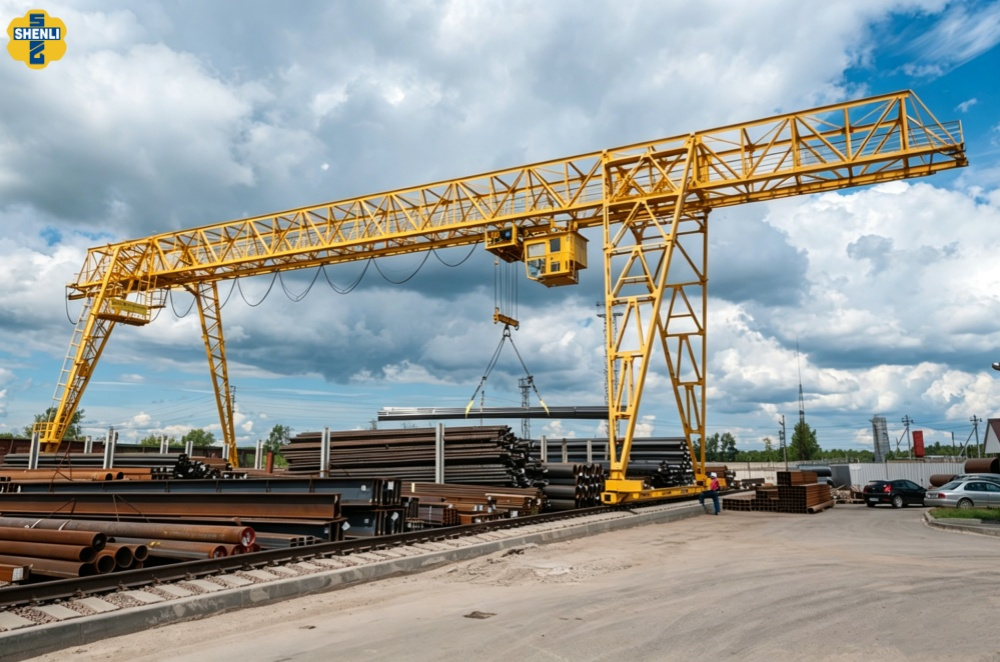
If you run a steel service center, you already know that moving steel is nothing like moving pallets. Steel coils, plates, beams, and tubes are dense, heavy, and often irregularly shaped. A forklift cannot handle a 15‑ton coil. A standard warehouse crane may not have the rigidity or the correct attachments.
Choosing the wrong gantry crane leads to real problems:
-
Bottlenecks on the slitting line because the crane is too slow
-
Damaged coil edges from poorly matched lifting attachments
-
Safety incidents when loads swing unexpectedly
-
High repair bills when an underspecified crane fails after 18 months
This guide walks you through every major decision – capacity, span, duty cycle, crane type, lifting attachments, and safety features. By the end, you will know exactly which gantry crane fits your steel service center’s workflow, budget, and growth plans.
2. What Is a Steel Service Center?
A steel service center is a facility that stores, processes, and distributes steel products to manufacturers, fabricators, and other end users. In the steel supply chain, the service center sits between the steel mill (which produces large volumes) and the factory that needs specific sizes and grades.
What makes service centers different from ordinary warehouses?
First, inventory variety. A service center may stock hot‑rolled coils, cold‑rolled sheets, galvanized steel, beams, channels, tubes, and plates – all in multiple grades and dimensions. The crane system must be able to switch between handling heavy coils one minute and long beams the next.
Second, processing equipment. Many service centers operate slitting lines, cut‑to‑length lines, levelers, blanking presses, and laser cutters. The crane must feed these machines precisely and clear finished parts quickly.
Third, continuous material flow. Truels arrive loaded with coils from the mill. Those coils go to storage, then to processing, then to shipping. The crane is the central link in that chain. If the crane stops, the whole operation stops.
This is why selecting the right gantry crane for a steel service center is not just an equipment purchase – it is a strategic decision that affects every part of your business.
3. Steel Products You Will Be Lifting
Before calculating capacity numbers, take a walk through your facility and list every type of product your crane will handle. Most steel service centers deal with several of the following:
-
Steel coils – Weights range from 5 tons to 40 tons per coil, with outer diameters up to 2,000 mm and inner diameters from 508 mm (20 inches) to 762 mm (30 inches). Coils are dense, concentrated loads that require C‑hooks or coil grabs.
-
Steel plates – Lengths up to 12 meters or more, stacked flat. Plate thickness varies from thin gauge (1–3 mm) to heavy plate (50 mm+). A single plate may weigh 1–10 tons; a stack of plates may exceed 20 tons.
-
Structural steel (beams, channels, angles, tubes) – Long, awkward shapes. A 12‑meter I‑beam weighs 0.5–1.5 tons per meter depending on section size. Spreader bars or multiple lifting points are often required.
-
Slabs and billets – Semi‑finished steel from the mill, extremely dense. A single slab can weigh 20–50 tons. These are typically moved with magnets or heavy‑duty lifting beams.
-
Bars and rebar – Bundles of long, cylindrical products. Requires careful sling or magnet handling to prevent rolling.
-
Scrap and trim – Offcuts from slitting or shearing operations. Often moved with magnets or scrap grabs.
Each product type places different demands on the crane – in weight, in size, in handling precision, and in duty cycle. The crane you choose must handle your heaviest product, your longest product, and your most frequent product. Do not design for the average – design for the peak.
4. Step 1:Determine Your Real Lifting Capacity
This is the single most important number in your crane selection.
How to calculate your required capacity
-
Find your heaviest single piece of steel. Look at your coil inventory, plate stacks, or beam bundles. What is the maximum weight you will ever need to lift?
-
Add the weight of your lifting attachment. A C‑hook for coils can weigh 0.5–2 tons. A lifting beam for plates may weigh 1–3 tons. A magnet system can be 1–2 tons. These weights come right off your available lifting capacity.
-
Add a safety margin. Professional engineers recommend a 10–25% margin above your calculated maximum load. This reserve capacity protects your crane from unexpected overloads during dynamic lifts, off‑center loading, and future production increases.
Typical capacity ranges for steel service centers
| Steel product type | Typical unit weight | Recommended crane capacity (including margin) |
|---|---|---|
| Small coils, light plates, bar bundles | 1–5 tons | 5–10 ton crane |
| Medium coils, plate stacks, structural steel | 5–15 tons | 10–20 ton crane |
| Large coils, heavy plates, beams up to 12m | 15–30 tons | 20–32 ton crane |
| Extra‑heavy coils, slabs, billets, multiple coils | 30–50 tons | 32–50+ ton crane |
| Very heavy slabs, ship plate, multiple‑coil lifts | 50–100+ tons | 100–500+ ton crane (double girder required) |
Why safety margin is not optional
A crane running at 100% of rated capacity every day will fail prematurely – fatigue cracks in the girder, worn‑out wheels and brakes, burned motors.
For steel service centers, where steel coils may be lifted hundreds of times per day, the safety margin is your insurance against:
-
Dynamic load spikes when a coil swings during acceleration
-
Off‑center loading when a coil is not perfectly balanced on the hook
-
Future growth when you start handling heavier coils next year
Many service centers add a 20% safety margin as a standard practice. For a 25‑ton coil, that means specifying a 30‑ton crane. Over 10 years, that extra capacity costs very little compared to the cost of a crane that is always overloaded.
Coil handling – the most critical case
Steel coils are the most challenging product because their weight is highly concentrated and their size varies.
A typical cold‑rolled coil might weigh 15–20 tons. A heavy‑gauge hot‑rolled coil can reach 30–40 tons. Some service centers handling multiple coils at once require capacities of 50 tons or more.
Here is a real‑world example: A Monarch Steel facility installed a 37.5‑ton coil grab under a 40‑ton crane – rated capacity is only 2.5 tons above the grab’s working load. That crane operates in CMAA Class D (heavy service) conditions, handling coils daily from the processing machine to storage.
When specifying crane capacity for coil handling, remember that your lifting attachment (C‑hook or coil grab) reduces effective capacity. If your heaviest coil is 30 tons and your C‑hook weighs 1.5 tons, you need a crane rated for at least 35–38 tons after adding a safety margin
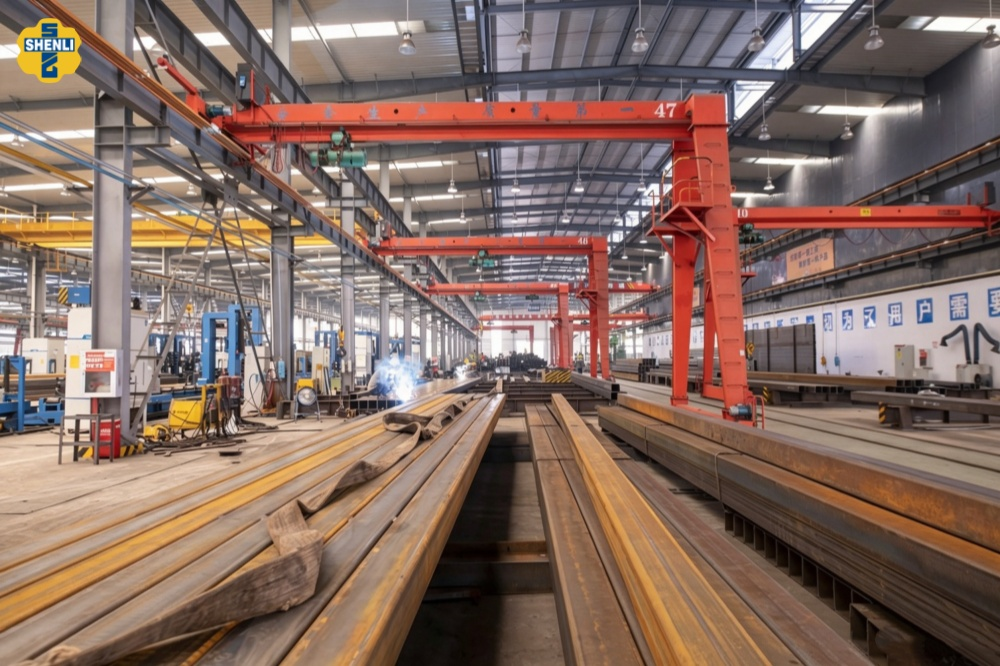
5. Step 2:Define Span and Lifting Height
Span – how wide must the crane cover?
Span is the distance between the inside edges of the crane’s legs. It determines how much of your work area the crane can serve.
To calculate your minimum required span:
-
Measure the width of your widest product. A 2‑meter (80‑inch) coil needs less width than a 6‑meter steel plate.
-
Add clearance for the lifting attachment. Your C‑hook or lifting beam extends beyond the product.
-
Add operator space. Operators need room to see the load and avoid crushing hazards.
-
Add future flexibility. A crane that barely covers today‘s layout will be useless if you rearrange your slitting line or add new storage racks.
Typical steel service center spans
| Bay type | Typical span range | Comments |
|---|---|---|
| Small fab shop / processing area | 10–15 meters | Single girder often sufficient |
| Medium service center bay | 15–20 meters | Single girder up to ~20t, double girder above |
| Large processing / storage bay | 20–30 meters | Double girder recommended |
| Outdoor stockyard | 25–40+ meters | Full gantry or double girder required |
A well‑designed crane with the correct span and properly sized girders ensures the lifting point can reach every required position over slitting lines, uncoilers, and truck beds. Miss the span by a few meters and operators will waste time repositioning loads manually.
Lifting height – how high do you need to go?
Lifting height is measured from the floor to the hook at its highest position. In a steel service center, lifting height affects:
-
Stacking storage – Higher stacking increases storage density. A crane that can stack coils three high versus two high effectively adds 50% more storage capacity in the same floor space.
-
Feeding processing equipment – Some slitting lines or uncoilers require specific hook approach heights.
-
Loading trucks – Semi‑trailer beds are about 1.5 meters high. Your crane must have enough height to lift a coil, clear the trailer sides, and place it safely.
Typical lifting height ranges:
| Application | Lifting height | Notes |
|---|---|---|
| Single‑level storage, low stacking | 4–6 meters | Basic coil storage |
| Medium stacking, truck loading | 6–9 meters | Standard for most processing facilities |
| High stacking, multiple levels | 9–12 meters | Requires double girder for stability |
| Very high stacking / tall bays | 12–20+ meters | Full gantry or specialty design |
For steel service centers with limited ceiling height, consider a low‑headroom double girder design. The compact crane profile adds 20–25% more effective lifting height compared to a single girder in the same building clearance.
Remember: lifting height is not just about the crane. It also depends on your building’s eave height, the crane structure height, the hoist dimensions, and the safety clearance required by local codes.
6. Step 3:Choose the Right Duty Cycle (CMAA/FEM Class)
This is where many steel service centers make expensive mistakes. A crane that matches your tonnage but not your usage pattern will fail early – and the repair costs will far exceed any upfront savings.
Why duty cycle matters
Duty cycle measures how often and how hard the crane works. Two cranes with identical capacity can have very different design lives depending on how they are used.
-
A CMAA Class A (standby) crane is designed for occasional lifts – maybe 2–5 lifts per hour, light loads, infrequent use.
-
A CMAA Class D (heavy service) crane is built for 15–20 lifts per hour, continuous operation, handling near‑capacity loads.
-
A CMAA Class F (continuous severe service) crane is designed for 24/7 operation, maximum loads, thousands of cycles per day.
Duty cycle requirements for steel service centers
Most steel service centers fall into CMAA Class D or FEM A5/A6 territory.
Here is why:
-
Coils move from receiving to storage to processing to shipping – often 100–200 lifts per 8‑hour shift
-
Loads often approach the crane’s rated capacity, especially for heavy coils and plates
-
Precision positioning is required for slitting lines, uncoilers, and truck loading
-
Multiple shifts may share the same crane
A facility processing 200+ coil movements per 8‑hour shift requires A6 rating. Lower‑volume operations (50–100 daily movements) can use A5 equipment. Underspecifying duty class leads to premature structural fatigue and component failure.
| Duty class | Description | Typical steel service center applications |
|---|---|---|
| CMAA Class C / FEM A4 | Moderate service, occasional heavy loads | Small service centers, light processing (<50 lifts/day) |
| CMAA Class D / FEM A5‑A6 | Heavy service, frequent full loads | Medium to large service centers, coil processing, slitting lines (100‑200 lifts/day) |
| CMAA Class E‑F / FEM A7‑A8 | Continuous severe service | Very high volume centers, 24/7 coil storage, integrated mills |
How to know if you need higher duty class
If you answer “yes” to any of these questions, you need at least CMAA Class D:
-
Does your crane lift near‑capacity loads more than 10 times per hour?
-
Does your crane run for more than 8 hours per day?
-
Do you have multiple shifts using the same crane?
-
Do you handle coils every day, not just occasionally?
-
Are you planning to increase production volume in the next 2‑3 years?
Many service centers also choose Class D to get better components – more robust motors, heavier brakes, better bearings. The upfront price difference is relatively small, but the reliability difference over 10 years is huge.
A note on duty class verification: Before finalizing a purchase, ask the manufacturer to explicitly state the CMAA or FEM duty rating for the full crane – not just the hoist. Some suppliers quote a higher duty class for the hoist than the structural components are rated for. A mismatch between hoist and structure duty rating creates hidden failure risk in long‑term continuous operation.
Steel service centers typically use three main gantry crane configurations. Your choice depends on your building, your yard, and your workflow.
Single girder gantry crane
One main girder with the hoist running underneath. A single girder gantry crane uses fewer steel components and has a lighter dead weight.
Typical specs: Capacity up to 32 tons (most common 5–20 tons), span up to 30 meters.
Advantages for steel service centers: Lower initial cost (30–50% less than double girder), lighter dead weight reduces ground load, simpler installation, easier maintenance.
Limitations for steel service centers: Limited lifting height (the hoist hangs below the girder), lower rigidity causing more sway under heavy coils, not suitable for daily high‑frequency handling.
Best used for: Light to medium steel products (plates, bars, small coils under 15 tons), intermittent service, service centers with modest daily throughput.
Double girder gantry crane
Two parallel main girders with the trolley running on rails on top. A double girder gantry crane provides the stability and height that heavy daily coil handling demands.
Typical specs: Capacity 5–500+ tons, span 10–50+ meters, supports dual hoist options.
Advantages for steel service centers: Higher lifting capacity, greater lifting height for the same building clearance, excellent stability under heavy coil loads, suitable for 24/7 continuous operation, can accommodate dual hoists, anti‑sway systems, and maintenance walkways.
Limitations for steel service centers: Higher initial cost (typically +30–50% above single girder), heavier dead weight requiring stronger foundations, more complex maintenance.
Best used for: Heavy steel products (coils over 20 tons, slabs, billets), daily high‑frequency operation (100+ lifts per day), facilities with multiple processing stations that require load tracking over long travel distances.
Decision rule for steel service centers: If your regular load exceeds 15–20 tons or your crane runs more than 6 hours per day, double girder is the right choice.
Full gantry vs semi‑gantry
-
Full gantry crane – Two rigid legs running on ground rails on both sides. Offers the highest stability and can cover very wide spans (10–50+ meters). Ideal for outdoor stockyards or very large indoor bays where loads need to be moved end‑to‑end across the entire floor area.
-
Semi‑gantry crane – One leg on a ground rail; the other side runs on a building runway beam. Saves floor space on one side. Best used where the steel service center is located against a building wall and floor space is tight.
Most steel service centers choose full gantry cranes for their main processing bays. Semi‑gantry cranes work well for loading docks or narrow aisles along the building perimeter.
Configuration recommendation table
| Your operation | Recommended configuration |
|---|---|
| Small service center, light plates/bars, <5t | Single girder gantry |
| Medium service center, coils up to 20t | Single girder gantry (20t max) or double girder for high frequency |
| Large service center, coils over 20t | Double girder gantry |
| Outdoor coil storage yard | Double girder full gantry |
| Narrow bay along building wall | Semi‑gantry crane |
| Multi‑processing stations (slitting + storage + shipping) | Double girder with long travel and optional dual hoists |
| High‑rise coil stacking (4–6 layers) | Double girder with sufficient lifting height and anti‑sway |
| Your operation | Recommended configuration |
|---|---|
| Small service center, light plates/bars, <5t | Single girder gantry |
| Medium service center, coils up to 20t | Single girder gantry (20t max) or double girder for high frequency |
| Large service center, coils over 20t | Double girder gantry |
| Outdoor coil storage yard | Double girder full gantry |
| Narrow bay along building wall | Semi‑gantry crane |
| Multi‑processing stations (slitting + storage + shipping) | Double girder with long travel and optional dual hoists |
| High‑rise coil stacking (4–6 layers) | Double girder with sufficient lifting height and anti‑sway |
8. Step 5:Pick the Right Lifting Attachments
A gantry crane is only as useful as its lifting attachment. Steel service centers require specialized tools that ordinary warehouses never need.
C‑hook for steel coils
A C‑shaped lifting beam cradles the coil’s inner diameter, distributing lifting forces across the coil‘s core instead of stressing outer wraps. This protects the coil’s surface – critical for pre‑finished steel destined for automotive or appliance manufacturing.
Key C‑hook specifications:
-
Material: Forged alloy steel with heat treatment
-
Capacity: 5–40 tons (match to crane capacity)
-
Coil inner diameter compatibility: 508 mm (20 inches) to 762 mm (30 inches) standard; custom sizes available
-
Surface protection: Urethane or rubber coating prevents scratching
-
Safety latching: Spring‑loaded automatic latch prevents coil disengagement
Capacity factor: The C‑hook itself weighs 0.5–2 tons. Subtract that from your crane’s rated capacity when calculating the maximum coil weight you can safely lift.
Safety margin for C‑hooks: Dafang recommends specifying 30–32 ton rated C‑hooks for coils up to 25 tons. Do not load hooks to 100% rated capacity in daily production use. Reserve capacity accommodates real‑world dynamic loading, off‑center pickup, and wear over time.
Coil grab (mill‑duty)
For very heavy coils or automated operations, a motorized coil grab provides positive mechanical clamping. A real‑world example: a 37.5‑ton mill‑duty coil grab operating under a 40‑ton crane in CMAA Class D service. The grab carries coils from a processing machine to floor storage over a distance of 30–60 meters.
Coil grabs are more expensive than C‑hooks but offer better control and can handle heavier coil stacks without manual slinging.
Magnetic lifters for plates and flat stock
Electromagnetic lifting systems are ideal for steel plates, sheets, and flat‑bottomed products. They allow single‑sided access (no need to get underneath) and can be turned on/off remotely.
When to use magnets: Large quantities of flat plate or sheet, scrap handling, bundling operations, feeding laser cutters or shearing lines where quick pick‑and‑place cycles matter.
Limitation: Magnets do not work well on stacked plates with air gaps between them. For single plates or tight stacks, they work beautifully.
Lifting beams and spreader bars for long products
For structural steel (beams, channels, tubes) and extra‑long plates, lifting beams or spreader bars keep the load level and prevent bending or slipping.
A spreader bar with two lifting points keeps long products horizontal, reducing the risk of the load tipping or sliding off slings. For beams over 12 meters, multiple lifting points may be required.
Attachment selection quick guide
| Steel product | Best lifting attachment | Notes |
|---|---|---|
| Steel coils | C‑hook or motorized coil grab | Match inner diameter; protect surface coating |
| Steel plates | Electromagnetic lifter or plate clamps | Magnets work best for single plates |
| Structural beams | Spreader bar with slings | Multiple pick points for long loads |
| Bars / tubes | Slings or magnets with proper padding | Prevent rolling during lift |
| Scrap / trim | Electromagnetic scrap magnet | Quick pick‑and‑drop cycles |
| Slabs / billets | Heavy lifting beam with chain slings | Dual pick points recommended |
9. Step 6:Safety and Control Features
Steel service centers handle loads that can cause serious injury or expensive damage if something goes wrong. Your gantry crane should include these safety and control features as standard or optional upgrades.
Variable Frequency Drive (VFD)
VFDs provide stepless speed control on hoisting, trolley, and bridge travel. Instead of only “slow” and “fast”, operators can creep at low speed for precise positioning over a slitting line or uncoiler.
For steel service centers, VFDs are not a luxury – they are a productivity tool. Smooth acceleration and deceleration reduce load swing, protect the steel from impact damage, and extend the life of mechanical components.
Some crane suppliers offer high‑speed adjustable frequency drives on bridge, trolley, and hoist to allow flexible, smooth operation.
Anti‑sway system
When a 20‑ton coil swings, it is dangerous. Anti‑sway technology actively cancels pendulum motion during operation, keeping the load steady even during bridge acceleration and braking.
For steel service centers where coils must be precisely placed onto a slitting line uncoiler or into narrow storage racks, anti‑sway dramatically reduces cycle time and operator fatigue.
Overload limiter (rated capacity indicator)
An overload limiter cuts power to the hoist if the load exceeds the crane’s rated capacity. This is not optional – it is required by OSHA and other safety regulations in most countries.
For steel service centers, where coil weights vary and operators may misjudge a heavy coil, an overload limiter prevents the single most common cause of crane structural failure.
Limit switches (hoist upper/lower and trolley/bridge travel)
Limit switches automatically stop motion at preset points, preventing the hook from hitting the crane structure (upper limit), the drum from running out of wire rope (lower limit), and the trolley or bridge from running off the end of the rails.
In a busy service center where operators move quickly, limit switches protect the crane from damage when an operator‘s attention slips.
Emergency stop system
A clearly marked emergency stop button (or pull‑cord) should cut all power to all crane motions immediately. This must be accessible from the operator’s normal working position.
Remote control (radio)
Radio remote controls allow the operator to stand at the best vantage point – near the coil being hooked, away from the pinch point between coil and rack. For steel service centers, a radio remote with a multi‑function transmitter integrating bridge, trolley, hoist, and auxiliary hoist controls significantly improves both safety and efficiency.
A backup pendant control (wired) is recommended in case the radio remote’s battery fails or radio interference occurs.
Wind brakes and rail clamps (outdoor gantry cranes)
If your gantry crane operates outdoors – common for steel stockyards – it must be equipped with wind brakes or rail clamps. These devices automatically engage when wind speed exceeds a preset threshold or when the crane is parked, preventing the crane from rolling on its rails.
Some local safety codes require anemometers (wind speed sensors) for outdoor cranes serving steel service centers in coastal or high‑wind regions.
Safety configuration checklist
| Feature | Recommended for indoor? | Recommended for outdoor? | Comments |
|---|---|---|---|
| Overload limiter | Yes (required) | Yes (required) | Non‑negotiable |
| Upper/lower limit switches | Yes | Yes | Protects hoist from over‑travel |
| Travel limit switches | Yes | Yes | Protects trolley/bridge from end‑stop impacts |
| VFD (stepless control) | Recommended | Recommended | Improves precision, reduces sway |
| Anti‑sway system | Recommended for coils/plates | Recommended for windy conditions | Cuts cycle time, reduces damage |
| Radio remote control | Recommended | Recommended | Improves operator visibility |
| Emergency stop | Yes | Yes | Required by OSHA/ISO |
| Wind brakes | Not required | Required | Prevents runaway in wind |
| Anemometer | Not required | Recommended in wind‑prone areas | Required by some local codes |
10. Application Quick‑Reference Table
Here is a fast guide to match steel product types to crane choices.
| Steel product | Typical weight range | Recommended crane capacity | Structure type | Duty class | Best attachment |
|---|---|---|---|---|---|
| Small coils (≤10t) | 1–10 tons | 10–15 ton crane | Single girder | CMAA Class C‑D / FEM A4‑A5 | C‑hook |
| Medium coils (10–20t) | 10–20 tons | 20–25 ton crane | Single girder (20t max) or double girder | CMAA Class D‑E / FEM A5‑A6 | C‑hook or motorized grab |
| Large coils (20–40t) | 20–40 tons | 32–50 ton crane | Double girder | CMAA Class D‑E / FEM A6‑A7 | Motorized coil grab |
| Steel plates (stack) | 5–30 tons | 15–40 ton crane | Single girder (up to 20t) or double girder | CMAA Class C‑D / FEM A4‑A5 | Electromagnet or plate clamp |
| Structural steel (beams, channels) | 0.5–10 tons | 10–15 ton crane | Single girder | CMAA Class C / FEM A4 | Spreader bar with slings |
| Slabs / billets | 20–50 tons | 30–60 ton crane | Double girder | CMAA Class D‑E / FEM A5‑A6 | Heavy lifting beam with chain slings |
| Scrap / trim | Variable | 10–20 ton crane | Single or double girder (depends on volume) | CMAA Class C‑D / FEM A4‑A5 | Electromagnetic scrap magnet |
| Mixed general steel | 1–20 tons | 20–25 ton crane | Double girder for flexibility | CMAA Class D / FEM A5 | Multiple quick‑change attachments |
The cheapest crane on the first invoice is rarely the cheapest crane over 10 years. Here is what to consider when building your budget.
Upfront costs
| Cost item | Steel service center budget factor |
|---|---|
| Crane equipment | 20,000(5tsinglegirder)to20,000(5tsinglegirder)to200,000+ (50t double girder) |
| Rail and foundation | 5,000–5,000–30,000+ depending on capacity and soil conditions |
| Lifting attachments | 5,000–5,000–50,000+ (C‑hook, coil grab, magnet, spreader bar) |
| Installation and rigging | 3,000–3,000–15,000 depending on crane size |
| Electrical work (power supply, control wiring) | 2,000–2,000–8,000 |
Long‑term operating costs
-
Energy consumption: A double girder crane with VFD typically consumes 20–30% less electricity than a single girder with traditional controls, especially when accelerating heavy loads frequently.
-
Maintenance: CMAA Class D cranes use higher‑quality components that last longer, but they may have higher parts costs. The total maintenance cost over 10 years is usually lower than a cheaper crane that breaks down frequently.
-
Downtime cost: The most expensive cost is not shown on any invoice – it is the production loss when your crane fails in the middle of a shift. A well‑specified crane with proper duty class is an insurance policy against that loss.
When to upgrade from single girder to double girder
The price difference between single girder and double girder is about 30–50%. Pay the premium when:
-
Your regular load exceeds 15–20 tons
-
Your crane runs more than 6 hours per day
-
You plan to add a second hoist or anti‑sway in the future
-
Your building height is limited and you need every centimeter of lifting height
-
You process coils daily (100+ movements per shift)
For steel service centers that move coils all day, the payback period for double girder is typically 2–3 years through lower maintenance, fewer breakdowns, and higher throughput.
12. Get the Right Gantry Crane for Your Steel Service Center
You have seen the decision framework – capacity, span, duty cycle, crane type, attachments, safety features. Now it is time to apply it to your specific steel processing facility.
At SLKJCrane, we design and manufacture gantry cranes for steel service centers worldwide. We have helped coil processors, plate warehouses, structural steel distributors, and full‑service metal centers choose the right lifting equipment for their workflow.
What we offer for steel service centers:
-
Free application consultation – we study your coil weights, plate sizes, storage layout, and daily movement volume
-
Single girder gantry cranes (1–32 tons, up to 30m span) for lighter steel handling
-
Double girder gantry cranes (5–500+ tons, up to 50m span) for heavy daily coil processing
-
Full gantry and semi‑gantry configurations to match your building layout
-
Specialized attachments – C‑hooks, coil grabs, electromagnets, lifting beams, spreader bars
-
Advanced controls – VFD, anti‑sway, radio remote, automation‑ready PLC
-
Full documentation – CAD drawings, load charts, FEM/CMAA/ISO compliance certificates
-
Worldwide shipping and remote installation guidance
👉 Contact us today – share your steel product types, maximum coil weight, daily lifting volume, building dimensions, and whether you operate indoors or outdoors. We will recommend the most cost‑effective gantry crane configuration for your steel service center.

Expert in Overhead Crane/Gantry Crane/Jib Crane/Crane Parts Solutions
Eileen
With 20+ years of experience in the Crane Overseas Export Industry, helped 10,000+ customers with their pre-sales questions and concerns, if you have any related needs, please feel free to contact me!
Our Crane Product Range
SLKJcrane provides a wide range of lifting equipment solutions including:
– Single Girder Overhead Crane
– Double Girder Overhead Crane
– Gantry Crane
– Spider Crane
– Marine Crane
Our engineering team can configure safety devices and technical solutions according to project requirements.
FAQ
10 to 32 tons covers most medium‑sized service centers. Light plate and bar facilities may use 5–10 ton cranes. Large coil processing centers commonly use 20–50 ton cranes.
Use the 20‑ton rule: regularly lift under 20 tons and less than 6 hours per day → single girder can work. Regularly lift over 20 tons or more than 6 hours per day → double girder is the right choice.
CMAA Class D or FEM A5‑A6. Facilities processing 200+ coil movements per 8‑hour shift require A6. Lower‑volume operations (50–100 daily movements) can use A5. Avoid A3‑A4 for daily coil handling.
Yes, but you will need interchangeable lifting attachments. Quick‑change systems allow the same crane to switch between a C‑hook for coils and a spreader bar for beams in a few minutes. If your mix is highly variable, consider a dual‑hoist double girder crane – one hoist fitted for coils, the other for general lifting.
Overload limiter + anti‑sway + VFD, in that order. Overload limiter prevents structural failure. Anti‑sway prevents accidents from swinging loads. VFD gives operators fine control for precise positioning over expensive processing equipment.
Depends on crane type and lifting height. Plan for at least 1–1.5 meters of clearance above the highest lifted load to accommodate the crane structure, hoist, and safety gap. Your crane supplier will provide exact dimensions based on your specified lifting height and crane configuration.
Yes. Full gantry cranes are ideal for outdoor steel stockyards. They must be equipped with corrosion protection (coating for outdoor exposure) and wind brakes/rail clamps to prevent movement in high winds.
Latest Blog
Lorem ipsum dolor sit amet, consectetur adipiscing elit, sed do eiusmod tempor incididunt ut labore et dolore magna aliqua
Gantry Crane Price Guide 2026
Gantry Crane Price Guide 2026: Cost by Tonnage, Type & Configuration Table of Contents Why a Gantry Crane
Hidden Costs of Importing a Gantry Crane
Hidden Costs of Importing a Gantry Crane: Shipping, Customs and Installation Guide Why Is a Gantry Crane Quote
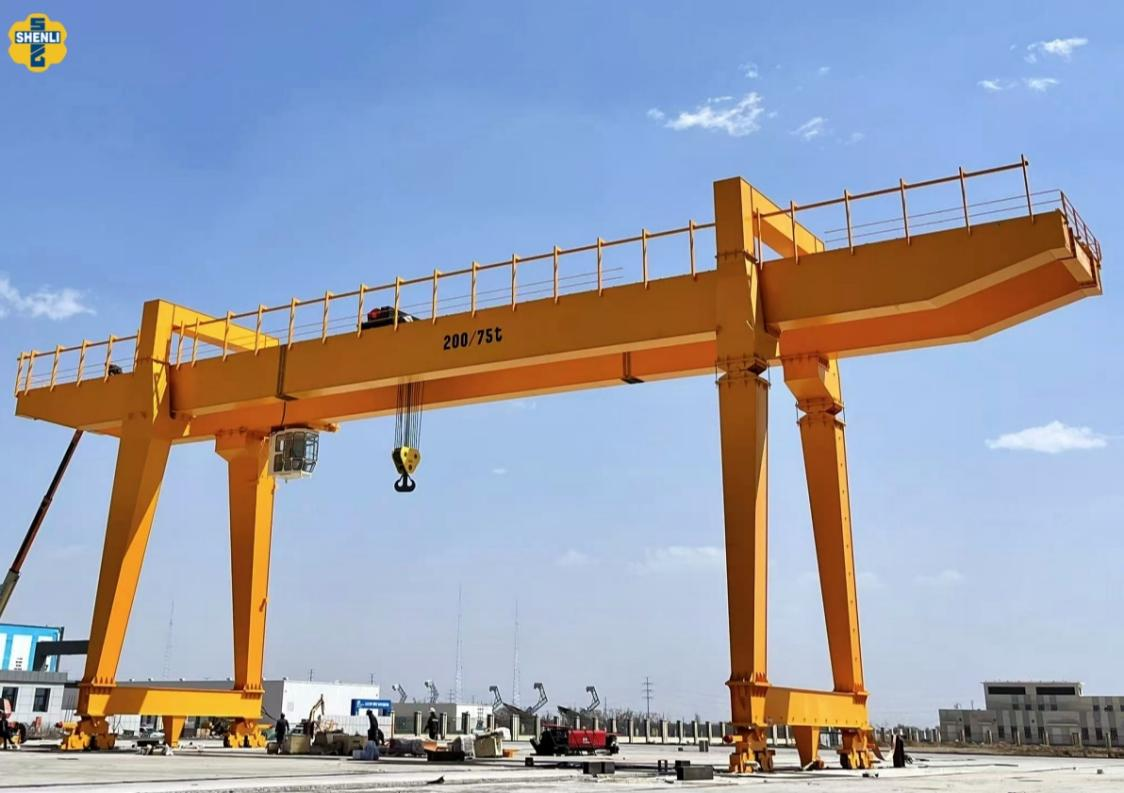
Used vs New Gantry Crane: Total Cost of Ownership Explained
Used vs New Gantry Crane: Which One Has Lower Total Cost of Ownership (TCO)? Introduction When purchasing a
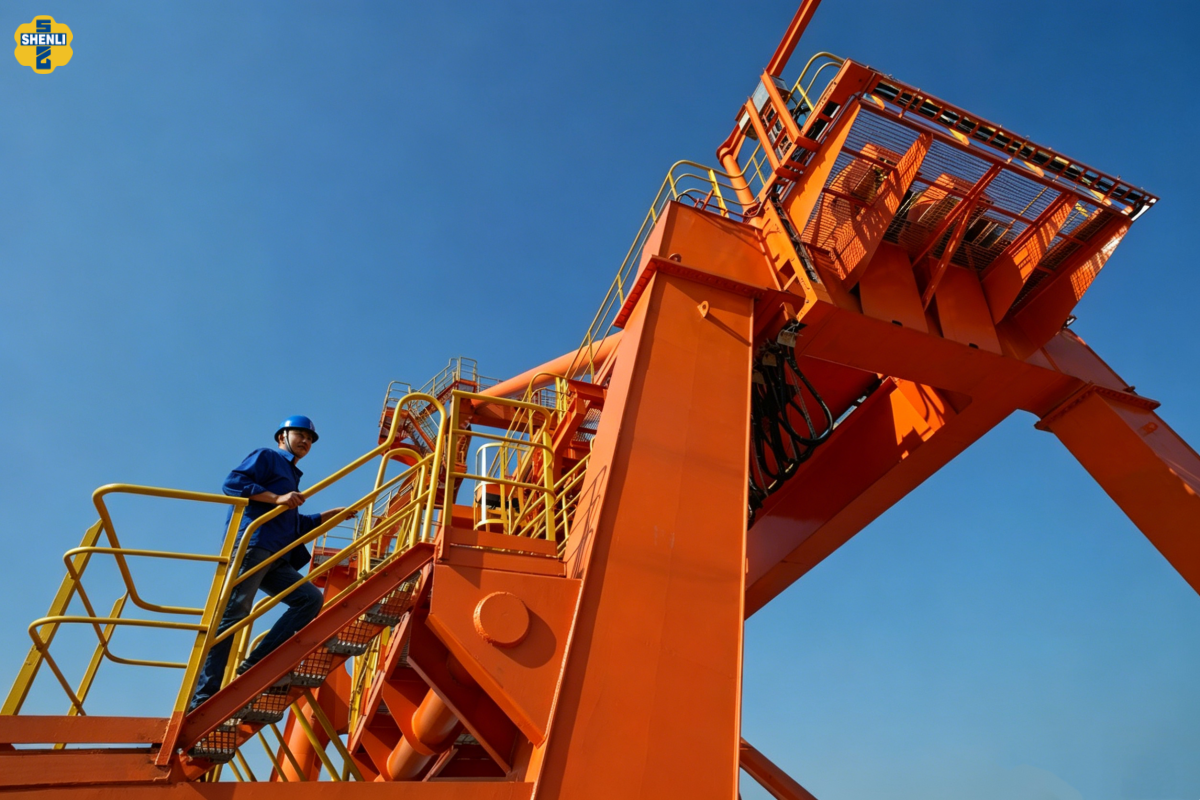
Gantry Crane Predictive Maintenance: How IoT Sensors Reduce Downtime
Gantry Crane Predictive Maintenance: How IoT Sensors Reduce Downtime Why Does Gantry Crane Downtime Cost So Much? Gantry
Contact Us Now
Have questions about our cranes or need help?
Reach out to our friendly team for expert support and guidance.
We are here to help you power your journey towards a greener future !
Address: Crane Industry Park, Xinxiang City Henan Provice
Hot Sales
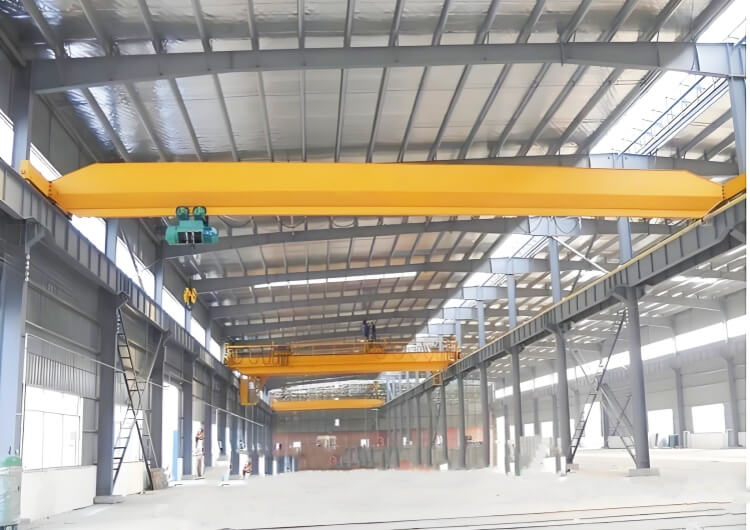
Single girder overhead cranes
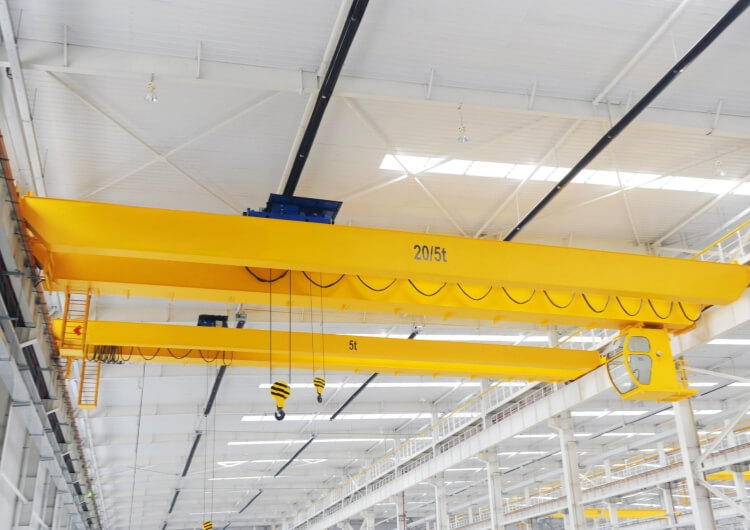
Double girder overhead cranes
Spider cranes