
Single Girder vs Double Girder Gantry Crane: Cost, Capacity and Applications Compared
Table of Contents
Why This Comparison Matters
What Is a Single Girder Gantry Crane?
What Is a Double Girder Gantry Crane?
Quick Comparison: Cost, Capacity & Applications at a Glance
Detailed Comparison by Key Factors
Application Guide: Which One Should You Choose?
Total Cost of Ownership Calculation (TCO)
Frequently Asked Questions (FAQ)
Get the Right Crane for Your Application
1. Why This Comparison Matters
If you need to lift heavy loads in a workshop, yard, or factory — and your building does not already have overhead runway beams — a gantry crane is likely your answer. But as soon as you start looking, you hit the first real decision: single girder or double girder?
This is not just a technical preference. The choice affects your upfront investment, your operating cost for years, how high you can stack, how stable the crane feels under load, and whether the crane will survive your daily workload.
This guide answers three questions buyers ask the most:
Cost — How much more is double girder, and when is it worth paying?
Capacity — What loads can each type actually handle?
Applications — Which industries and jobs fit each type best?
Let us start with a clear definition of each crane type.
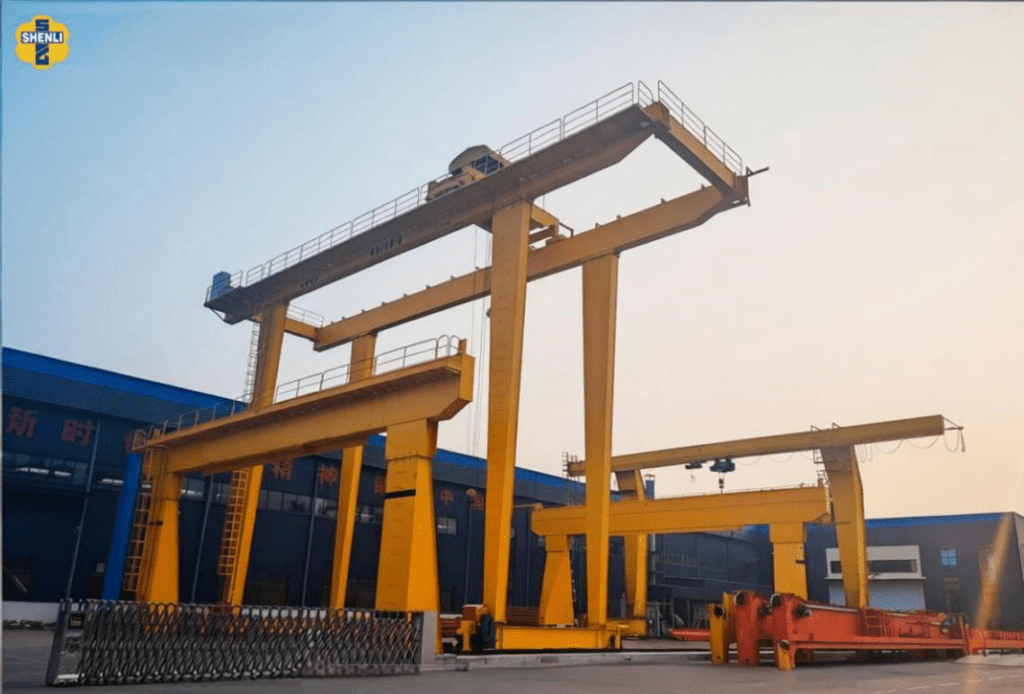
2. What Is a Single Girder Gantry Crane?
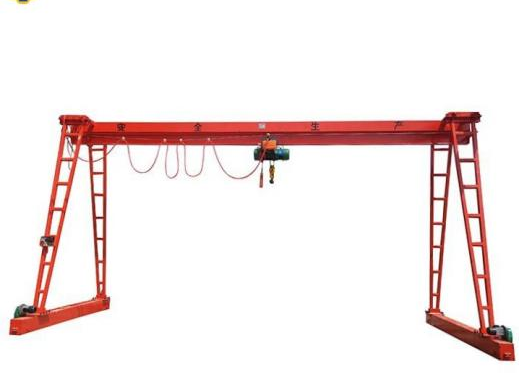
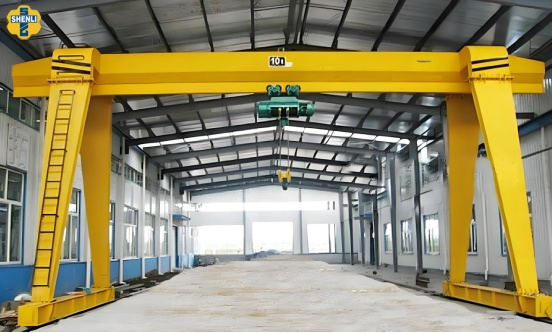
A single girder gantry crane uses one main horizontal beam (the girder) spanning between two legs. The hoist travels along the bottom flange of the girder — hanging underneath rather than riding on top.
Why “underhung” matters: the hoist eats up some vertical space, which limits how high you can lift for a given crane height. But the design uses less steel, weighs less, and costs less to build and install.
Typical specifications:
Capacity: Normally up to 20 tons, with reinforced designs reaching up to 32 tons
Span: Up to about 30–35 meters (100–115 feet)
Lifting height: Typically 6 to 24 meters, customisable higher
Duty class: CMAA Class A, B, or C (standby to moderate service)
Price range comparison: For a 10‑ton crane, single girder costs roughly 20–35% less than double girder(e.g., ~21,000USDforsinglegirdervs.>21,000USDforsinglegirdervs.>28,000 for double girder)
Key features:
Lighter dead weight compared to double girder crane
Lower initial investment and easier installation
Compact structure fits smaller spaces
Quicker delivery and simpler maintenance
Limitations:
Limited lifting height because the hoist hangs below the beam
Lower rigidity – more sway with heavy loads
Not designed for continuous heavy‑duty operation(e.g., 8+ hours daily)
3. What Is a Double Girder Gantry Crane?
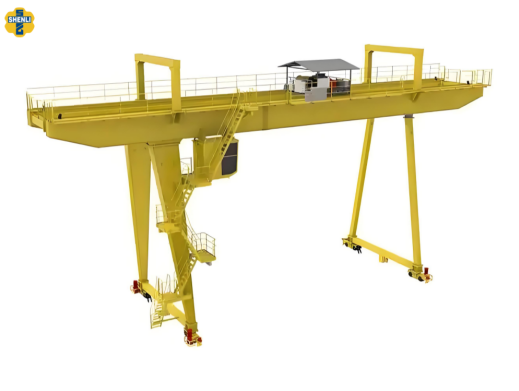
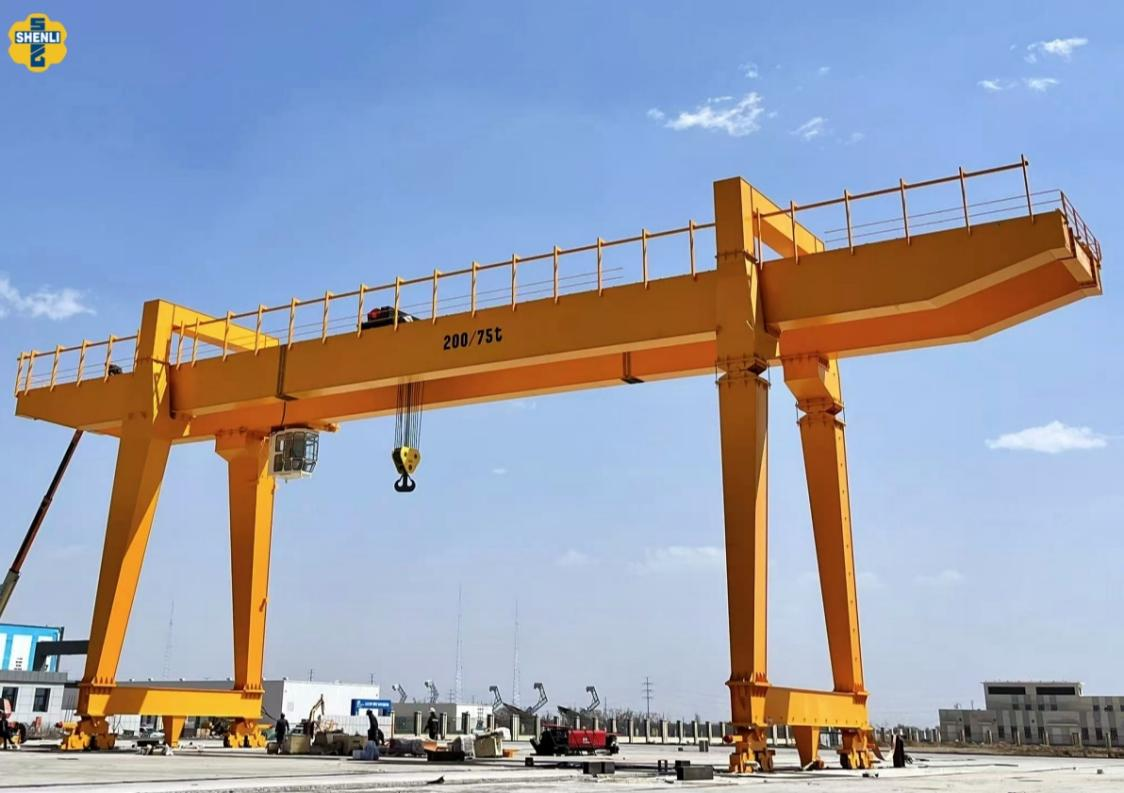
A double girder gantry crane uses two parallel main beams spanning between the legs. The hoist trolley runs on rails mounted on top of the girders — not hanging underneath.
Why “top‑running” matters: the trolley sits on top of the girders, so the hook can be raised much higher for the same overall crane height. This “hook approach” is significantly shorter. The structure is also much stiffer, because two girders share the load instead of one
Typical specifications:
Capacity: 5 tons to 500+ tons, custom designs can exceed 1,000 tons
Span: Up to 40+ meters (over 130 feet), with custom spans available
Lifting height: Up to 30+ meters (over 100 feet), highly customizable
Duty class: CMAA Class C through F — moderate to continuous severe service
Typical industries: Steel mills, shipyards, ports, heavy fabrication, mining
Key features:
Higher lifting height for the same building clearance
Greater stability under heavy loads and better wind resistance
Supports dual trolleys, anti‑sway systems, walkways, and service platforms
Typical dual hoist design — you get a main hoist for heavy lifts and a smaller auxiliary hoist for quick, lighter moves without switching attachments
Limitations:
Higher initial cost
Heavier, requiring stronger foundations
More complex maintenance
4. Quick Comparison: Cost, Capacity & Applications at a Glance
Use this table as your first‑level filter.
| Feature | Single Girder Gantry Crane | Double Girder Gantry Crane |
|---|---|---|
| Initial purchase cost | Lower | Higher (typically +30‑50%) |
| Lifting capacity(standard) | 1 – 20 tons | 5 – 500+ tons (custom >1,000t) |
| Span | Up to ~30 m | Up to 40 m+ |
| Lifting height | Moderate (hoist hangs below girder) | High (trolley rides on top) |
| Duty cycle suitability | Intermittent (CMAA A‑C) | Continuous heavy duty (CMAA D‑F) |
| Typical applications | Small workshops, warehouses, fabrication shops | Steel mills, shipyards, ports, heavy manufacturing |
| Dead weight / foundation | Lighter, simpler foundation | Heavier, requires prepared foundation |
| Installation time | 7–14 days (typical) | Longer (2–4 weeks typical, depending on scale) |
Now let us walk through the factors that matter most for your buying decision.
5. Detailed Comparison by Key Factors
5.1 Cost: How Much More Is Double Girder?
Upfront, double girder is roughly 30–50% more expensive than a single girder of similar capacity. But “similar capacity” is the tricky part — because once you pass about 20 tons, the two options are no longer directly comparable.
Example (10‑ton crane): For a 10‑ton gantry crane, a single girder model costs roughly 21,000USD,whileadoublegirdermodelcostsabove21,000USD,whileadoublegirdermodelcostsabove28,000 USD — a 20–35% price difference.
However, the ROI picture flips when the application genuinely pushes beyond what a single girder can comfortably handle. Engineering analysis suggests that a single girder crane’s upfront cost advantage disappears when the job truly requires the hook height, stiffness, or capacity range that only a double girder design delivers.
Long‑term operating cost: For light‑to‑medium duty, single girder has lower operating cost because fewer components wear out. For heavy, high‑frequency operation, double girder’s operating cost is actually lower — because it doesn’t break down as often, and wear is distributed across two girders instead of concentrated on one.
ℹ️ If you are seriously considering a double girder crane for a heavy‑use scenario, be sure to evaluate its Total Cost of Ownership (TCO) and return‑on‑investment horizon over 5–10 years. We break down TCO later in this guide.
5.2 Capacity and Lifting Height
This is where the two types diverge most sharply.
A single girder gantry crane is structurally efficient for light to medium loads. The underhung hoist places the load below the beam, which works well up to about 20 tons. For heavier duty, you need a larger beam. Beyond roughly 15 tons, the beam weight climbs quickly, and the economic advantage over double girder shrinks.
A double girder gantry crane shines above 20 tons. The load sits between two beams instead of hanging under one, which spreads stress evenly. This allows capacities up to 500 tons or more with practical spans. Double girder cranes are also widely used in steel mills, shipyards, and heavy engineering for loads exceeding 30 tons, where a single girder design would be unsafe or impractical
5.3 Duty Cycle (How Often Will You Use It?)
If you run a busy workshop with several lifts per day, but not full‑time continuous duty, single girder is likely fine.
If your crane runs 8+ hours a day, or if you work in steel mill, port, or heavy‑duty manufacturing environments, a double girder is almost always the right call. The dual‑girder design distributes wear, handles thermal stress better, and supports the higher CMAA classifications (Class D, E, or F) required for continuous duty.
For context, CMAA Class D cranes require motors with a 60% duty cycle, while Class B cranes only require 25%. In practical terms, you cannot run a Class B single girder crane on a Class D schedule —— overload and premature failure are inevitable.
5.4 Applications: Where Each Type Excels
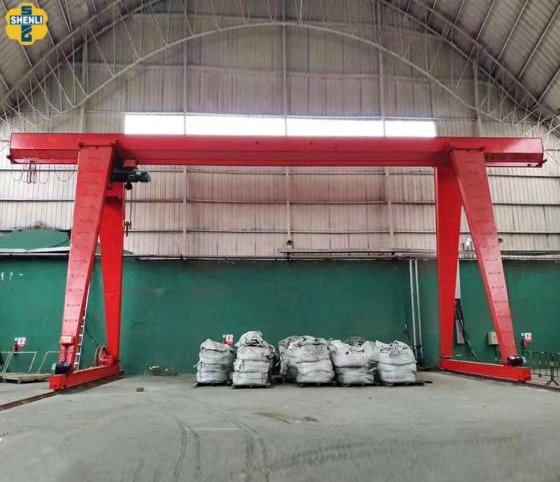
Single girder gantry cranes are common in small to medium fabrication shops, warehouses, machine shops, light assembly lines, and small precast yards. Any setting where loads stay under 20 tons and lifts happen intermittently.
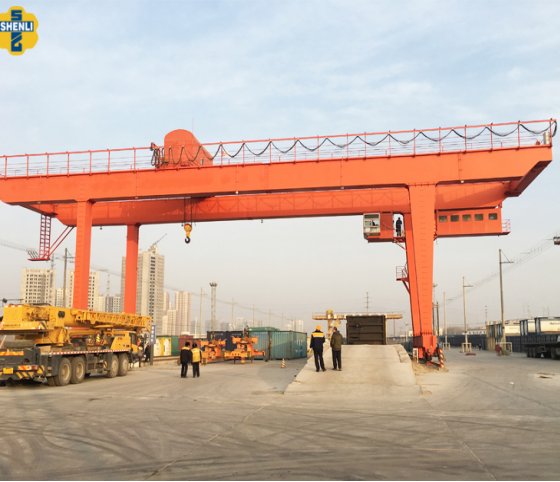
Double girder gantry cranes dominate steel mills, shipyards, heavy industrial manufacturing, ports and container yards, and large precast plants. Any workload where loads exceed 20 tons, or where 24‑hour continuous operation is the norm
6. Application Guide: Which One Should You Choose?
Here is how you match the right crane type to your operation.
Choose single girder if:
Your maximum load is 15 tons or less(20 tons absolute ceiling)
You have limited headroom or low ceilings where a deeper crane structure would be problematic — the compact single‑girder profile leaves more operational space beneath
The crane runs less than 4–6 hours per day on average
Your budget is tight and you cannot justify the extra upfront cost of double girder
You plan to use standard features, not specialised hardware like walking platforms or twin‑trolley setups
Choose double girder if:
Your loads regularly reach 20 tons or more
You have no severe height restrictions and can accommodate the taller crane profile — the trolley‑on‑top double‑girder arrangement adds structure height but gives you greater lifting height under the hook
The crane runs 8+ hours per day or experiences high‑frequency lifts
You need future flexibility, such as adding auxiliary hoists, walkways, or anti‑sway systems. The space between two girders makes retrofitting easier
You operate outdoors in windy conditions — double girder’s higher rigidity provides better stability
You operate in steel mills, ports, or continuous manufacturing
7. Total Cost of Ownership Calculation (TCO)
Buying a crane based on purchase price alone can be misleading. Here is a TCO illustration using a 10‑ton gantry crane, based on industry estimates.
Note: These figures are approximations, not a firm quotation. Your actual operating conditions, energy rates, maintenance cycles, and local labour costs will affect real‑world TCO.
| Cost component | Single girder(est.) | Double girder(est.) |
|---|---|---|
| Purchase price (10‑ton model) | ~$21,000 USD | ~$28,000+ USD |
| Installation & foundations | Lower (modular, simpler) | Higher (two rails, heavier) |
| Annual electricity (8 h/day) | ~$1,100 USD (15‑20% lower motor power) | ~$1,300 USD |
| 5‑year energy total | ~$5,500 USD | ~$6,500 USD |
| 5‑year maintenance | Moderate (fewer wheels) | Higher (more components) |
If your application stays within single girder’s design limits, single girder offers lower TCO. However, if you operate near 20 tons daily or run 8+ hour shifts, double girder often has significantly lower TCO because it avoids premature failures, unplanned downtime, and the “over‑specification / under‑specification trap” inherent when you push a single girder beyond its intended limits.
💡 The actual equipment weight can differ by 30% or more between single and double girder configurations. A lighter crane eases foundation requirements and installation, while a heavier crane may call for additional site prep — factor that into your total project budget
8. Get the Right Crane for Your Application
You have seen the cost differences, the capacity limits, and the application fit for single girder and double girder gantry cranes. Now it is time to apply that knowledge to your own workshop, yard, or factory.
At SLKJCrane, we manufacture both types — single girder and double girder — with capacities tailored to your load requirements. We help customers choose based on their actual operation, not a one‑size‑fits-all answer.
We provide:
Free consultation — compare single vs double girder for your specific site
Single girder gantry cranes: 1–32 tons, compact and cost‑effective
Double girder gantry cranes: 5–500+ tons, built for heavy duty
Full documentation: CAD drawings, load charts, ASME/FEM/ISO compliance
Worldwide shipping and installation guidance
👉 Contact us today — tell us about your load weight, span, lifting height, and working environment. We will recommend the most cost‑effective crane type for your budget and timeline.

Expert in Overhead Crane/Gantry Crane/Jib Crane/Crane Parts Solutions
Eileen
With 20+ years of experience in the Crane Overseas Export Industry, helped 10,000+ customers with their pre-sales questions and concerns, if you have any related needs, please feel free to contact me!
Our Crane Product Range
SLKJcrane provides a wide range of lifting equipment solutions including:
– Single Girder Overhead Crane
– Double Girder Overhead Crane
– Gantry Crane
– Spider Crane
– Marine Crane
Our engineering team can configure safety devices and technical solutions according to project requirements.
FAQ
Typically, a double girder costs about 30–50% more than a single girder of similar capacity. For an example, a 10‑ton single girder may cost roughly 21,000,whileadoublegirderequivalentcanbe21,000,whileadoublegirderequivalentcanbe28,000+. The gap increases with larger capacities, heavy‑duty components, and special features like anti‑sway systems or advanced controls
Standard engineered single girder designs are rated up to 20 tons for normal use. Some reinforced designs can reach 32 tons, but that is the practical upper limit. Above 20 tons, a double girder crane is the structurally safe and economically rational choice
Double girder cranes are preferred for heavy loads(over 20 tons), continuous 24/7 operation, steel mills, ports, large precast concrete yards, and shipyards. They deliver greater rigidity, better lifting height, and support for features like dual trolleys and walkways that single girder configurations cannot accommodate
Not practically. Single girder cranes are built for intermittent duty cycles. Using one for continuous heavy lifting will cause rapid wear on the hoist, beam, wheels, and power system — leading to frequent breakdowns and higher long‑term costs than simply starting with a correctly rated double girder crane
For the same overall crane height, a double girder crane gives you more net lifting height. The single girder's underhung hoist consumes vertical space below the beam. The double girder's top‑running trolley sits above the beams, allowing the hook to rise closer to the structure
Class A‑B ❌ standby or infrequent use. Class C ❌ moderate service, machine shops. Class D ❌ heavy service, steel plants — motors require a 60% duty cycle. Class E‑F ❌ severe/continuous severe — ports, 24/7 industrial production. Choose your required class before you select the crane type, then confirm that the crane you are considering is rated for that class.
Yes, but with limits. The underhung design of a single girder crane makes retrofitting these systems more complex than on a double girder. If you anticipate needing advanced positioning or sway control in the future, choosing double girder from the start is usually more cost‑effective
Latest Blog
Lorem ipsum dolor sit amet, consectetur adipiscing elit, sed do eiusmod tempor incididunt ut labore et dolore magna aliqua
Gantry Crane Price Guide 2026
Gantry Crane Price Guide 2026: Cost by Tonnage, Type & Configuration Table of Contents Why a Gantry Crane
Hidden Costs of Importing a Gantry Crane
Hidden Costs of Importing a Gantry Crane: Shipping, Customs and Installation Guide Why Is a Gantry Crane Quote
Used vs New Gantry Crane: Total Cost of Ownership Explained
Used vs New Gantry Crane: Which One Has Lower Total Cost of Ownership (TCO)? Introduction When purchasing a
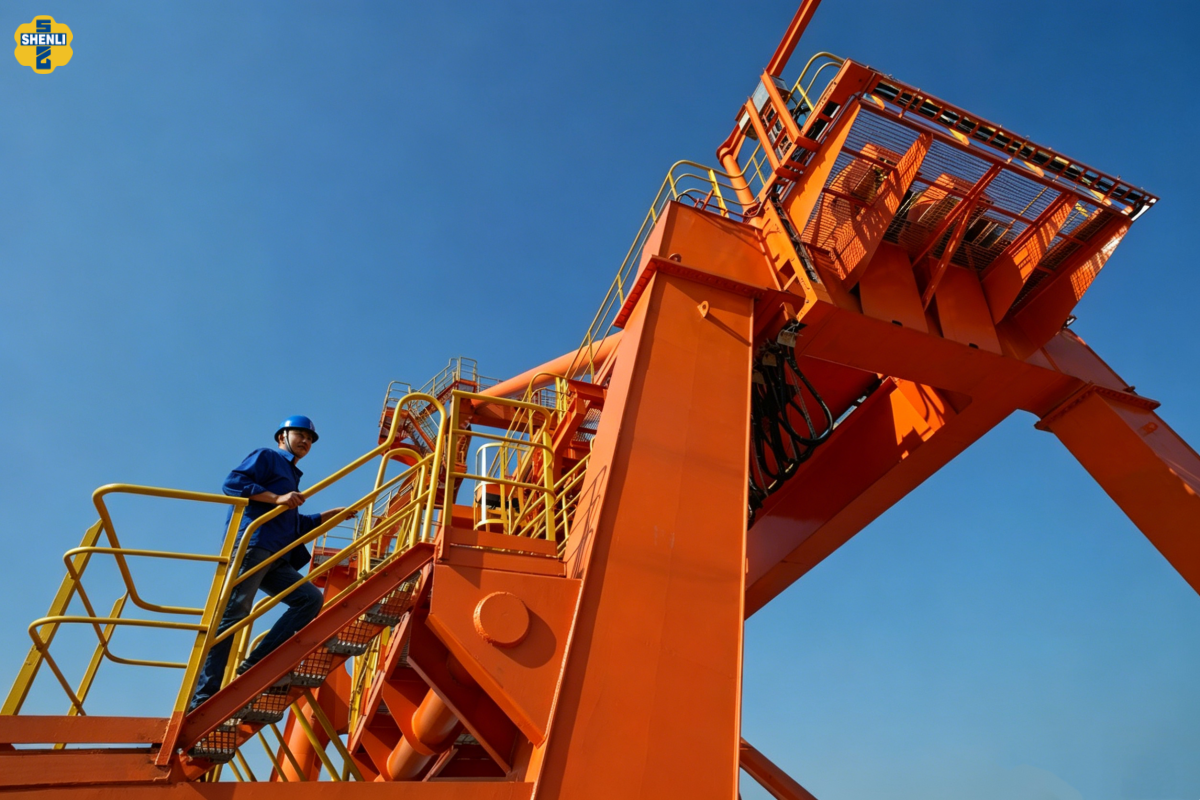
Gantry Crane Predictive Maintenance: How IoT Sensors Reduce Downtime
Gantry Crane Predictive Maintenance: How IoT Sensors Reduce Downtime Why Does Gantry Crane Downtime Cost So Much? Gantry
Contact Us Now
Have questions about our cranes or need help?
Reach out to our friendly team for expert support and guidance.
We are here to help you power your journey towards a greener future !
Address: Crane Industry Park, Xinxiang City Henan Provice
Hot Sales
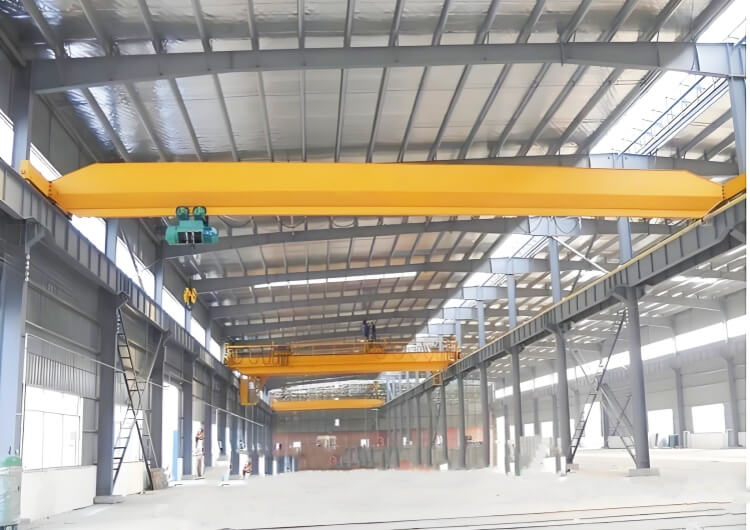
Single girder overhead cranes
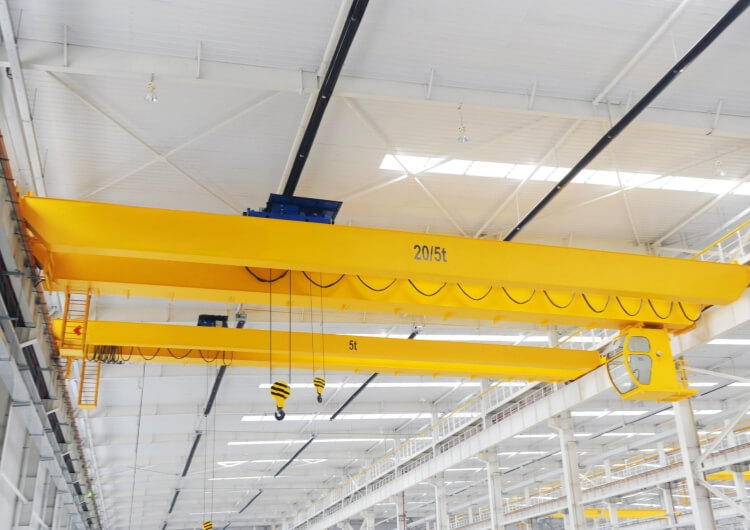
Double girder overhead cranes
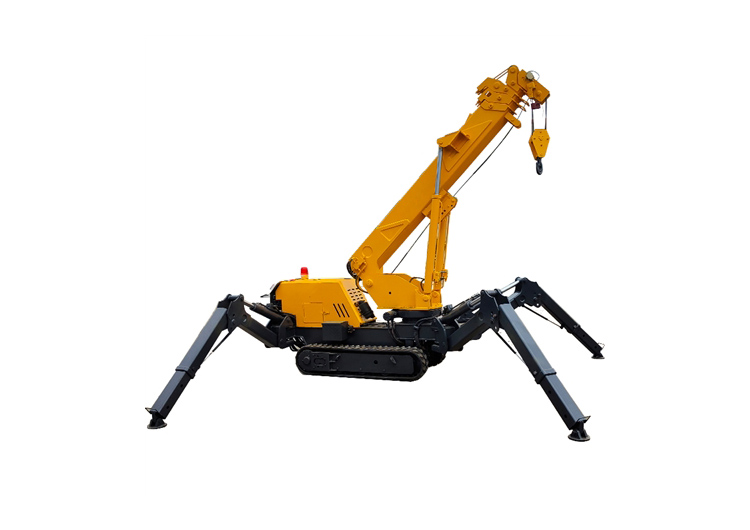
Spider cranes