
Full Gantry vs Semi Gantry Crane: Key Differences and Which One to Choose
Table of Contents
-
Why This Comparison Matters
-
What Is a Full Gantry Crane?
-
What Is a Semi Gantry Crane?
-
Key Differences at a Glance
-
Detailed Comparison by Key Factors
-
Application Guide
-
Cost Comparison
-
Frequently Asked Questions (FAQ)
-
Need a Crane for Your Operation?
1. Why This Comparison Matters
If you make your living in a workshop, factory, or storage yard, you require a way to move heavy objects—maybe beams, huge wooden boards, machinery spares, or unfinished parts. Gantry cranes are great for that.
But here is the thing every new buyer eventually realises: not all gantry cranes are the same. Two of the most common types – full gantry and semi gantry – look similar but work very differently. One has two legs that run on floor rails. The other has one leg, while the opposite side hangs from an existing wall or column.
Choosing the wrong type can mean wasted floor space, higher installation costs, or a crane that just does not fit your building. The right crane, on the other hand, will serve you reliably for years without headaches.
This article breaks down the key differences between full gantry and semi gantry cranes – structure, space requirements, load capacity, stability, installation, maintenance, and cost. By the end, you will know exactly which one suits your workshop, factory, or yard.
Let us first look at each type on its own.
2. What Is a Full Gantry Crane?
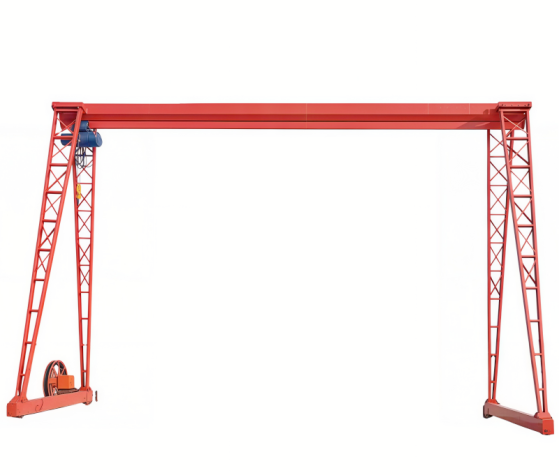
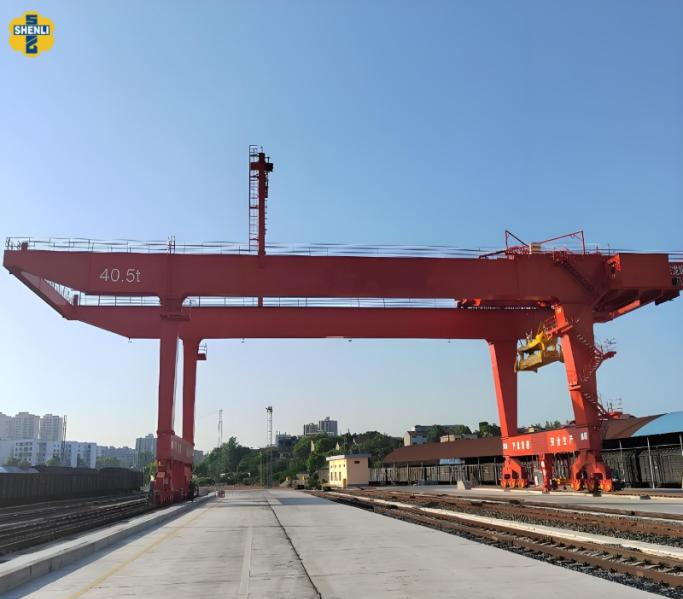
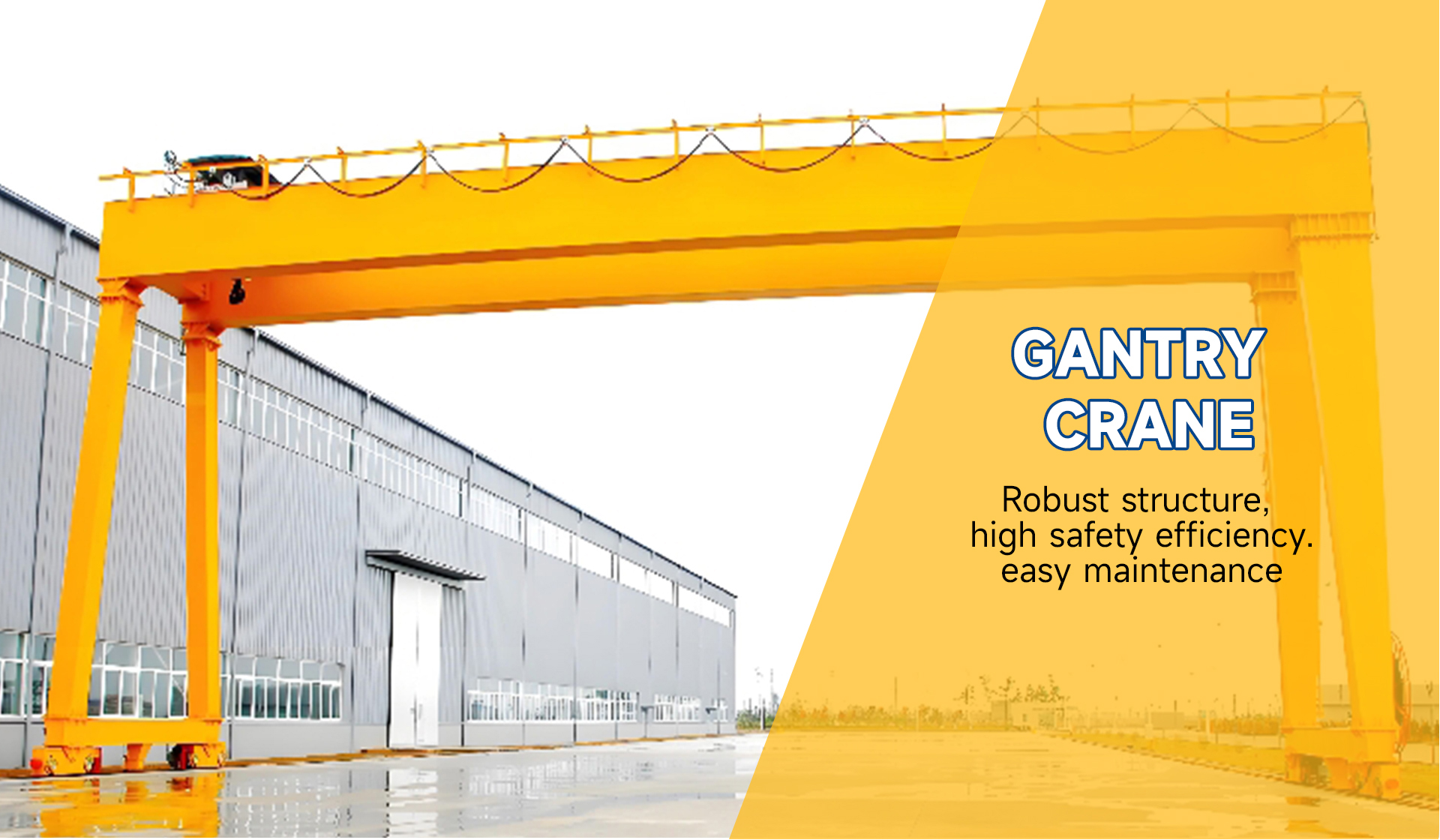
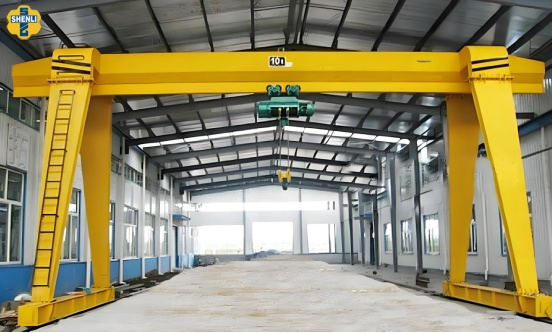
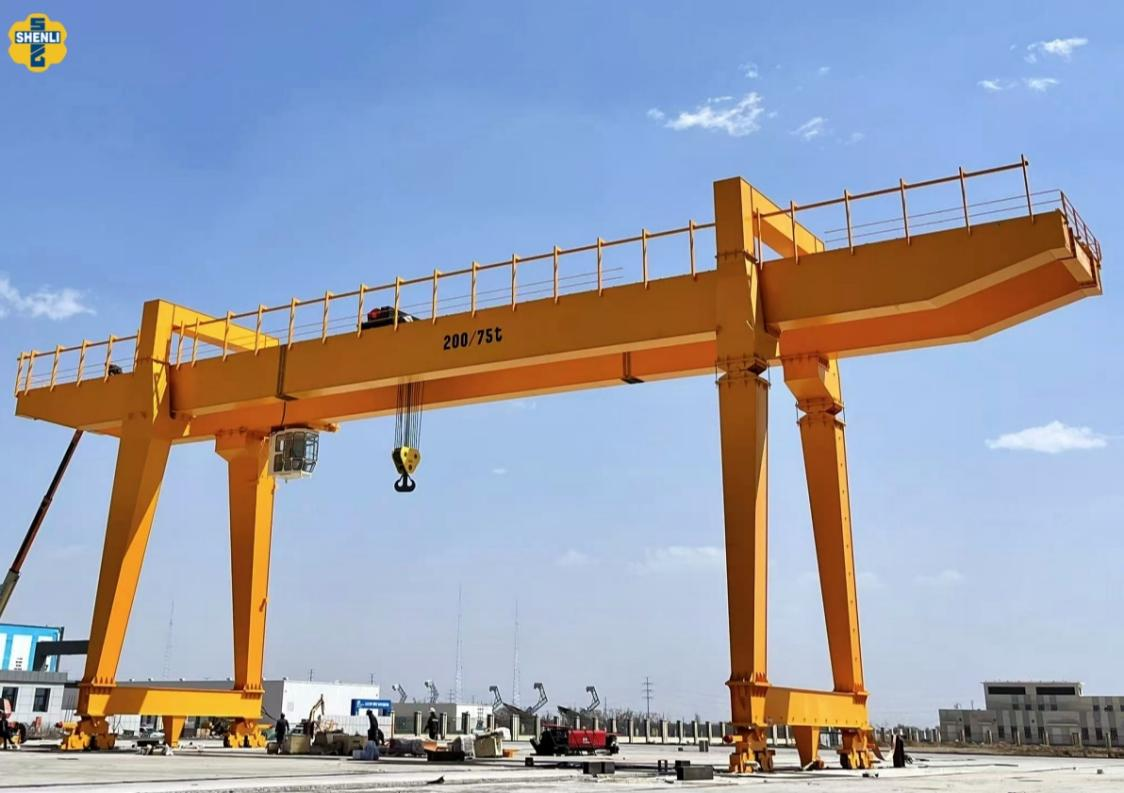
A full gantry crane is what most people picture when they hear “gantry crane”. It has two vertical legs – one on each side – that run on rails embedded in the floor. The horizontal bridge spans the entire workspace between the legs, forming an inverted U-shape over the work area
Both legs support the crane and its load, so the building carries nothing. This makes the crane completely independent of the building structure.
Key characteristics:
-
Structure: Two legs on both sides
-
Movement: Travels on dual ground rails
-
Building dependence: None – fully self-supporting
-
Span: Covers the full width of the work area
-
Typical capacity: 1 ton to 500+ tons
-
Best applications: Wide open spaces, outdoor yards, ports, steel mills, heavy fabrication shops
What it is good for: Heavy lifting, full-coverage movement, and outdoor operations. If you need to move loads from one end of a large workshop to the other, a full gantry crane gives you full coverage of the entire area.
What it costs you: Floor space on both sides. The legs take up space, so you need clear pathways around the entire work area. The installation also requires precise concrete foundations and rails on both sides.
A full gantry crane trades floor space for operational independence. It asks nothing from your building but takes up more of your floor.
3. What Is a Semi Gantry Crane?
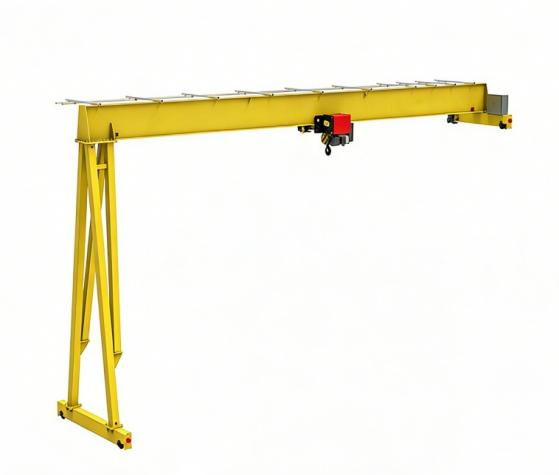
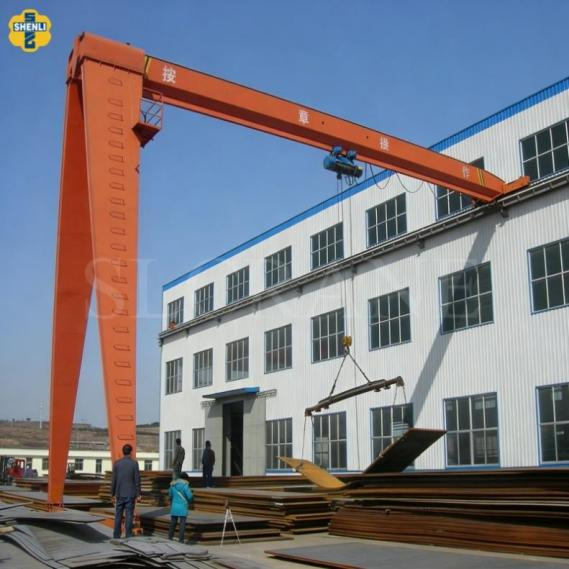
A semi gantry crane is a clever hybrid. It is a mixture of a gantry crane and an overhead crane. It has one ground leg, but the other side runs on an elevated beam attached to a building wall or column.
Only one set of wheels touches your workshop floor. The other side uses your building for support.
Key characteristics:
-
Structure: One leg on floor rail, one side on building runway beam
-
Movement: One ground rail instead of two
-
Building dependence: Partial – one side uses existing building support
-
Span: Covers only the area reachable from the wall side
-
Typical capacity: 5 to 50+ tons
-
Best applications: Narrow workshops, floor‑sensitive layouts, retrofits where you cannot add a second floor rail.
What it is good for: Saving floor space. By removing one leg, you open up a traffic lane or storage area along the wall side. This is especially useful in workshops where floor space is tight or where you need to keep a forklift path clear.
What it costs you: Dependence on your building. The wall or column that supports the crane must be strong enough to handle the extra load. Weak walls can cause alignment problems and safety risks.
A semi gantry crane trades building independence for floor space. It fits where a full gantry cannot – but only if your building is strong enough to help.
4. Key Differences at a Glance
This quick table will help you orient yourself before we go into the deep details.
| Feature | Full Gantry Crane | Semi Gantry Crane |
|---|---|---|
| Legs | Two – both run on ground rails | One – ground rail + building runway beam |
| Support type | Fully self‑standing | Hybrid – partly building‑supported |
| Floor rails required | Two (both sides) | One (leg side only) |
| Floor space footprint | Occupies space on both sides | Occupies space on one side |
| Building modification | None | Requires strong wall/column |
| Span range | Covers entire work area | Covers area from wall to leg |
| Lifting capacity | Higher (can exceed 100 tons) | Moderate (typically 5–50 tons) |
| Application type | Heavy‑duty, full‑width | Light‑to‑medium, space‑saving |
| Outdoor suitability | Excellent | Limited (building support required) |
| Initial installation cost | Higher (two rails + foundation) | Lower (one rail + existing building) |
| Installation time | Longer (civil works on both sides) | Shorter (prep one side only) |
| Building strength requirement | Low (no dependence) | High (wall/column must be verified) |
| Long‑term operating cost | Lower to moderate | Low (fewer wheels, tracks) |
Now, let us expand each of these differences in detail.
5. Detailed Comparison by Key Factors
5.1 Structural Configuration
This is the most fundamental difference.
Full gantry: The crane forms a complete portal – a horizontal beam held up by two legs, with both legs running on floor‑level rails. The entire structure is self‑supporting and independent. The legs sit on both sides of the work area, so the crane can cover the full width.
Semi gantry: One leg runs on a floor rail, while the other side travels on an elevated runway beam attached to a wall or building column. The design is asymmetrical by nature – it “borrows” support from the building rather than providing both legs from the floor up.
Why this matters: Full gantry works anywhere (indoors or outdoors) because it asks nothing from your building. Semi gantry works only where a strong wall or column exists – and that wall must be capable of carrying the crane’s load.
5.2 Space Requirements and Floor Layout
Full gantry: Takes up floor space on both sides. You need clear pathways along each leg, which can block forklift routes or storage areas. If your workshop is narrow, a full gantry crane may be difficult to fit in. However, if you have a wide, open space, the legs do not obstruct workflow as much.
Semi gantry: Uses floor rails on only one side. The wall side requires no legs, so that space remains open for other uses. This makes it a strong candidate for narrow workshops or retrofits where you cannot sacrifice the aisle opposite the wall.
Some estimates suggest a semi gantry crane uses 30 to 40 percent less floor space than a full gantry crane of similar capacity. If every square meter counts, this difference can be critical.
When to favour full gantry: You have a wide, open layout and do not need to preserve aisle space specifically on either side of the work area.
When to favour semi gantry: Your workshop is narrow, or you need to keep one side completely clear for forklifts, storage racks, or foot traffi
5.3 Load Capacity and Span
Full gantry: Handles higher loads. A well‑designed full gantry crane can lift 100 tons or more, depending on the girder configuration. It also covers the entire span of the work area because both legs can travel the full length of the rails.
Semi gantry: Moderate capacity – typically between 5 and 50 tons. The lighter structure and one‑side support limit how much load the crane can safely carry. Semi gantry cranes are not meant for extremely heavy lifts. Their span is also limited – they only cover the area from the wall side out to the leg.
What this means for you: If your main job is very heavy lifts – say steel coils or industrial machinery – a full gantry crane is the correct choice. If your lifts are lighter and you need to free up floor space, a semi gantry crane may be all you need.
5.4 Stability and Building Dependence
Full gantry: Highly stable. Both legs are anchored on ground rails, creating a balanced, rigid frame. The building is not part of the load path, so the crane performs consistently regardless of how strong your walls are.
Semi gantry: Stability depends partly on the building. If the wall or column that supports the crane is sound, the crane will operate smoothly. Weak walls can cause alignment issues, uneven wear, and even safety hazards over time. Before installing a semi gantry crane, a structural check of the supporting wall or column is essential.
Key question to ask yourself: Do you know that your building can safely carry the crane load? If not, full gantry is the safer bet.
5.5 Installation Complexity and Time
Full gantry: More civil work to complete. You need two parallel floor rails, which require a level concrete foundation and precise alignment. This adds both time and cost to the project.
Semi gantry: Simpler installation. Only one ground rail to install. The other side attaches to existing building beams or tracks. Less foundation work means shorter project timelines and lower upfront costs.
Out of the many differences buyers consider, the single vs double rail question is often the starting point [H18†L13-L16]. Not every facility can accommodate a second rail – sometimes due to floor space, sometimes due to budget.
5.6 Maintenance Considerations
Full gantry: Two sets of wheels, two rails, two running surfaces. Maintenance covers both sides, which means more wear parts and slightly higher labour costs over the long term. However, many operators find the extra maintenance acceptable given the full coverage and high capacity the crane provides.
Semi gantry: One set of ground wheels, one ground rail, and a simpler upper track. Fewer moving parts on the floor means lower maintenance costs. The building‑supported side has fewer components that wear compared to a second ground rail assembly.
Long‑term view: Semi gantry cranes generally have lower maintenance requirements because there is simply less hardware on the floor to inspect, lubricate, and replace [5†L6-L9]. That said, the building‑supported side still needs periodic inspection to ensure it remains secure.
5.7 Speed and Positioning Accuracy
Full gantry: Both legs run on dedicated rails, which allows for precise alignment and smooth rolling. Positioning accuracy is generally higher because the structure does not rely on the building for lateral guidance.
Semi gantry: Accuracy can be slightly lower if the building beam is not perfectly aligned with the ground rail. However, modern designs with cable‑free, high‑precision control systems have narrowed the gap considerably.
5.8 Application Suitability (Indoors vs Outdoors)
Full gantry: Works equally well indoors and outdoors. Many full gantry cranes are installed in ports, scrap yards, and shipyards where they operate in wind, rain, and sun. The self‑supporting structure handles outdoor conditions without issue.
Semi gantry: Best suited for indoor environments where the building itself can provide support. Outdoor use is possible only if the wall‑supported side is adequately protected from the elements and the building remains structurally sound. For most outdoor applications, full gantry is the safer choice.
6. Application Guide
Choose a Full Gantry Crane When:
-
Your work covers the full width of the area. You need to move loads from one side to the other, not just near the wall.
-
Your loads are heavy, typically exceeding 30–50 tons, though capacities vary by design.
-
Your building lacks a suitably strong wall or column to support the crane.
-
You work outdoors – in a port, scrap yard, freight yard, or similar environment.
-
You want zero dependence on the building for operational reliability.
-
You are okay with occupying floor space on both sides of the work area.
Typical applications for full gantry cranes: Heavy fabrication, shipbuilding, container yards, steel mills, large warehouses, and any facility with a wide, open span where forklifts and foot traffic can route around both legs.
Choose a Semi Gantry Crane When:
-
Floor space is tight on the wall side – a path must remain clear for forklifts, trucks, or foot traffic.
-
Your loads are moderate, typically under 30–50 tons.
-
Your building has a strong wall, column, or existing runway beam that can safely carry the crane load. A quick structural check is recommended before committing.
-
You need to keep initial installation costs low – only one ground rail means fewer civil works.
-
The crane only needs to cover the area near one wall, not the full workshop width.
-
Lower long‑term maintenance is a priority – one ground rail means fewer wheels and tracks to maintain.
Typical applications for semi gantry cranes: Narrow warehouses, retrofits where you cannot add a second rail, workshops with an existing corbel that can be used for support, facilities where floor space near the wall must stay clear, and operations with light‑to‑medium lifting needs.
7. Cost Comparison
When evaluating the total investment, look beyond the crane itself. Both initial and ongoing costs matter.
| Cost Component | Full Gantry Crane | Semi Gantry Crane |
|---|---|---|
| Crane structure | Higher – more steel and larger legs | Lower – smaller frame, one leg |
| Civil work / foundations | High – two rails with concrete | Lower – one rail, fewer foundations |
| Building modification | None | May require reinforcement of wall/column |
| Rail system | Two ground rails | One ground rail + one elevated runway |
| Installation time | Longer | Shorter |
| Annual maintenance | Moderate to higher | Lower – fewer ground wheels |
| Land / floor space usage | Higher footprint | Lower footprint |
A semi gantry crane reduces installation and material costs compared to a full gantry crane because of the need for only one set of floor rails. In many cases, the lighter structure and smaller drive system also reduce power consumption.
Important note: If your building already has a strong column or wall that can support the crane, the cost advantage of semi gantry grows significantly. If the building requires reinforcement, the gap narrows. Always factor in the condition of your existing structure when doing a cost comparison.
8. Need a Crane for Your Operation?
You have seen the differences between full gantry and semi gantry cranes. Now it is time to apply that knowledge to your own workspace.
At SLKJCrane, we manufacture both types – full gantry, semi gantry, single girder, double girder, and custom designs. We help customers decide based on their actual floor layout, load requirements, and budget – not on a one‑size‑fits-all formula.
We provide:
-
Free consultation to compare full gantry vs semi gantry for your specific site
-
Full gantry cranes: 1–500+ tons, custom spans
-
Semi gantry cranes: 5–50+ tons, one‑side support designs
-
Both single girder and double girder configurations
-
Full documentation: CAD drawings, load charts, ASME/FEM/ISO compliance
-
Worldwide shipping and installation guidance
👉 Contact us today – tell us about your building layout, load weight, span, and whether you work indoors or outdoors. We will recommend the most cost‑effective crane type for your budget and timeline.

Expert in Overhead Crane/Gantry Crane/Jib Crane/Crane Parts Solutions
Eileen
With 20+ years of experience in the Crane Overseas Export Industry, helped 10,000+ customers with their pre-sales questions and concerns, if you have any related needs, please feel free to contact me!
Our Crane Product Range
SLKJcrane provides a wide range of lifting equipment solutions including:
– Single Girder Overhead Crane
– Double Girder Overhead Crane
– Gantry Crane
– Spider Crane
– Marine Crane
Our engineering team can configure safety devices and technical solutions according to project requirements.
FAQ
Semi gantry cranes generally require less groundwork, need only one ground rail, and can be installed more quickly. However, they still require a structural check of the wall or column that will carry one side. The installation itself is generally less labour‑intensive, assuming the building support is ready and verified.
Yes, but with conditions. The building‑supported side must be protected from weather and structurally sound. Outdoor semi gantry cranes exist, but full gantry cranes are more common for outdoor use because they do not rely on the building at all.
Semi gantry cranes have fewer ground components – one set of wheels and one ground rail instead of two. This generally translates into lower long‑term maintenance costs
Not in any practical sense. The structure is completely different. Conversion would essentially mean building a new crane, so it is not a cost‑effective path.
You need a structural engineer to check the existing wall or column. The building must be able to handle the crane load, plus any dynamic forces during operation
Both are safe when properly maintained and used within their rated capacities. Full gantry cranes are fully independent of building condition, which can be an advantage in older facilities. Semi gantry cranes are safe if the supporting wall or column is in good condition and the installation is correct.
Semi gantry spans vary widely. Typical spans range from 6 to 30 metres, but custom designs can go higher. The practical limit depends on the load capacity and the building support.
Yes. Both full gantry and semi gantry cranes can be equipped with remote controls, variable frequency drives, and automation features. The choice of crane type does not block automation readiness, though structural assessment for semi gantry automation still applies.
Latest Blog
Lorem ipsum dolor sit amet, consectetur adipiscing elit, sed do eiusmod tempor incididunt ut labore et dolore magna aliqua
Gantry Crane Price Guide 2026
Gantry Crane Price Guide 2026: Cost by Tonnage, Type & Configuration Table of Contents Why a Gantry Crane
Hidden Costs of Importing a Gantry Crane
Hidden Costs of Importing a Gantry Crane: Shipping, Customs and Installation Guide Why Is a Gantry Crane Quote
Used vs New Gantry Crane: Total Cost of Ownership Explained
Used vs New Gantry Crane: Which One Has Lower Total Cost of Ownership (TCO)? Introduction When purchasing a
Gantry Crane Predictive Maintenance: How IoT Sensors Reduce Downtime
Gantry Crane Predictive Maintenance: How IoT Sensors Reduce Downtime Why Does Gantry Crane Downtime Cost So Much? Gantry
Contact Us Now
Have questions about our cranes or need help?
Reach out to our friendly team for expert support and guidance.
We are here to help you power your journey towards a greener future !
Address: Crane Industry Park, Xinxiang City Henan Provice
Hot Sales
Single girder overhead cranes
Double girder overhead cranes
Spider cranes