
Gantry Crane vs Overhead Crane: Which One Do You Need?
Table of Contents
Why This Comparison Matters
What Is an Overhead Crane? (Bridge Crane)
What Is a Gantry Crane?
Key Differences at a Glance (Comparison Table)
Detailed Breakdown: Support, Mobility, Cost, Installation
Pros and Cons of Each Type
Which One Should You Choose? (Application Guide)
Can They Be Used Together?
Frequently Asked Questions (FAQ)
Need a Crane for Your Operation?
1. Why This Comparison Matters
If you are in the market for a heavy lifting solution, you have probably seen two main options: gantry cranes and overhead cranes (also called bridge cranes). They look similar – both have a horizontal beam (bridge) and a trolley that moves loads left and right. But the way they are supported, installed, and used is fundamentally different.
Choosing the wrong type can lead to expensive building modifications, lower productivity, or even safety risks. On the other hand, the right crane will serve you reliably for 20 years or more.
This article breaks down every important difference between gantry cranes and overhead cranes. You will learn how they work, where each type shines, and exactly how to decide which one fits your workshop, yard, or factory.
Let us start with the basics.
2. What Is an Overhead Crane? (Bridge Crane)
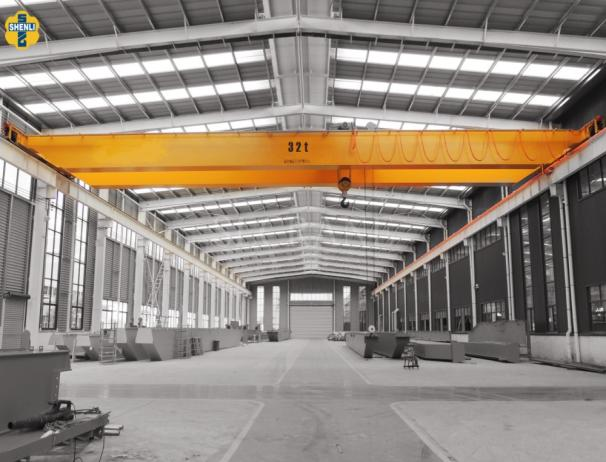
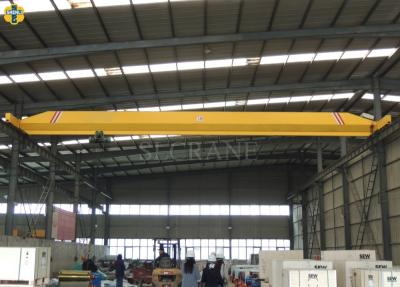
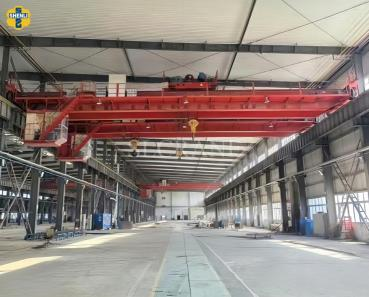
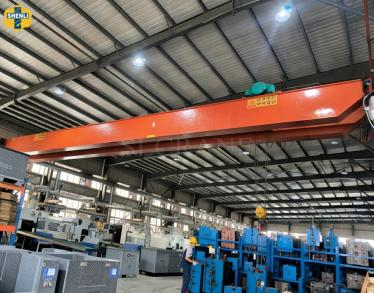
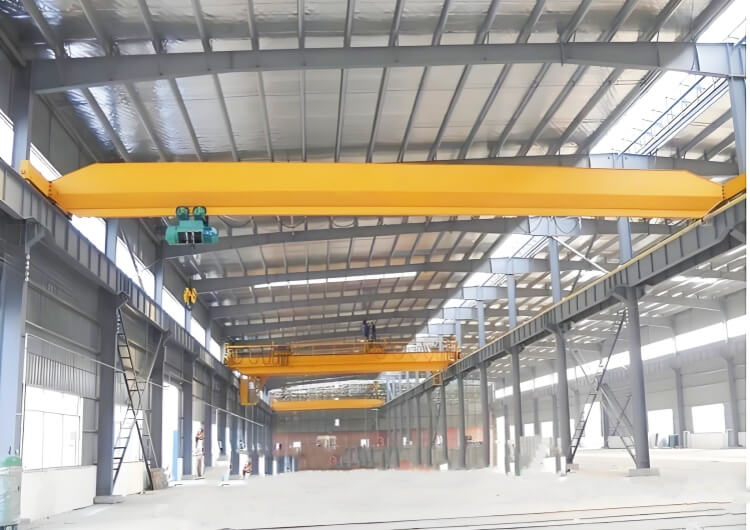
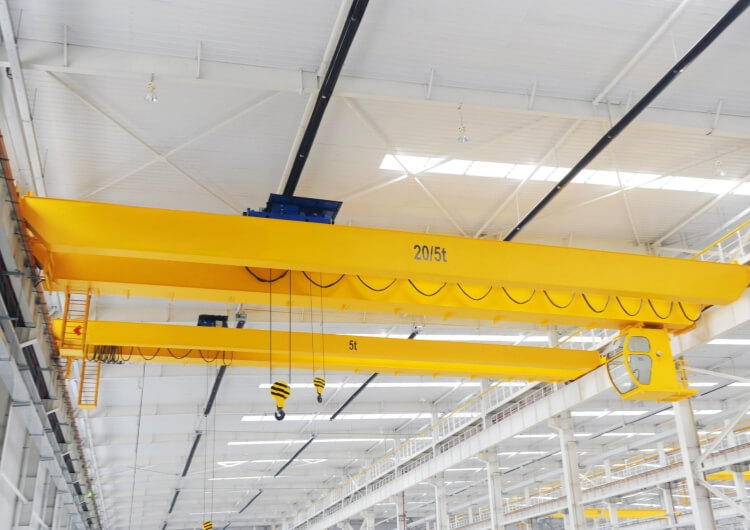
An overhead crane (often called a bridge crane or EOT crane – Electric Overhead Traveling crane) is a lifting machine where the bridge runs on elevated runways. Those runways are attached to the building columns or roof structure.
In other words, the building itself carries the weight of the crane plus the lifted load. That is why factories and warehouses that install overhead cranes need strong steel columns and proper roof reinforcement.
Common names: bridge crane, EOT crane, electric overhead traveling crane, suspended crane.
Typical applications: indoor manufacturing plants, warehouses, assembly lines, machine shops – anywhere the building is strong enough and the work area is permanent.
Example: a large automotive plant uses overhead cranes to move engine blocks from one station to the next. The building was designed with crane runways built into the columns.
An overhead crane is building‑dependent. You cannot move it to another location without tearing down the runways.
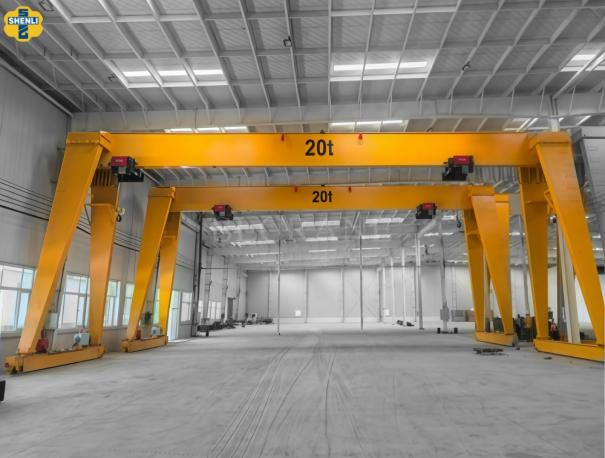
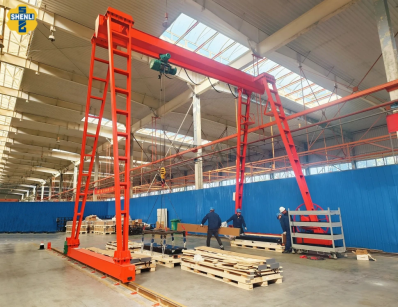
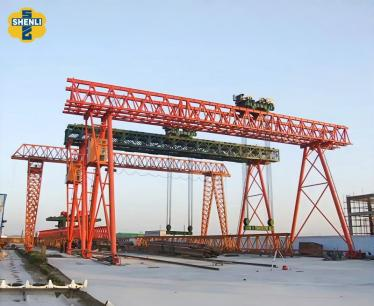
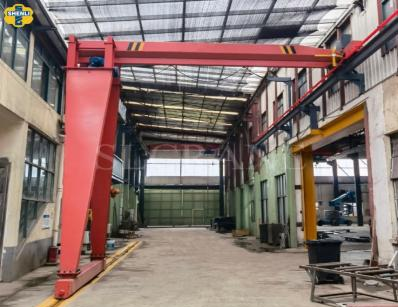
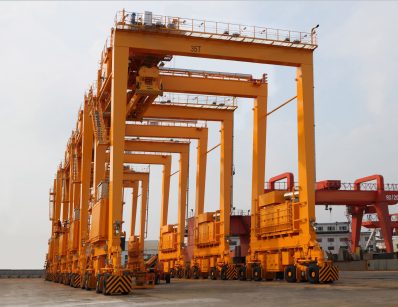
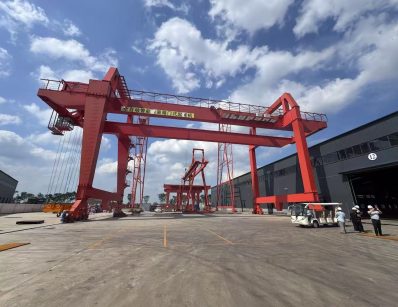
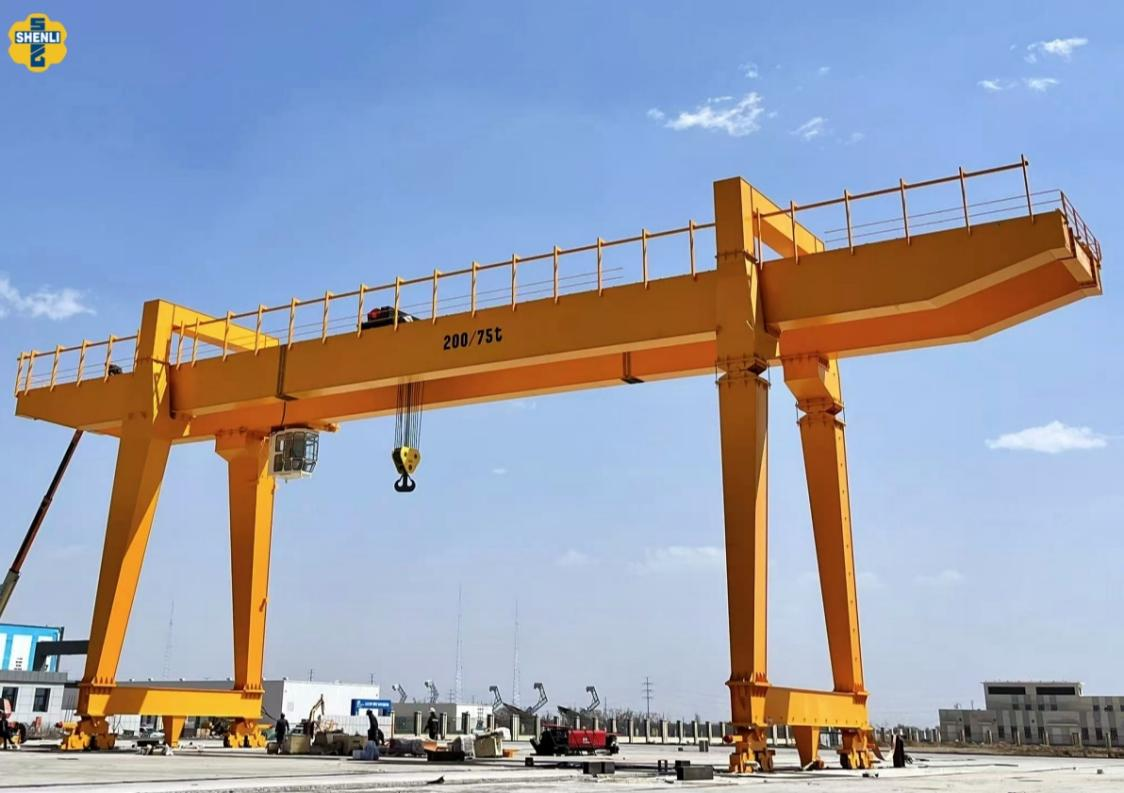
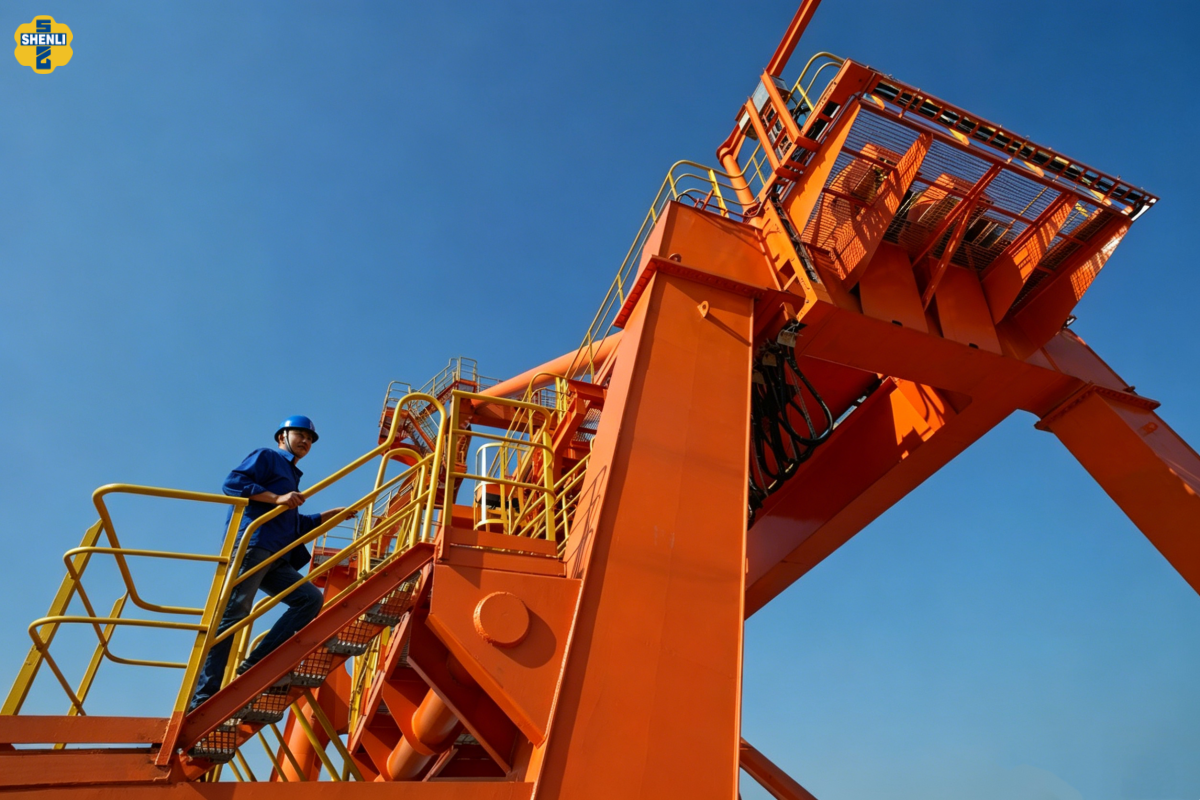
A gantry crane is a self‑supporting lifting machine. Instead of hanging from building structures, it stands on its own legs. Those legs run on ground‑level wheels, rails, or rubber tires.
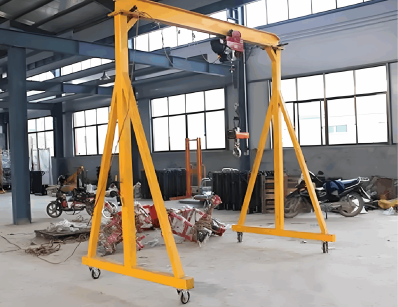
Because the crane does not rely on the building, you can use it indoors or outdoors. Some gantry cranes are even portable – you can push them around a workshop and store them when not in use.
Common names: gantry crane, portal crane, full gantry crane, semi‑gantry crane, RTG (rubber‑tired gantry), RMG (rail‑mounted gantry).
Typical applications: outdoor yards, ports, steel service centers, precast concrete plants, shipyards, and also small workshops (portable units).
Example: a steel yard uses a rail‑mounted gantry crane to move steel coils from storage trucks to the processing line. The crane runs on ground rails and does not touch the building at all.
A gantry crane is building‑independent. It works where overhead cranes cannot – outdoors, in temporary sites, or in buildings not designed for heavy lifting.
4. Key Differences at a Glance
Here is a quick side‑by‑side comparison. Use this as your first filter.
| Feature | Overhead Crane (Bridge Crane) | Gantry Crane |
|---|---|---|
| Support structure | Building columns / roof runways | Self‑supporting legs on ground |
| Building requirement | Strong building needed (reinforced columns) | None – no structural modification |
| Primary location | Indoors (factories, warehouses) | Indoors & outdoors (yards, ports, workshops) |
| Mobility | Fixed along elevated runways | Can move on ground rails, tires, or casters |
| Typical capacity | 1–100+ tons (common 5–50 tons) | 0.5–500+ tons |
| Span range | 5–35 meters (typical) | 2–50+ meters |
| Installation complexity | High – requires structural engineering | Low to medium |
| Cost (initial) | Medium to high (building mods add cost) | Low to high (portable cheap, large RTG expensive) |
| Best for | Permanent indoor heavy lifting | Flexible, indoor/outdoor, temporary or permanent |
Now let us go deeper into each difference.
5. Detailed Breakdown
5.1 Support Structure – The Main Difference
This is the single most important difference.
Overhead crane: The crane’s bridge runs on runway beams that are bolted or welded to the building columns. The building must carry the crane’s own weight plus the load. That means the columns need to be strong enough (usually steel I‑beams) and the roof structure must be designed for lateral forces.
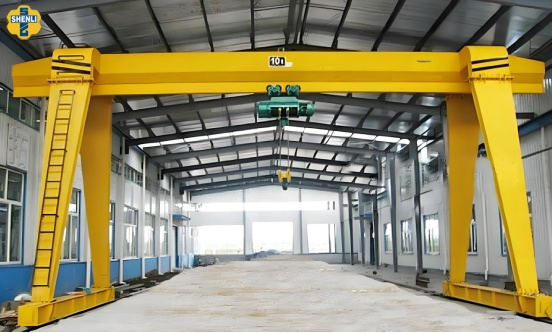
Gantry crane: The crane stands on its own legs. The building carries nothing. The legs run on wheels, rubber tires, or rails laid on the ground. You can place a gantry crane anywhere – inside, outside, on a temporary site – without asking a structural engineer to approve your building.
Why this matters: If your building is old, or if you rent the space, or if you work outdoors, a gantry crane is your only practical choice. If you own a modern factory with reinforced columns and you never need to move the crane, an overhead crane can be a clean solution.
5.2 Mobility – Can the Crane Move?
Overhead crane: The crane travels along its fixed elevated runways. It can move the length of the building, but that is the only travel path. You cannot move the crane to another bay or another building without dismantling and reinstalling the runways.
Gantry crane: Mobility is a spectrum.
Rail‑mounted gantry cranes (RMG) – travel on fixed ground rails. They are precise and stable but cannot leave the rails.
Rubber‑tired gantry cranes (RTG) – can steer and move freely around a yard. Very flexible.
Portable gantry cranes – on casters or wheels. One or two people can push them to different spots in a workshop.
If you need to serve multiple work areas or a large outdoor yard, a gantry crane (especially RTG or portable) is far more flexible.
5.3 Installation Complexity & Cost
Overhead crane installation:
Engineering assessment of building strength.
Possibly reinforce columns and roof.
Install runway beams along the building length.
Assemble the crane on the runways.
Electrical wiring along the building.
This is a major project. It can take weeks and often requires shutting down part of the facility.
Gantry crane installation:
Portable units: unbox, assemble (no tools sometimes), ready in 30 minutes.
Rail‑mounted units: lay ground rails, level them, then place the crane on the rails. No building work.
Rubber‑tired units: deliver, check tire pressure, start using.
Installation is usually faster and cheaper because you are not modifying the building.
Cost example: A 5‑ton overhead crane might have a similar crane price to a 5‑ton single girder gantry crane, but the overhead crane will also require runway beams, structural work, and possibly a building upgrade. The gantry crane just sits on the floor.
5.4 Indoor vs Outdoor Use
Overhead crane: Almost always indoors. Rain, snow, and UV light are bad for the exposed runways, and the building protects the crane. You could build an outdoor shelter for an overhead crane, but that is rare.
Gantry crane: Built for outdoor use. Many gantry cranes have corrosion protection, weather‑sealed electrical components, and wind brakes. You see them in ports, scrap yards, and shipyards working in all weather.
Rule of thumb: If your lifting happens under a roof, both types can work. If your lifting happens under the sky, you need a gantry crane (or a very specialised outdoor overhead crane – almost never cost‑effective).
6. Pros and Cons of Each Type
Overhead Crane (Bridge Crane)
Pros:
Clean floor space – no legs to walk around.
Stable and precise – building support adds rigidity.
Often higher lifting height for the same overall height (no legs to clear).
Good for very long buildings and multiple cranes on same runways.
Cons:
Building must be strong – expensive if not already designed for cranes.
Permanent installation – you cannot move it to another site.
High installation cost and lead time.
Outdoor use is difficult (needs weather protection for runways).
Gantry Crane
Pros:
No building modifications – place it anywhere.
Works indoors and outdoors.
Flexible – portable units can be moved around.
Wide capacity range – from 0.5 ton to 500+ tons.
Faster installation and lower upfront cost for many applications.
Cons:
Legs take up floor space – you need to walk around them.
For very long spans, heavy gantry cranes require ground rails (still less building work than overhead).
Rubber‑tired units have higher operating cost (fuel/tires) and lower precision than rail‑mounted.
Portable units are not for heavy daily use (lower duty cycle).
7. Which One Should You Choose? (Application Guide)
Ask yourself these five questions. Your answers will point directly to the right type.
Question 1: Where will the crane operate?
-
Indoors only → both possible. Go to question 2.
-
Outdoors at all → gantry crane. No question.
Question 2: Does your building have reinforced crane runways?
-
Yes, already installed → overhead crane may be cheaper and cleaner.
-
No, or you are not sure → gantry crane. Building modifications are expensive and slow.
Question 3: Do you need to move the crane to different areas or buildings?
-
No, one fixed area → overhead crane works if building is strong. Otherwise gantry.
-
Yes, multiple spots → gantry crane (portable or rubber‑tired).
Question 4: What is your maximum load?
-
Under 20 tons → both types available. Decision based on building and mobility.
-
Over 20 tons → both types available but gantry cranes are often easier to install for heavy loads (no building reinforcement needed).
Question 5: Is this a temporary or permanent setup?
-
Permanent (10+ years) → both are fine. Choose based on other factors.
-
Temporary or you might move → gantry crane. Overhead cranes are permanent.
Quick decision matrix:
| Your situation | Recommended crane type |
|---|---|
| Permanent indoor factory with existing runway beams | Overhead crane |
| Outdoor yard (container, steel, scrap, precast) | Gantry crane |
| Workshop with no reinforced columns | Gantry crane (portable or single girder) |
| Rented building, cannot modify structure | Gantry crane |
| Need to lift in multiple indoor locations | Gantry crane (portable) |
| Narrow space with no room for legs | Overhead crane (if building supports it) |
| Temporary construction site | Gantry crane (portable or small RTG) |
Still unsure? When in doubt, a gantry crane is almost always the safer choice – it works everywhere, does not require building work, and can be resold or moved more easily. The only time an overhead crane clearly wins is when you already have a building with strong crane runways installed and you never need to move the crane.
8. Can They Be Used Together?
Absolutely. Many large facilities use both.
For example:
A steel service center uses an overhead crane inside the processing building (clean, precise lifting over the slitting line). Outside, they use a gantry crane to unload steel coils from trucks and store them in the yard.
A port uses ship‑to‑shore gantry cranes (a type of gantry) to unload containers, then uses overhead cranes inside the warehouse for stuffing and stripping.
There is no rule that says you must pick one. Start with the crane that solves your most urgent need, then add the other type later if the job requires it.
10. Need a Crane for Your Operation?
You have seen the differences between gantry cranes and overhead cranes. Now it is time to apply that knowledge to your own workshop, yard, or factory.
At SLKJCrane, we manufacture both types – and we help customers choose the right one without upselling. Tell us about your building, your loads, and how you plan to work.
We provide:
Free consultation to compare gantry vs overhead for your specific site
Gantry cranes: portable, single girder, double girder, rail‑mounted (RMG), rubber‑tired (RTG)
Overhead cranes (EOT cranes): single girner, double girder, top‑running, under‑running
Full documentation: CAD drawings, load charts, ASME/FEM/ISO compliance
Worldwide shipping and installation guidance
👉 Contact us today – describe your building, load weight, span, and whether you work indoors or outdoors. We will recommend the most cost‑effective crane type for your budget and timeline.

Expert in Overhead Crane/Gantry Crane/Jib Crane/Crane Parts Solutions
Eileen
With 20+ years of experience in the Crane Overseas Export Industry, helped 10,000+ customers with their pre-sales questions and concerns, if you have any related needs, please feel free to contact me!
Our Crane Product Range
SLKJcrane provides a wide range of lifting equipment solutions including:
– Single Girder Overhead Crane
– Double Girder Overhead Crane
– Gantry Crane
– Spider Crane
– Marine Crane
Our engineering team can configure safety devices and technical solutions according to project requirements.
9. Frequently Asked Questions (FAQ)
Q: Which is cheaper – a gantry crane or an overhead crane?
A: It depends. For the same capacity, a single girder gantry crane often has a lower initial price than an overhead crane plus its building runways. However, if your building already has runways installed, the overhead crane may be cheaper because you do not buy the legs. Portable gantry cranes are the cheapest of all.
Q: Can I use an overhead crane outdoors?
A: Generally no. Overhead cranes rely on building support, and outdoor runways are exposed to rain, rust, and temperature changes. Some specialised outdoor overhead cranes exist, but they are rare and expensive. A gantry crane is the standard outdoor solution.
Q: Which type is safer?
A: Both are safe when properly designed and maintained. Overhead cranes have no legs on the floor, so there is no tripping hazard. Gantry cranes have legs that take up space, but modern designs include warning lights and bumpers. The most important safety factor is correct selection (capacity, duty cycle) and regular inspection.
Q: Can a gantry crane be as precise as an overhead crane?
A: Yes. Rail‑mounted gantry cranes (RMG) are extremely precise – they are used for stacking containers to millimeter accuracy. Rubber‑tired gantry cranes are slightly less precise than rail‑mounted but still accurate enough for most outdoor work. Portable gantry cranes are less precise because they move on casters, but for small workshops that is usually fine.
Q: Do I need a building permit for a gantry crane?
A: It depends on your local regulations. For small portable units (under 2 tons), usually no. For large rail‑mounted gantry cranes (over 10 tons), you may need a foundation permit and safety inspection. Overhead cranes almost always require building permits because they modify the structure. Check with your local authority.
Q: Which type lasts longer?
A: Both can last 20–30 years with proper maintenance. Overhead cranes have fewer moving parts on the ground (no wheels on floors), but they depend on the building’s condition. Gantry cranes have more exposed components (wheels, rails, tires) that need regular maintenance. In harsh outdoor environments, a well‑maintained gantry crane is very durable.
Q: Can I convert an overhead crane into a gantry crane?
A: Not really. The structure is completely different. An overhead crane lacks legs and a ground‑level running mechanism. You would be building a new crane. It is better to sell the overhead crane and buy the right gantry crane for your needs.
Q: What is an EOT crane?
A: EOT stands for Electric Overhead Traveling crane. It is simply another name for a standard overhead bridge crane with electric motors. In this comparison, EOT crane = overhead crane.
Latest Blog
Lorem ipsum dolor sit amet, consectetur adipiscing elit, sed do eiusmod tempor incididunt ut labore et dolore magna aliqua
Hidden Costs of Importing a Gantry Crane
Hidden Costs of Importing a Gantry Crane: Shipping, Customs and Installation Guide Why Is a Gantry Crane Quote
Used vs New Gantry Crane: Total Cost of Ownership Explained
Used vs New Gantry Crane: Which One Has Lower Total Cost of Ownership (TCO)? Introduction When purchasing a
Gantry Crane Predictive Maintenance: How IoT Sensors Reduce Downtime
Gantry Crane Predictive Maintenance: How IoT Sensors Reduce Downtime Why Does Gantry Crane Downtime Cost So Much? Gantry

Automated Gantry Crane: Benefits, Cost and ROI for Smart Factories
Automated Gantry Crane: Benefits, Cost and ROI for Smart Factories Why Are More Factories Investing in Automated Gantry
Contact Us Now
Have questions about our cranes or need help?
Reach out to our friendly team for expert support and guidance.
We are here to help you power your journey towards a greener future !
Address: Crane Industry Park, Xinxiang City Henan Provice
Hot Sales
Single girder overhead cranes
Double girder overhead cranes
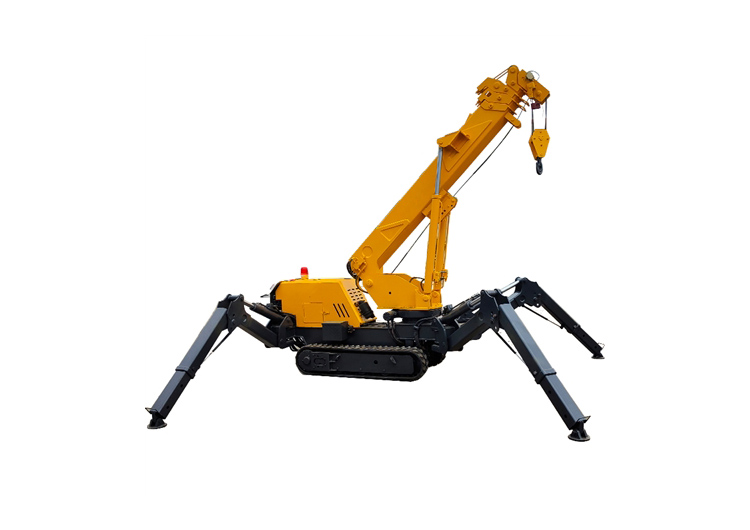
Spider cranes