
Steel Mill Overhead Crane Failure: Why It Happens (And How to Avoid It)
Table of Contents
-
What Is a Gantry Crane?
-
Gantry Crane vs. Overhead Crane: What’s the Difference?
-
Main Types of Gantry Cranes
-
How a Gantry Crane Works (Step by Step)
-
Key Components of a Gantry Crane
-
Common Applications by Industry
-
Safety Standards and Regulations
-
Factors to Consider When Selecting a Gantry Crane
-
Frequently Asked Questions (FAQ)
1. What Is a Gantry Crane?
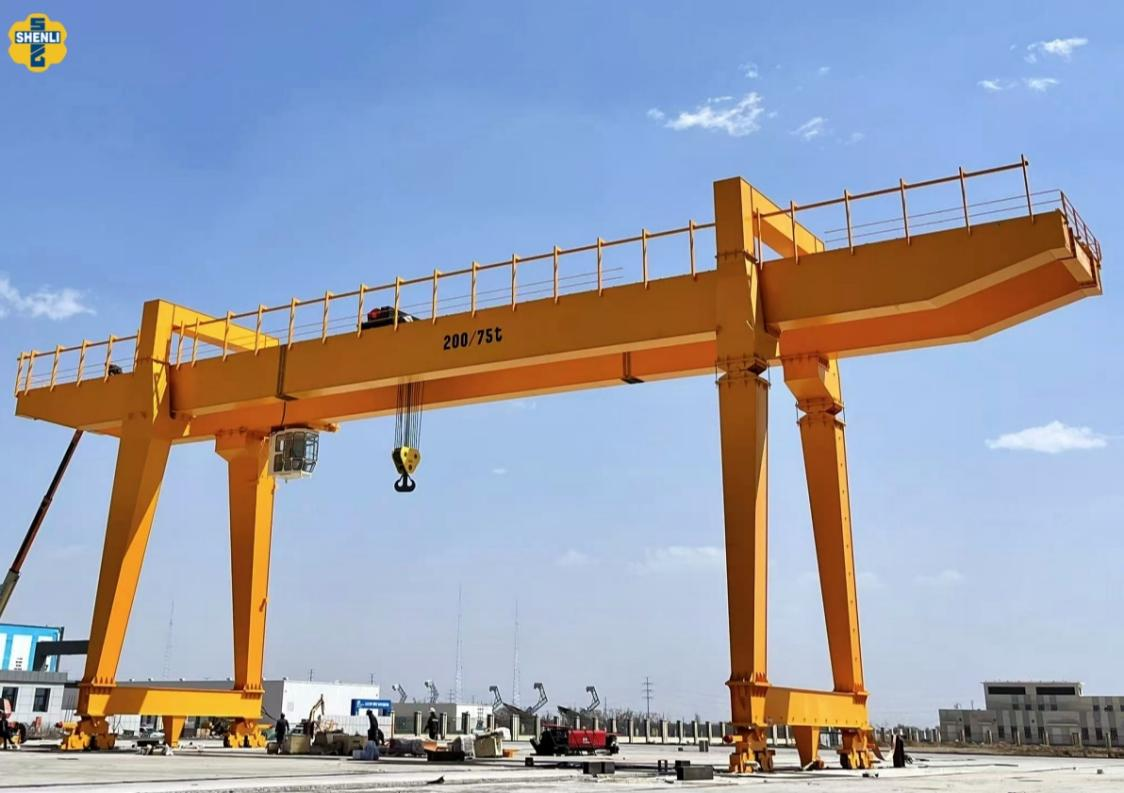
A gantry crane is a common type of industrial lifting equipment consisting of a main girder, legs, hoisting mechanism, and traveling mechanism. Its features include:
-
A “door” shaped structure: the main girder is supported by legs on both sides, allowing it to straddle the workpiece.
-
It runs on wheels or rails through its legs – no need for building support, roof reinforcement, or wall‑mounted runways. Just place it on the ground and it is ready to work.
-
Wide size range: from small units used in workshops to lift engines, to giant cranes that handle extremely heavy loads in ports and shipyards – adaptable to many applications.
2. Gantry Crane vs. Overhead Crane: What's the Difference?
The core difference lies in how each type is supported.
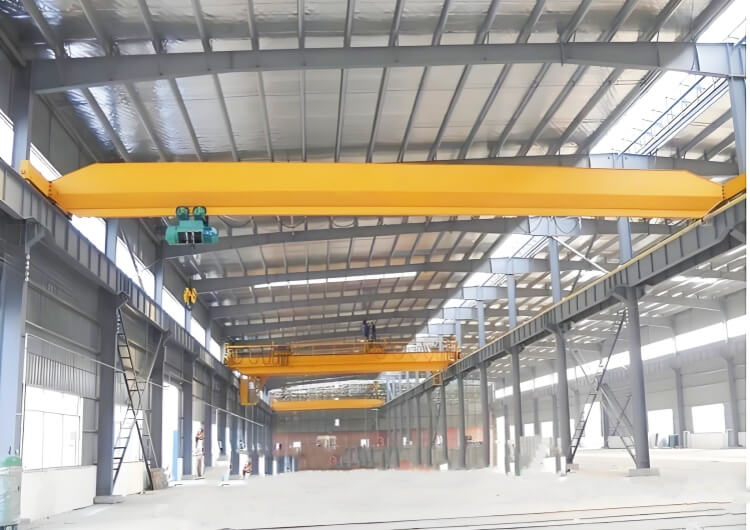
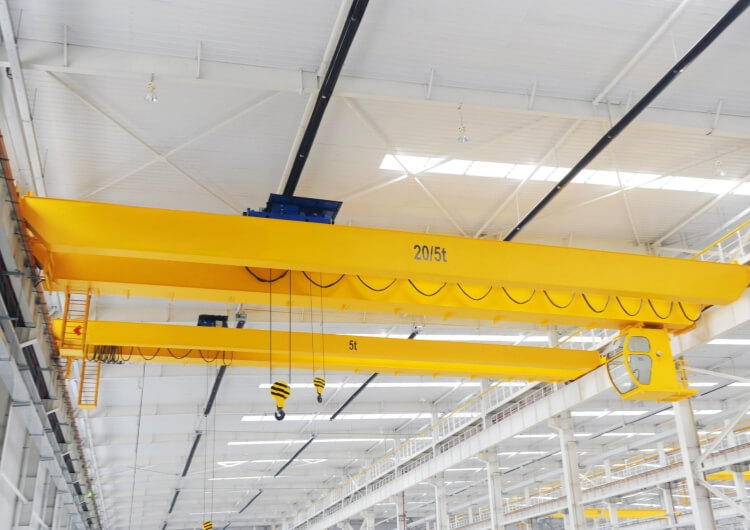
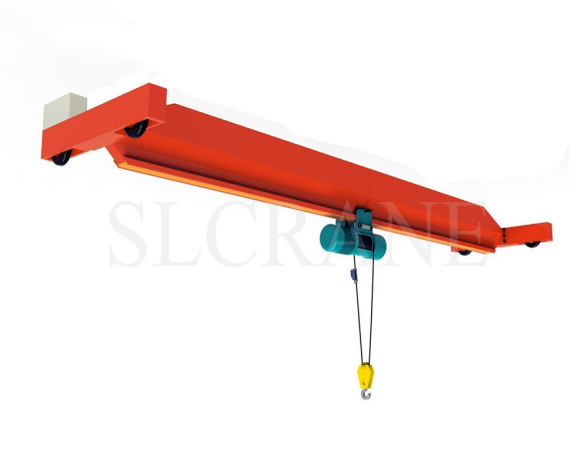
Overhead crane (bridge crane): The entire structure is mounted on runway beams attached to building columns or the roof. The crane travels along those runways and relies on the building for support.
Gantry crane: The bridge is supported by freestanding legs that run on ground‑level rails or wheels. It does not rely on the building and requires no structural modification.
Quick comparison table:
| Feature | Gantry Crane | Overhead Crane |
|---|---|---|
| Support structure | Freestanding legs running on the ground | Building‑mounted runway beams |
| Primary location | Outdoors (yards, ports) and indoors | Primarily indoors (factories, warehouses) |
| Mobility | Flexible and movable | Moves on fixed elevated runways |
| Building requirement | No structural reinforcement needed | Requires building support |
Selection advice:
Choose a gantry crane when working outdoors or where no building support is available. An overhead crane is more cost‑effective for long‑term indoor use with strong building support. Many large facilities actually use both types together.
3. Main Types of Gantry Cranes
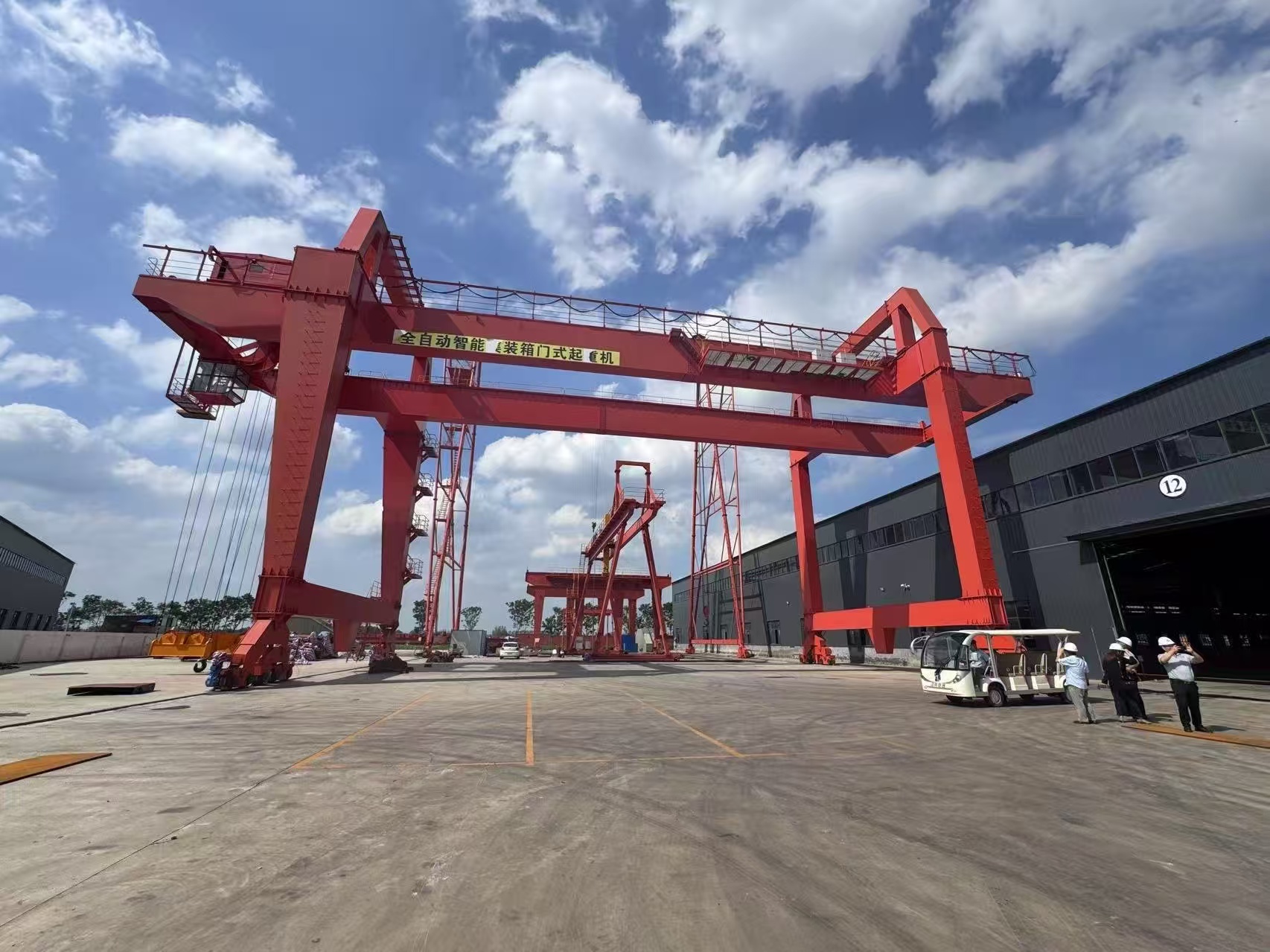
Full Gantry Crane
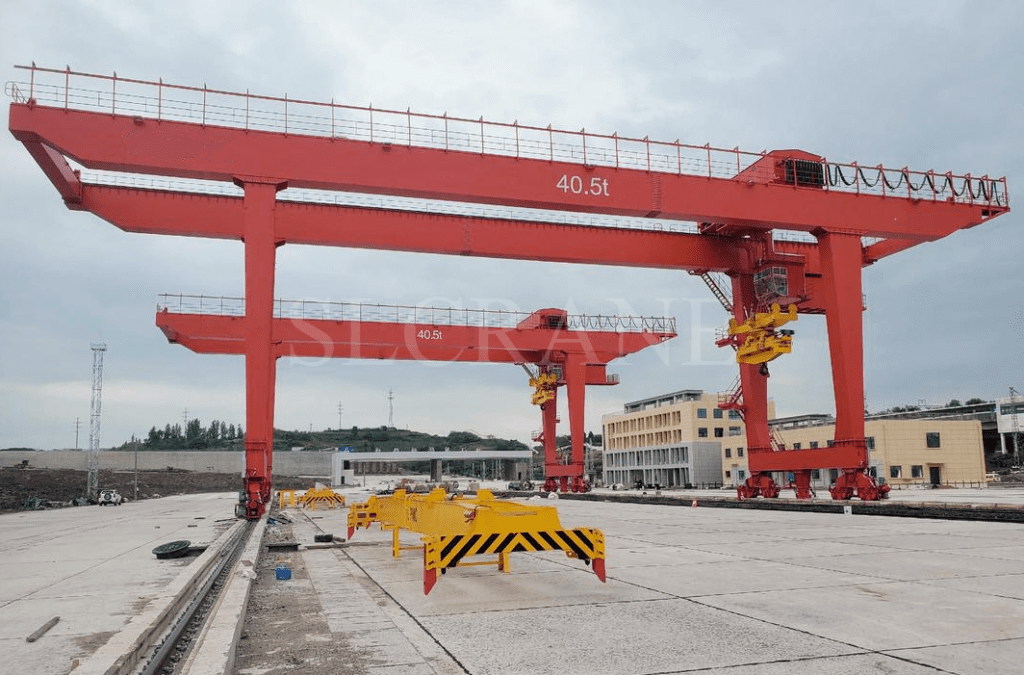
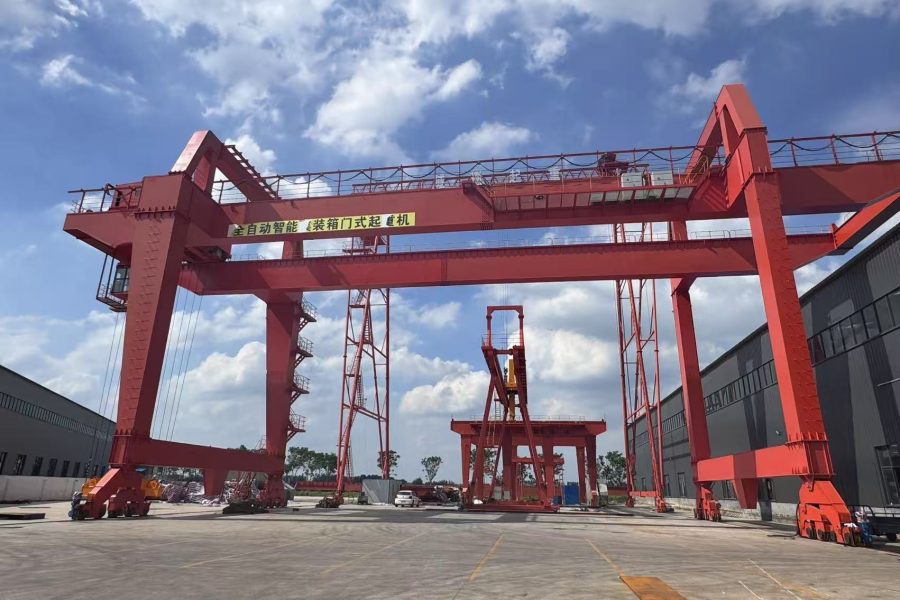
Two rigid legs + ground rail travel, high stability. Capacity: 5–500+ tons, span: 10–50+ meters. Used in ports, shipyards, steel mills, and other heavy‑duty applications.
Semi Gantry Crane
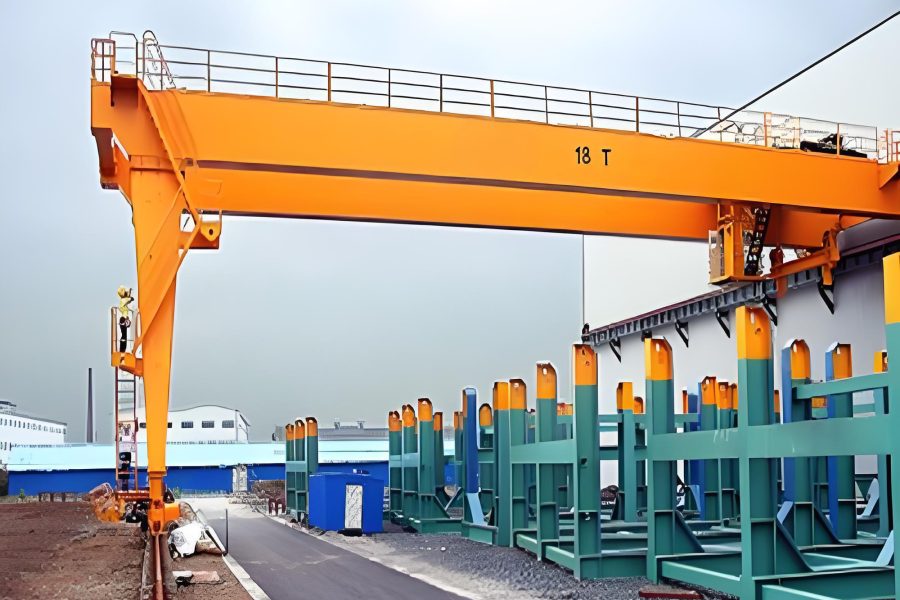
One leg runs on the ground, the other side is supported by the building. Saves floor space on one side. Ideal for loading/unloading materials next to a building wall.
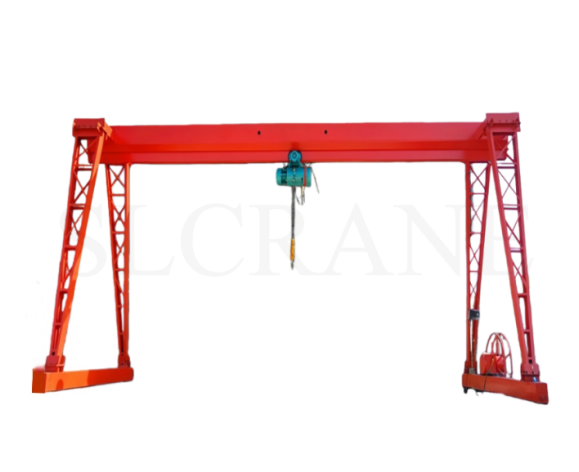
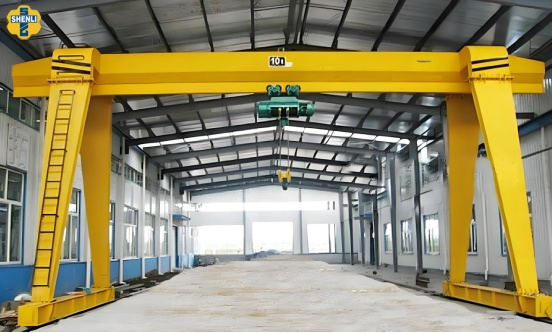
Single Girder Gantry Crane
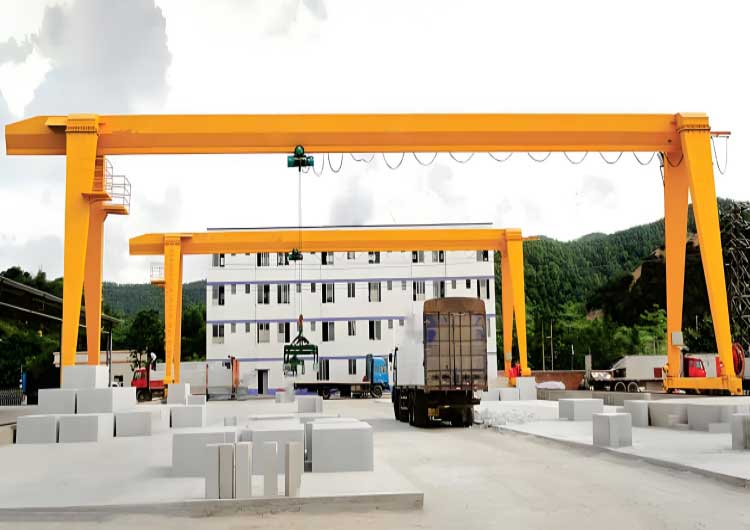
Single main girder supporting the hoist. Simple structure, low cost. Capacity up to 32 tons, span up to 30 meters. Suitable for light to medium loads in small workshops.
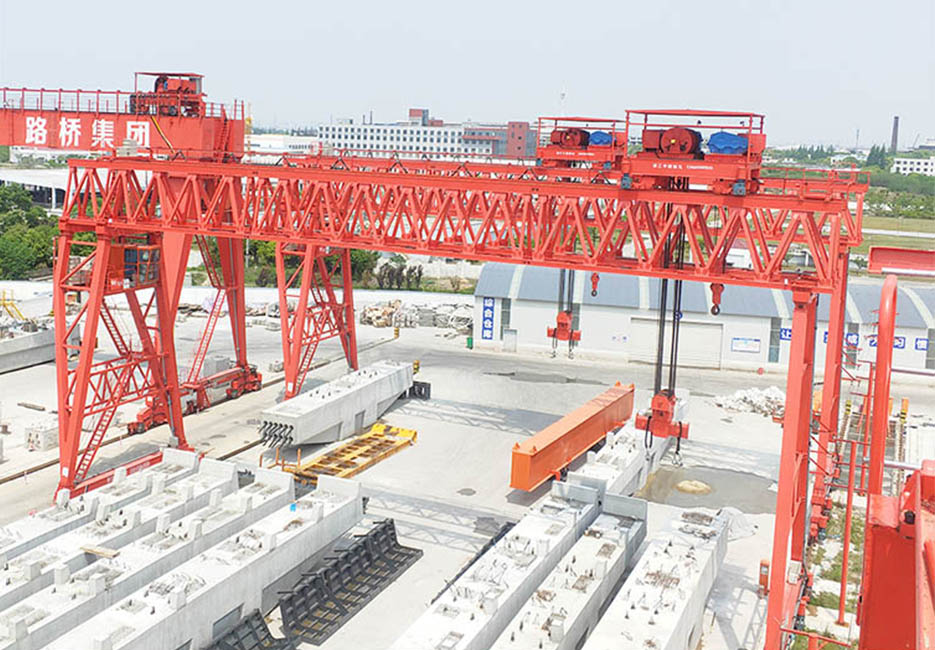
Double Girder Gantry Crane
Two main girders – higher lifting height and better stability. Capacity from 5 tons to over 500 tons. Can be equipped with dual hoists or anti‑sway systems. Used for heavy loads and high‑frequency operation
Rubber Tired Gantry Crane (RTG)
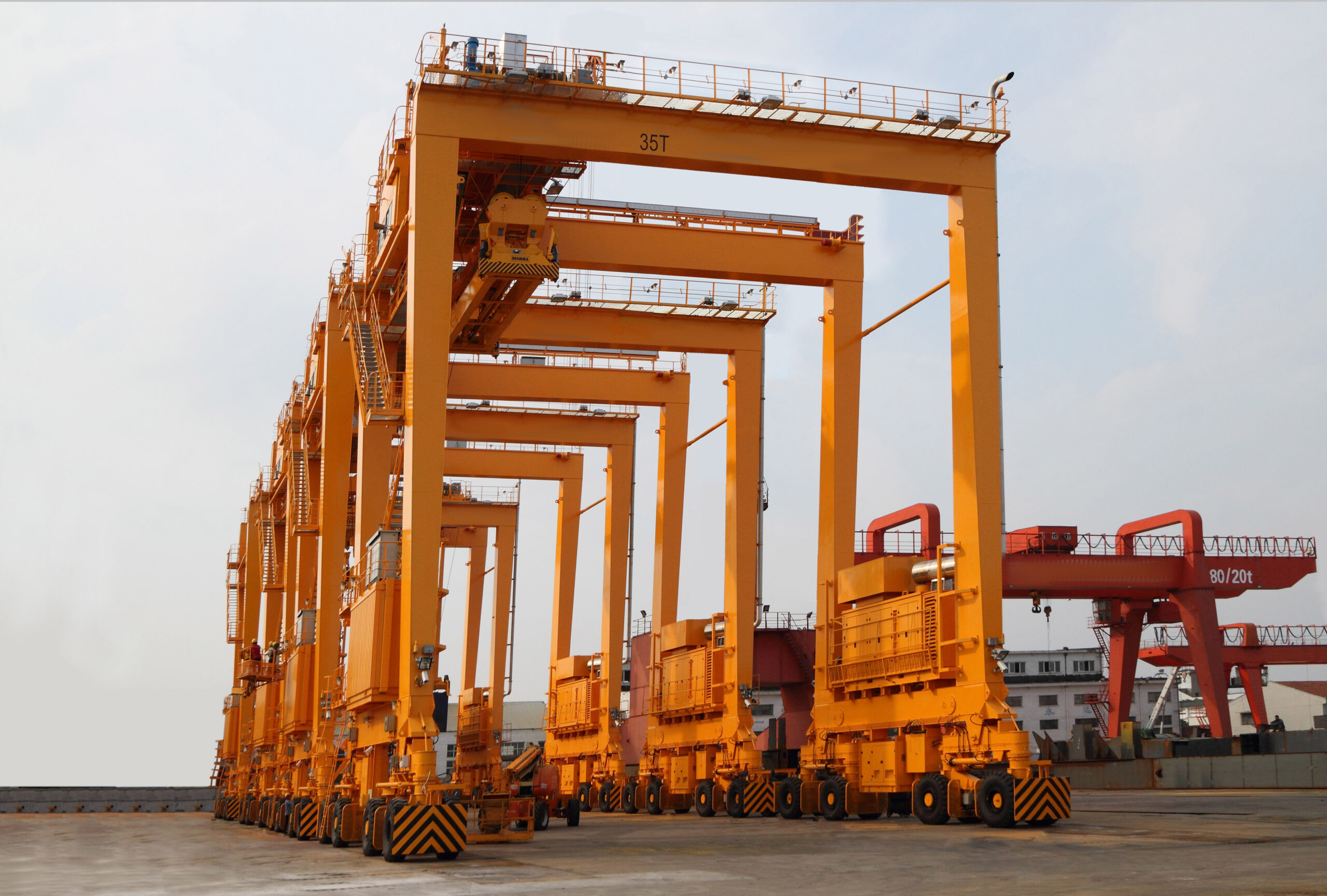
Excellent mobility – driven on rubber tires, can steer and move sideways. Capacity: 20–100+ tons. Used in container yards, steel stockyards, and precast concrete facilities. No fixed rails required.
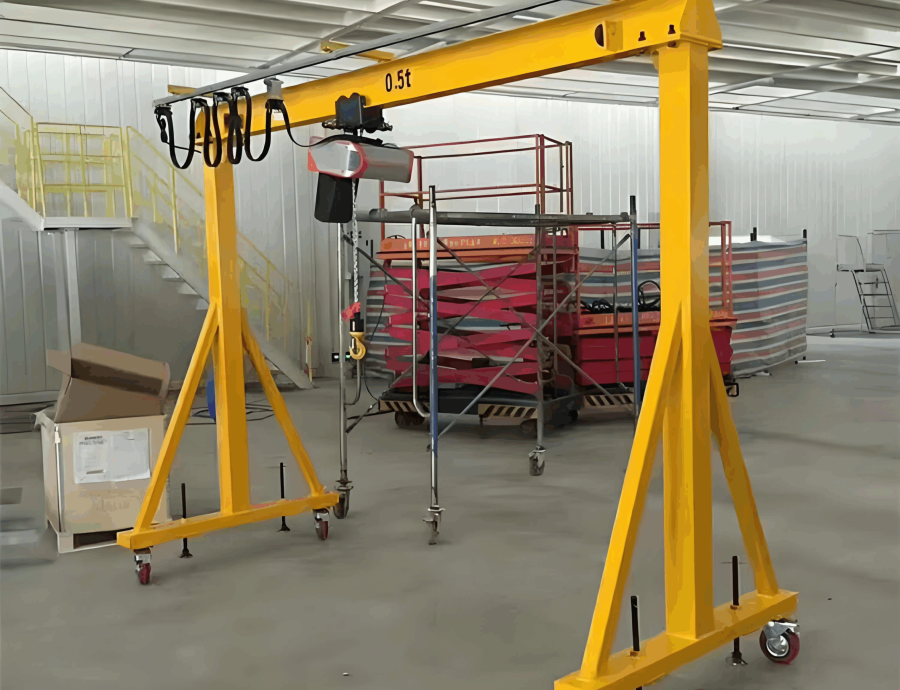
Portable / Adjustable Gantry Crane
Lightweight, often made of aluminum or steel. Can be disassembled or folded for storage. Usually equipped with casters for easy movement. Capacity: 0.5–10 tons, with adjustable height and span. Ideal for temporary lifting in small workshops or maintenance bays.
Rail Mounted Gantry Crane (RMG)
Runs on fixed steel rails. Large span. Used for precise container stacking at container terminals or in rail yards.
Truss / Lattice Boom Gantry Crane
Lattice‑type main girder – light dead weight, high strength. Suitable for very long spans and windy outdoor conditions. Capacity: 5–100+ tons.
Quick tip: At SLKJCrane, we manufacture full gantry, semi‑gantry, single girder, double girder, and rail‑mounted configurations. If you are unsure which type is right for you, contact us – we will recommend the best option based on your loads, space, and budget.
4. How a Gantry Crane Works (Step by Step)
A gantry crane uses three coordinated movements to lift and precisely position a load.
Step 1: Lifting (vertical movement)
The hoist mechanism (motor, wire rope/chain, hook) lifts the load. The operator controls speed and direction. Most modern models use electric hoists with variable frequency drives for accurate positioning.
Step 2: Cross‑travel (trolley movement)
The trolley moves horizontally along the main girder, carrying the hoist and the load. On a single girder crane, the trolley runs along the bottom flange of the girder. On a double girder crane, it runs on rails on top of the girders. This allows positioning the load anywhere between the legs.
Step 3: Long‑travel (crane movement)
The entire crane moves along its runway – steel rails, rubber tires, or wheels. The legs are mounted on end trucks that contain wheels and motors. This motion transfers loads from one end of a yard or workshop to the other.
These three movements work together. The operator typically coordinates them via a pendant control, remote control, or cabin. Modern gantry cranes can also include advanced features such as:
-
Anti‑sway system – prevents load swinging
-
Variable frequency drive – smooth acceleration and deceleration
-
Load moment indicator – warns the operator if the crane is overloaded
-
Remote control – allows the operator to stand at the best vantage point
-
Automatic positioning – for repetitive tasks (e.g., container stacking)
5. Key Components of a Gantry Crane
Understanding each component helps you make better decisions when purchasing or maintaining a crane.
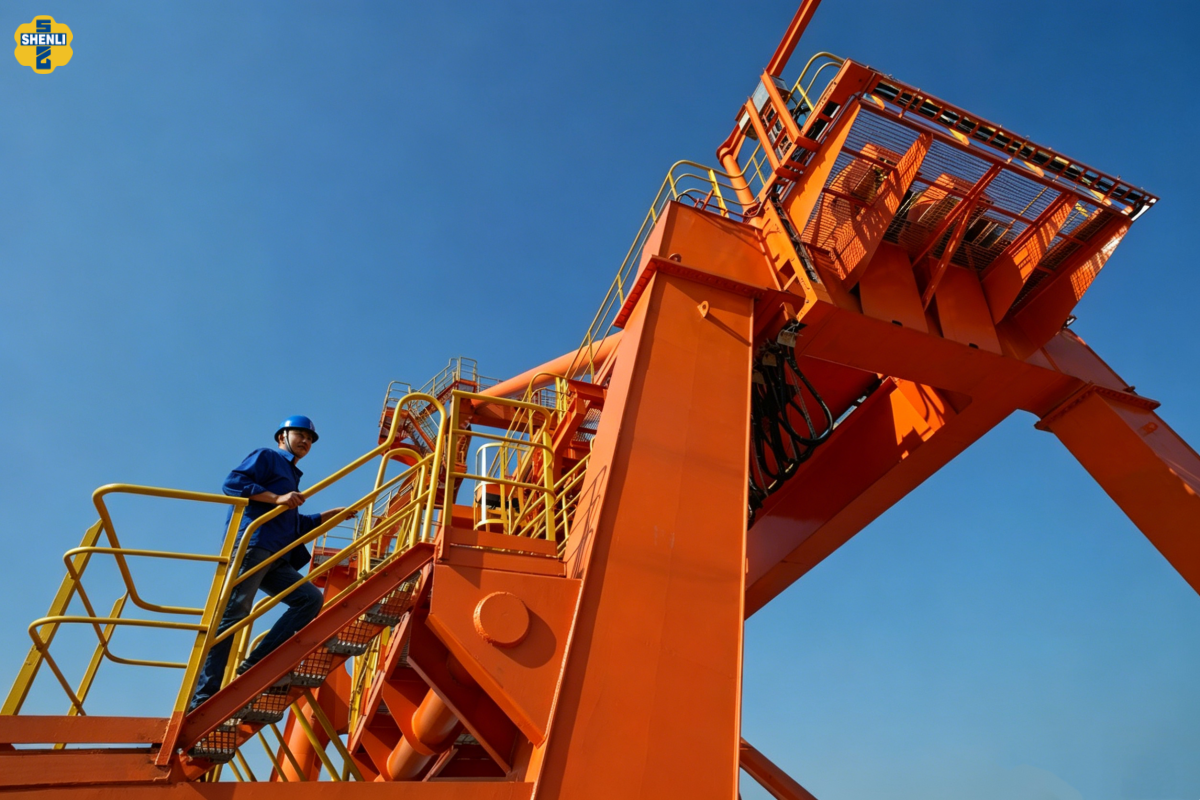
Legs: The vertical support structures on both sides of the gantry crane, connecting the main girder to the ground. They carry the crane’s dead weight and the lifted load, keeping the equipment stable and preventing tipping.
Main girder (bridge girder): The primary horizontal load‑bearing member. It carries the full load and also serves as the track for the trolley’s cross‑travel movement.
End trucks: Beams that connect the main girder ends to the legs. They house the long‑travel wheels, stabilise the frame, transfer loads, and ensure structural integrity.
Trolley: The carriage that moves back and forth along the main girder, carrying the hoist. It enables lateral movement of the load.
Hoist: The electric wire rope hoist – the core lifting component. It raises and lowers the load by winding or unwinding the wire rope.
Control system: The brain of the crane – includes the control cabinet, operator device, and wiring. It controls starting, stopping, travel, lifting, lowering, and speed adjustment of all mechanisms.
Power supply: Delivers continuous electrical energy to the crane. Common methods: cable reel, safe conductor bar (busbar), or battery/diesel for rubber‑tired units.
Safety devices: Include limit switches, overload limiters, bumpers, rail clamps, etc. They prevent over‑travel, overload, collisions, and derailment.
Crane runway (for rail‑mounted types): Special steel rails laid on the ground. They guide the crane’s travel path, carry the load, and ensure smooth operation.
6. Common Applications by Industry
-
Ports and container terminals
-
Steel mills and metal service centers
-
Shipyards and boat building
-
Railway freight yards
-
Construction sites and precast concrete yards
-
Warehouses and distribution centers
-
Scrap yards and recycling facilities
-
Aerospace and defense
At SLKJCrane, we have supplied gantry cranes to customers across all these industries. If you are unsure about selection, we can walk you through the options based on your load, space, and budget.
7. Safety Standards and Regulations
If you are buying or operating a gantry crane, you need to be aware of the relevant safety standards.
-
ASME B30.2 (USA): The primary standard for overhead and gantry cranes. Covers design, manufacturing, installation, operation, inspection, and maintenance.
-
OSHA 29 CFR 1910.179 (USA): Regulations for overhead and gantry cranes from the Occupational Safety and Health Administration. Covers clearances, brakes, inspection frequency, operator training, and more.
-
FEM (Europe): European Material Handling Federation standard. Classifies cranes by duty cycle (FEM 1Am to 5m). Widely used outside North America.
-
CMAA (USA): Crane Manufacturers Association of America specifications, including service classifications (Class A through F). A technical reference, not a legal requirement, but followed by most US crane manufacturers.
-
ISO 4301 (International): International standard for crane classification, roughly aligned with FEM classes.
8. Factors to Consider When Selecting a Gantry Crane
Getting the selection right means matching the crane to your actual needs. Here is what you need to consider:
-
Lifting capacity: Add a 10‑25% safety margin to your heaviest regular load. Single girder: up to 32 tons. Double girder: covers 5–500+ tons.
-
Span: Measure the width of your loads, add clearance on both sides – that is your minimum span.
-
Lifting height: The distance from the ground to the highest hook position. Double girder models give you more lifting height for the same overall crane height because the hoist sits on top.
-
Duty cycle: Measures how often and how hard the crane works. CMAA: Class A (standby) to F (continuous severe duty). FEM: 1Am to 5m. If you run 8+ hours a day, choose a high duty cycle (CMAA Class D or above, FEM 3m or above). Low frequency can use a lower rating.
-
Power supply availability: Do you have three‑phase power at the site? How far does the crane need to travel? Rail‑mounted: cable reel or busbar. Rubber‑tired: diesel or battery.
-
Environmental conditions: Indoor or outdoor? Temperature, dust, moisture? Outdoor needs wind brakes and corrosion‑resistant coating. High‑temperature environments need heat‑resistant motors and cables.
-
Controls and automation: Choose pendant, remote, or cabin. Add variable speed, anti‑sway, automatic positioning – these add cost but improve safety and productivity.
-
Future expansion: If you plan to increase production in 3‑5 years, build in extra capacity now to avoid expensive upgrades later.
-
Maintenance and spare parts availability: Choose a manufacturer with easy spare parts access and local support. A cheap crane can cost you more in downtime than the money you saved.
At SLKJCrane, we help customers work through all these factors. Send us your requirements – load weight, span, lifting height, usage frequency, environment – and we will recommend the right configuration.
Our Crane Product Range
SLKJcrane provides a wide range of lifting equipment solutions including:
– Single Girder Overhead Crane
– Double Girder Overhead Crane
– Gantry Crane
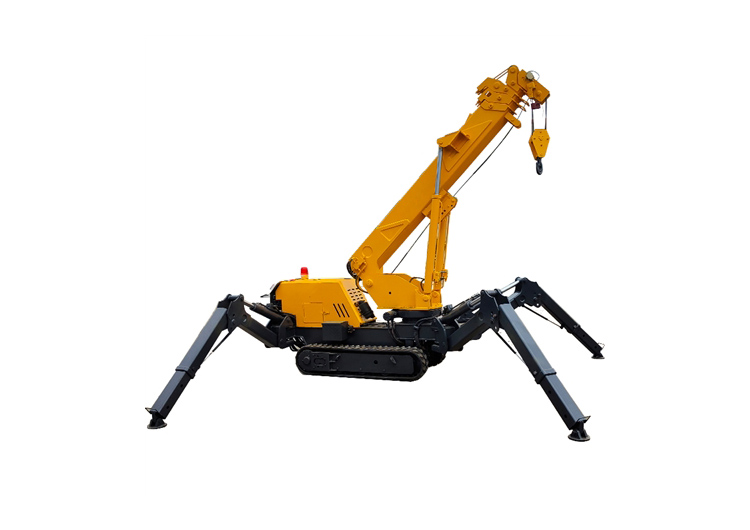
– Spider Crane
– Marine Crane
Our engineering team can configure safety devices and technical solutions according to project requirements.
Work With an Experienced Crane Engineering Team
If you are still unsure which model is right for you, or if you are ready to get a quote, please contact the SLKJCrane technical team. We have many years of experience in manufacturing gantry cranes, and our equipment is widely used in ports, construction sites, warehouses, steel mills, and other locations.
We provide:
-
Free selection consulting based on your actual working conditions
-
Custom‑engineered gantry cranes (single girder, double girder, semi‑gantry, rail‑mounted, and more)
-
Full documentation including CAD drawings, load charts, and compliance certificates
-
Shipping support and on‑site installation guidance
👉 Contact us today to discuss your lifting needs. Tell us your load weight, span, lifting height, and working environment – we will recommend the right crane for your budget and timeline.
Expert in Overhead Crane/Gantry Crane/Jib Crane/Crane Parts Solutions
Eileen
With 20+ years of experience in the Crane Overseas Export Industry, helped 10,000+ customers with their pre-sales questions and concerns, if you have any related needs, please feel free to contact me!
FAQ
Yes. Gantry cranes do not rely on a building for support, making them ideal for outdoor use. Just choose a model with corrosion‑resistant coating, sealed electrical components, and wind brakes.
It depends on the type. Small portable units go up to 10 tons. Single girder gantry cranes typically go up to 32 tons. Double girder gantry cranes can handle 5 to 500+ tons. Custom‑engineered units can go even higher.
Basic safety features include an overload limiter, emergency stop button, limit switches, and audible/visual alarms. For outdoor cranes, add wind brakes and anemometers. For high‑frequency operation, consider anti‑sway systems and wireless remote controls to improve safety.
Yes. You can adjust span, lifting height, and rated capacity; upgrade to remote control, cabin operation, or automation; and add corrosion protection or high‑temperature components for special environments like coastal areas, chemical plants, or steel mills.
Latest Blog
Lorem ipsum dolor sit amet, consectetur adipiscing elit, sed do eiusmod tempor incididunt ut labore et dolore magna aliqua
Types of Gantry Cranes: The Complete Guide (2026 Updated)
Types of Gantry Cranes – The Complete Guide Table of Contents Three Ways to Classify Gantry Cranes Classification
What Is a Gantry Crane? Definition, Types, Working Principle & Applications
Steel Mill Overhead Crane Failure: Why It Happens (And How to Avoid It) Table of Contents What Is
Steel Mill Overhead Crane Failure: Causes & Solutions
Steel Mill Overhead Crane Failure: Why It Happens (And How to Avoid It) Meta Description Crane failures in
Single Girder vs Double Girder Gantry Crane: 7 Key Differences You Must Know
Single Girder vs Double Girder Gantry Crane: 7 Key Differences You Must Know Introduction When you need to
Contact Us Now
Have questions about our cranes or need help?
Reach out to our friendly team for expert support and guidance.
We are here to help you power your journey towards a greener future !
Address: Crane Industry Park, Xinxiang City Henan Provice