Steel Mill Overhead Crane Failure: Why It Happens (And How to Avoid It)
Meta Description
Crane failures in steel mills are not rare. When they happen, you get serious safety risks, expensive downtime, and production stops.
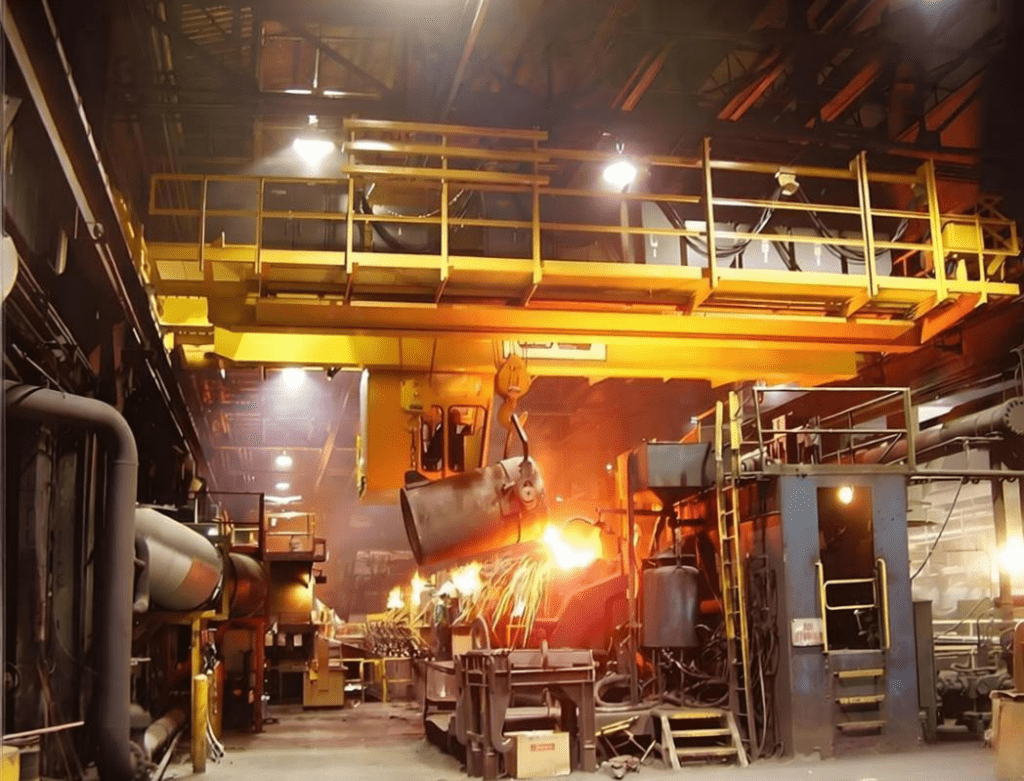
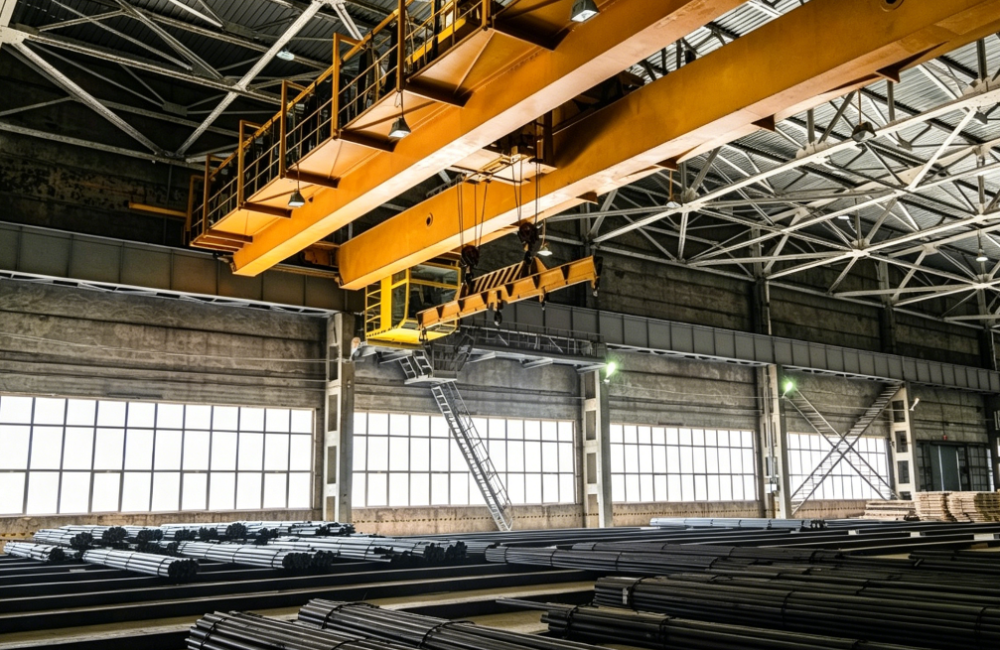
Unlike normal industrial sites, steel mills throw extreme heat, heavy loads, and continuous operation at their cranes every single day. That’s why breakdowns are way more common.
This article breaks down the real reasons why steel mill overhead cranes fail, and gives you field‑tested solutions to prevent them.
1. Heat Damage – The Number One Killer
Steel mills generate insane heat – especially near furnaces and casting areas.
Typical problems you’ll see:
-
Motors overheating and burning out
-
Electrical systems failing
-
Insulation aging fast
-
Metal structure deformation
How to fix it:
-
Use heat‑resistant motors and cables
-
Install heat shield panels on the crane structure
-
Pick high‑temperature lubricants
-
Choose a crane specifically designed for metallurgical use
👉 Bottom line: a regular overhead crane was never built for steel mill conditions. If you’re wondering how to protect crane electrics from heat in a steel plant, start with these upgrades.
2. Overloading and Improper Operation
A big chunk of crane failures comes from overloading or bad operating habits.
What usually goes wrong:
-
Lifting loads above rated capacity
-
Sudden shock loads
-
Side pulling (not lifting vertically)
Solutions that work:
-
Install an overload limiter on every crane
-
Train operators regularly – not just once
-
Add an anti‑sway system for smoother, safer movement
If you’ve ever seen what happens when a crane is used beyond its rated capacity in a steel mill, you know it’s ugly. Don’t wait for that to happen.
3. Continuous Heavy Duty Work (A7 / A8 Duty Cycle)
Most steel mills run 24/7. Their cranes are pushed to the limit for hours and hours, day after day. That demands a lot from the equipment.
Common failure points:
-
Fatigue wear on parts
-
Brake wear and tear
-
Gearbox damage
What actually helps:
-
Choose a crane rated A7 or A8 duty cycle – no compromise
-
Use reinforced steel structure design
-
Set up a regular preventive maintenance schedule
👉 If your crane runs more than 16 hours a day handling heavy loads, you need a *heavy duty overhead crane for 24/7 steel production*. A lower duty class will fail on you fast.
4. Poor Maintenance – The Hidden Threat
A lot of failures don’t happen suddenly. They build up slowly because maintenance was skipped or rushed.
What gets ignored until it breaks:
-
Worn‑out wire ropes
-
Brakes that don’t bite anymore
-
Lack of lubrication everywhere
The fix:
-
Build a preventive maintenance plan and stick to it
-
Use a daily inspection checklist (yes, daily)
-
Replace wear parts before they fail – not after
A steel mill crane preventive maintenance checklist isn’t paperwork – it’s your best insurance against unplanned downtime.
5. Electrical System Failures
Steel mills are tough on electrics. Dust, heat, voltage swings – it all adds up.
Common electrical issues:
-
Voltage fluctuations
-
Control system glitches or total failure
-
Cables damaged by heat and debris
Solutions:
-
Use industrial‑grade control systems
-
Run cables through heat‑resistant protection
-
Add backup safety systems where possible
If you’ve ever asked yourself why a crane control system fails in a high‑dust, high‑heat environment, the answer is usually cheap components or no thermal protection.
6. Missing Safety Features
Many older steel mill cranes were built before modern safety standards. And they haven’t been upgraded.
What’s often missing:
-
Overload protection
-
Emergency brakes
-
Anti‑collision systems
What to do:
Retrofit your cranes with:
-
Overload limiters
-
Emergency braking systems
-
Collision avoidance devices
These upgrades cost a fraction of a major accident.
7. Wrong Crane Selection – Using a Standard Crane Instead of a Metallurgical One
This is painfully common – and a huge mistake.
The core problem:
A standard general‑purpose overhead crane simply cannot handle:
-
High ambient temperatures
-
Continuous heavy lifts
-
Extreme mill conditions
The right answer:
You must use a metallurgical overhead crane – designed specifically for steel mills.
Recommended types for steel mill applications:
-
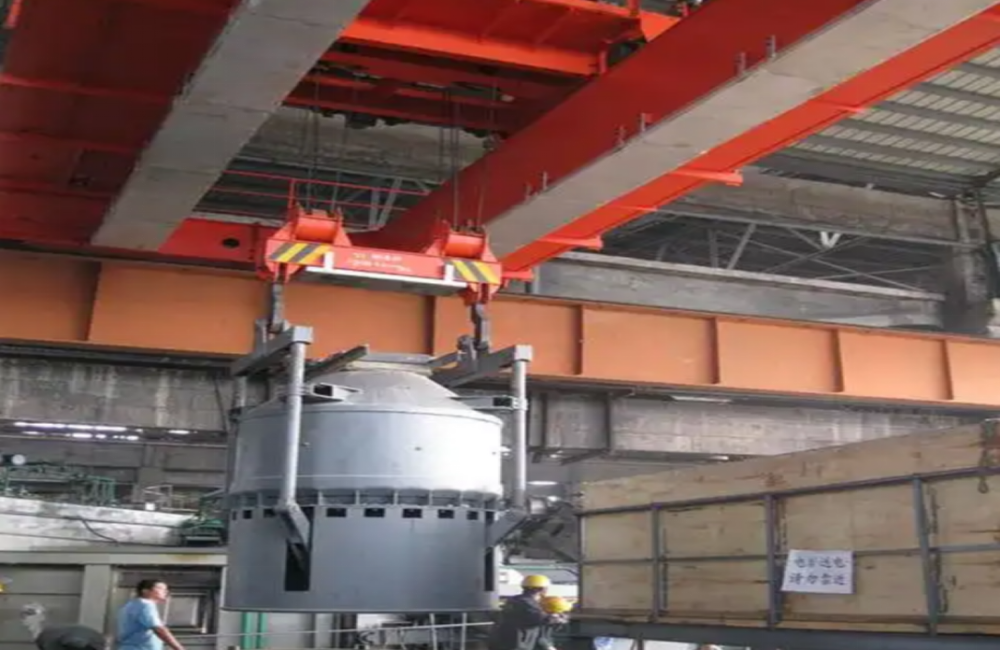
Ladle overhead crane (for molten steel)
-
Slab / billet handling crane
-
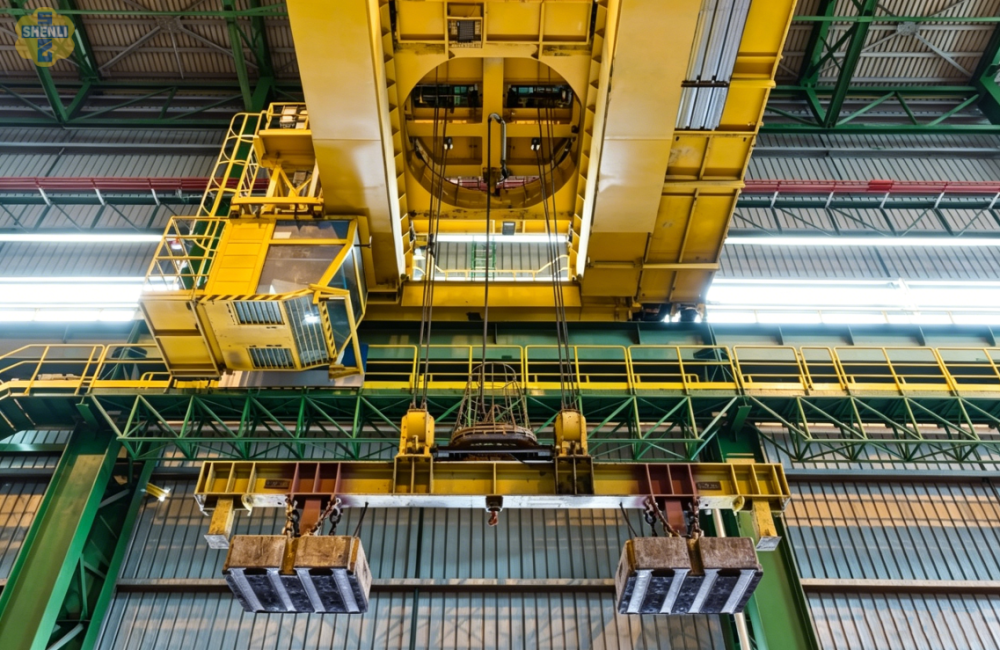
Electromagnetic crane (for scrap and coils)
A lot of plant managers ask: Can a regular EOT crane work in high temperature? The honest answer is: for a while. Then it fails, and you pay more in repairs and downtime than you saved.
The Real Cost of a Crane Failure in a Steel Mill
When your steel mill crane breaks down, here’s what’s at stake:
-
Production stops – every minute costs money
-
Damaged equipment – not just the crane, but sometimes the load
-
Safety incidents – injuries or worse
-
Major financial loss
In extreme cases (like a ladle crane failure), molten steel can spill. That’s a catastrophe you never want to see.
How to Effectively Prevent Steel Mill Crane Failures
Here’s a quick checklist of what actually works:
✔️ Select the right crane type for your specific mill conditions
✔️ Go for heat‑resistant design – motors, cables, insulation
✔️ Run a strict preventive maintenance plan – no skipping
✔️ Upgrade old cranes with modern safety gear
✔️ Work with a supplier who knows steel mills, not just general cranes
Final Thoughts
Steel mill crane failures almost never have a single cause. It’s usually a mix of harsh environment, how the crane is used, and design or selection mistakes.
The prevention formula is actually pretty simple:
👉 Choose the right crane for the job. Maintain it properly. Never compromise on safety.
Need a Custom Metallurgical Crane Solution?
If you’re still unsure about selection, or you need a reliable crane manufacturer for your steel plant, contact the Shenli Crane technical team. We provide:
-
Free selection consulting based on your actual working conditions
-
Custom‑designed metallurgical overhead cranes
-
Full support – from installation to commissioning and after‑sales
👉 Let us help you find a safer, more efficient, and cost‑effective lifting solution for your steel mill.
Our Crane Product Range
SLKJcrane provides a wide range of lifting equipment solutions including:
– Single Girder Overhead Crane
– Double Girder Overhead Crane
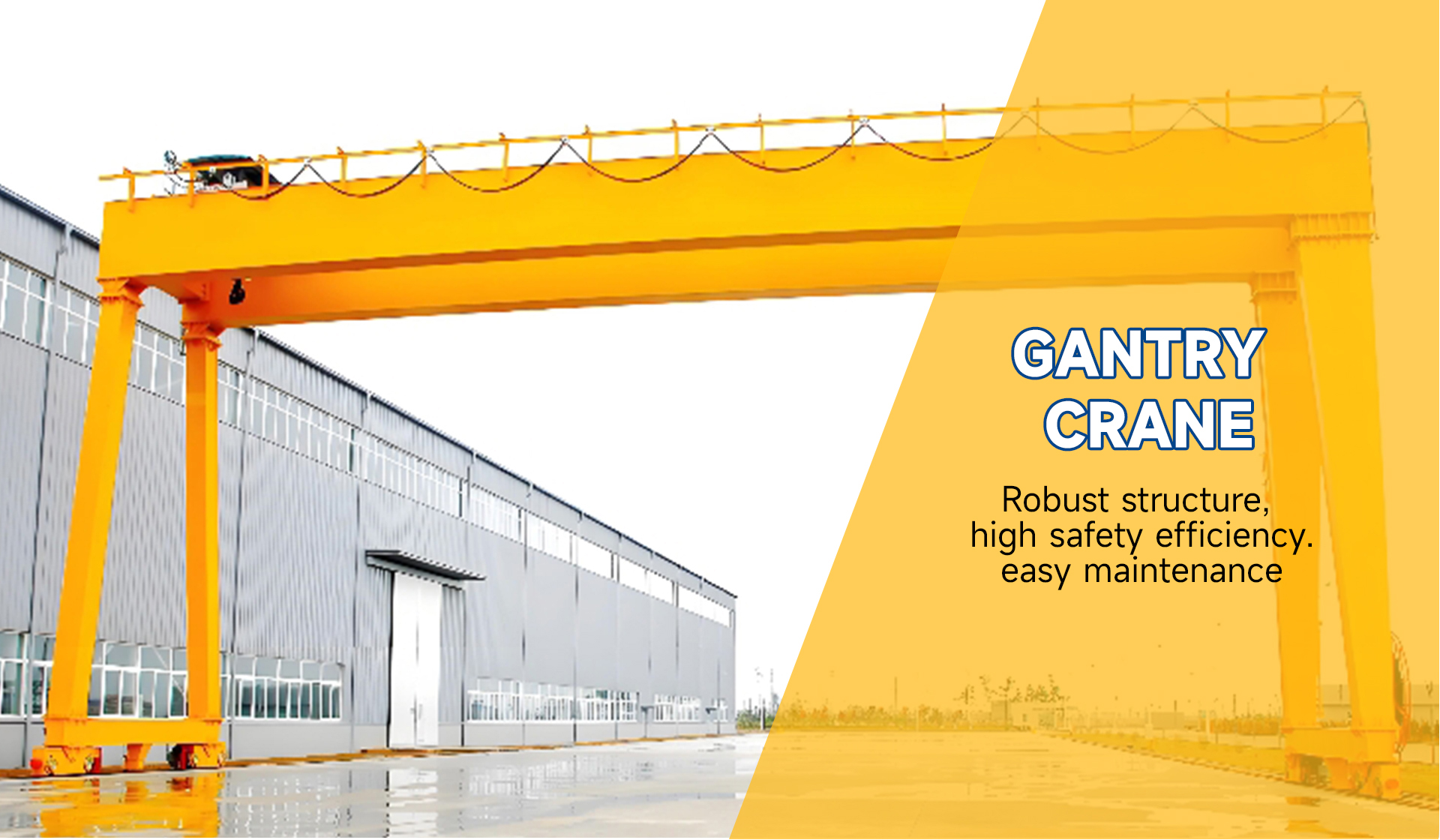
– Gantry Crane
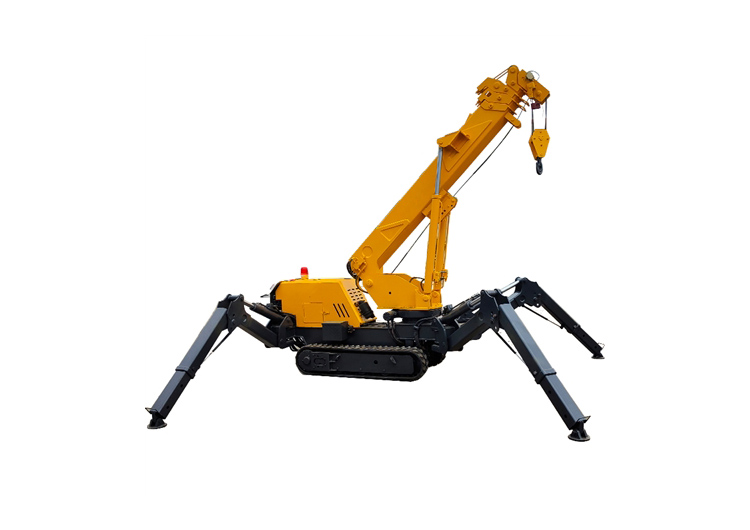
– Spider Crane
– Marine Crane
Our engineering team can configure safety devices and technical solutions according to project requirements.
Work With an Experienced Crane Engineering Team
Our crane engineering and sales team has more than 20 years of experience in lifting equipment projects. We help customers analyze lifting requirements, select proper crane types, and design safe and efficient lifting systems.
If you are planning a crane project, our team can provide technical consultation, equipment configuration advice, and competitive project quotations.
Expert in Overhead Crane/Gantry Crane/Jib Crane/Crane Parts Solutions
Eileen
With 20+ years of experience in the Crane Overseas Export Industry, helped 10,000+ customers with their pre-sales questions and concerns, if you have any related needs, please feel free to contact me!
FAQ
Because standard cranes aren't built for extreme ambient temperatures near furnaces. You need heat‑resistant motors, cables, and insulation – plus optional heat shields.
Not really. Cooling fans help a little, but they don't fix the root problems: weak structural design, wrong duty cycle rating, and lack of heat protection for electricals. Get a metallurgical crane.
A6 is for intermittent heavy work. A8 is for continuous, 24/7 operation with high loads. Most steel mills need A7 or A8. Using A6 in an A8 environment guarantees early failure.
It depends on usage, but inspect it weekly. Replace immediately if you see broken wires, kinks, or severe wear. Don't go by calendar time – go by condition.
Absolutely. Those two upgrades alone prevent a huge percentage of failures and accidents. Much cheaper than a new crane, but huge safety and uptime benefits.
Latest Blog
Lorem ipsum dolor sit amet, consectetur adipiscing elit, sed do eiusmod tempor incididunt ut labore et dolore magna aliqua
Steel Mill Overhead Crane Failure: Causes & Solutions
Steel Mill Overhead Crane Failure: Why It Happens (And How to Avoid It) Meta Description Crane failures in
Single Girder vs Double Girder Gantry Crane: 7 Key Differences You Must Know
Single Girder vs Double Girder Gantry Crane: 7 Key Differences You Must Know Introduction When you need to
Why is the Price Gap So Large? European vs. Traditional Single Girder Overhead Cranes
Why is the Price Gap So Large? European vs. Traditional Single Girder Overhead Cranes When sourcing lifting equipment,
single girder overhead crane installation guide
Single Girder Overhead Crane Installation Guide | Step-by-Step Crane Installation Procedure A single girder overhead crane is widely
Contact Us Now
Have questions about our cranes or need help?
Reach out to our friendly team for expert support and guidance.
We are here to help you power your journey towards a greener future !
Address: Crane Industry Park, Xinxiang City Henan Provice