
Portable vs Fixed Gantry Crane: Which Is Better for Small Workshops?
Table of Contents
-
The Problem Every Small Workshop Faces
-
Quick Decision: The Selection Quadrant
-
What Is a Portable Gantry Crane?
-
What Is a Fixed Gantry Crane?
-
Portable vs Fixed: Side‑by‑Side Comparison
-
“Right Fit / Wrong Fit” Decision Table
-
Cost Comparison – Beyond the Price Tag
-
Safety First – Non‑Negotiable Rules
-
Frequently Asked Questions (FAQ)
-
Get the Right Crane for Your Workshop
1. The Problem Every Small Workshop Faces
You run a small workshop. Maybe you fix heavy machinery, fabricate steel parts, repair vehicles, or build custom equipment. Your space is tight. Your budget is tighter. And you need to lift things — engine blocks, steel beams, machine tools, pallets of raw material.
A forklift costs a fortune and takes up half your floor. An overhead crane would require tearing open your ceiling and pouring foundations. And neither solves your actual problem: you don‘t have a fixed production line. Your lifting needs move around the shop.
So what do you do?
You look at gantry cranes — floor‑supported, self‑standing, no building modifications required. But then you hit the next question: portable or fixed?
This guide is written for workshop owners, garage managers, and small fabrication shop operators. We’ll skip the engineering jargon and focus on what actually matters: your space, your budget, your lifting frequency, and your future plans.
Let‘s start with a 10‑second decision tool.
2. Quick Decision: The Selection Quadrant
Before you read the rest of this guide, look at this table. Find the box that matches your workshop. That’s your shortlist.
| Your situation | Recommended crane type |
|---|---|
| Your workshop layout changes, or you work in multiple bays | Portable gantry crane (wheel it to the job) |
| You need to lift in different positions around the shop | Portable gantry crane (one crane, many spots) |
| You have a dedicated workstation where the same lift happens every day | Fixed gantry crane (set it and forget it) |
| You are renting the building and cannot drill into the floor or modify the structure | Portable gantry crane (zero permanent changes) |
| You need to lift more than 3 t daily, for hours at a time | Fixed gantry crane (or heavy‑duty portable, but check ground conditions) |
| Your budget is under $2,000 | Portable gantry crane (fixed starts much higher once you add foundations) |
| You have very low ceilings (below 3 m / 10 ft) | Portable gantry crane with adjustable height |
| You need to lift the same 2 t part, in the same spot, 20 times per shift | Fixed gantry crane (stability and speed win) |
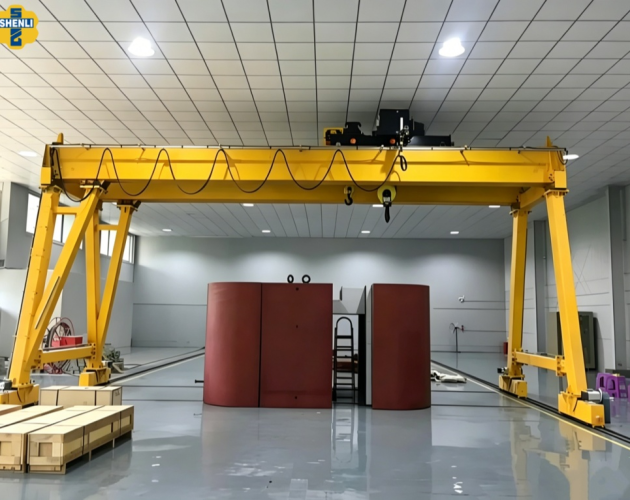
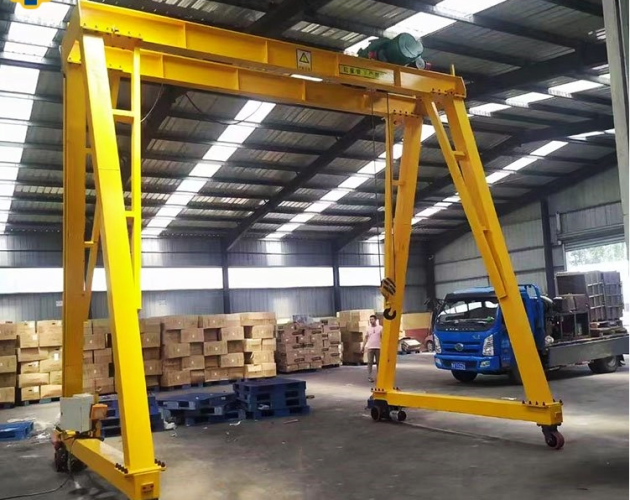
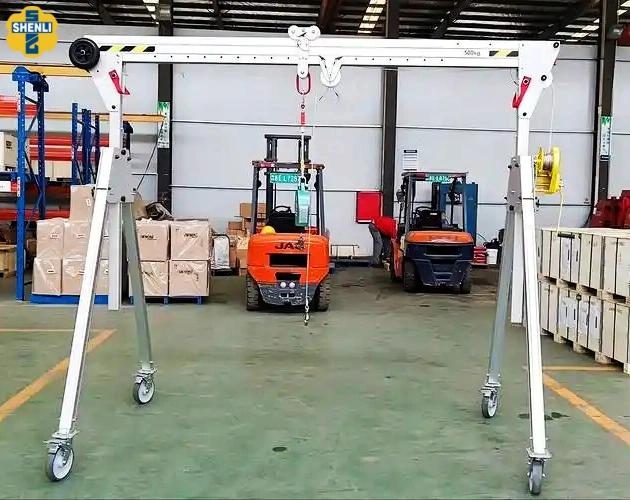
Portable gantry crane with adjustable height and width
If you are still unsure after the table, read on. The rest of this guide explains why each answer makes sense and how to make the final call.
3. What Is a Portable Gantry Crane?
A portable gantry crane is a self‑standing lifting frame mounted on heavy‑duty casters (wheels). It consists of a horizontal beam (the girder) supported by two legs, each ending in lockable wheels. The whole structure is bolted together — no welding, no concrete, no permanent changes to your building.
How it moves: One or two people push it across a level floor. When you reach the spot where you need to lift, you lock the casters, attach the hoist, and do the lift. When you‘re done, unlock the casters and roll it back to storage or to the next work area.
Key specs for small workshops:
| Specification | Typical range for small workshops | Notes |
|---|---|---|
| Lifting capacity | 0.5 t – 5 t (custom up to 20 t) | 1–2 t most common for garage/repair shops |
| Span (width) | 2 m – 12 m | 2–5 m typical for tight spaces |
| Lifting height | 1 m – 10 m | Adjustable on most models |
| Assembly time | 15–45 minutes (two people, hand tools) | Can be knocked down and stored when not in use |
| Price range (equipment only) | 500–500–5,000 for 0.5–3 t models | 5,000–5,000–13,000 for higher capacity portable units |
Where portable shines:
-
Multi‑bay workshops where lifting happens in different spots
-
Rented facilities where you cannot modify the building
-
Low‑ceiling spaces where height‑adjustable legs are essential
-
Shops that need one crane to serve several workstations
-
Operations with intermittent lifting (a few lifts per day, not continuous)
Where portable falls short:
-
Heavy daily use (8+ hours per day, dozens of lifts per shift)
-
Very heavy loads above 5 t on regular casters (some heavy‑duty portable models exist, but they are more expensive and harder to move)
-
Rough, uneven floors (casters need smooth, level, hard surfaces)
4. What Is a Fixed Gantry Crane?
A fixed gantry crane is also a self‑standing lifting frame — but it does not have wheels. Instead, its legs are bolted or welded to the floor, or it runs on fixed rails embedded in concrete. It stays where you install it. That‘s the whole point.
How it moves: The crane itself does not move. The trolley (the part carrying the hoist) travels along the bridge beam, and the bridge beam may travel along rails on the legs. But the crane‘s base position is permanent.
Key specs for small workshops:
| Specification | Typical range | Notes |
|---|---|---|
| Lifting capacity | 1 t – 20 t (or much higher for industrial units) | 5–10 t common for workshop fixed cranes |
| Span | 5 m – 30 m | Limited by your available floor space and building dimensions |
| Installation time | Days to weeks | Requires foundation work, curing time for concrete, and professional rigging |
| Price range (equipment + installation) | 8,000–8,000–25,000+ for 5 t | Foundations add significant cost (2,000–2,000–10,000+) |
| Permanent building modifications | Yes – foundations, anchor bolts, sometimes rail systems | Cannot be moved without major demolition |
Where fixed shines:
-
Dedicated workstation where the same lift happens repeatedly
-
High‑frequency lifting (dozens of lifts per hour, all day long)
-
Heavy loads (above 5 t) where portable casters would be unsafe
-
Shops with permanent layouts that will not change for years
-
Outdoor yards where ground surfaces are not smooth enough for casters
Where fixed falls short:
-
Rented buildings (you cannot pour foundations in a space you don‘t own)
-
Shops with changing layouts
-
Low budgets (foundations alone often exceed the cost of a portable crane)
-
Temporary operations (you cannot take a fixed crane with you when you move)
5. Portable vs Fixed: Side by Side Comparison
Here is the complete comparison table. Keep this open while you evaluate your workshop.
| Comparison area | Portable gantry crane | Fixed gantry crane |
|---|---|---|
| Can be moved around the shop | ✅ Yes — push by hand, lock casters at the lift point | ❌ No — stays in one spot |
| Requires concrete foundation | ❌ No — just a level, hard floor | ✅ Yes — concrete pad + anchor bolts |
| Rented building? No problem | ✅ Yes — zero permanent changes | ❌ No — landlord will not approve foundations |
| Assembly time | 15–45 minutes (two people, basic tools) | Days to weeks (foundation curing + rigging) |
| Base price (equipment only, 1–2 t) | 500–500–2,500 | 3,000–3,000–8,000 (plus foundation) |
| Total installed cost (including foundation) | 500–500–2,500 (no foundation) | 6,000–6,000–20,000+ (foundation adds 2,000–2,000–10,000+) |
| Best for lifting frequency | Intermittent — a few lifts per day | High frequency — dozens of lifts per hour, all day |
| Typical maximum capacity (workshop models) | 1–5 t (heavy‑duty portable up to 10 t) | 5–20 t (or much higher) |
| Storage when not in use | Can be disassembled and stored in a corner | Takes up permanent floor space |
| Caster / wheel requirement | Heavy‑duty lockable swivel casters | None — crane does not roll |
| Stability under load | Good (with casters locked) | Excellent (bolted to foundation) |
| Suitable for very low ceilings | ✅ Yes — adjustable height models go as low as 2 m / 6.5 ft | ⚠️ Sometimes — fixed‑height models must be ordered for your specific ceiling |
| Moving the crane to a new building | ✅ Yes — disassemble, load into a truck, reassemble | ❌ No — the foundation stays behind; you leave the crane or pay for demolition |
6. “Right Fit / Wrong Fit” Decision Table
This table tells you when each type works — and, just as importantly, when it does not.
| If this describes your workshop… | Portable gantry crane | Fixed gantry crane |
|---|---|---|
| You rent the building and cannot drill into the floor | ✅ Right fit | ❌ Wrong fit |
| You have a dedicated welding table where heavy pieces are always assembled | ❌ Not the best | ✅ Right fit |
| Your budget is under $2,000 for the whole project | ✅ Right fit | ❌ Wrong fit (foundation alone exceeds budget) |
| You have multiple work bays and need lifting in each one | ✅ Right fit | ❌ Wrong fit (you would need multiple fixed cranes) |
| You lift the same engine block, in the same spot, 30 times a day | ❌ Not the best | ✅ Right fit |
| Your floor is rough or uneven (gravel, old cracked concrete) | ❌ Wrong fit (casters need smooth surfaces) | ✅ Right fit (bolted to foundation) |
| You need to lift more than 5 t regularly | ❌ Wrong fit (most portable units are 1–5 t) | ✅ Right fit (fixed handles higher loads) |
| You have very low ceiling height (<2.5 m / 8 ft) | ✅ Right fit (adjustable‑height models) | ⚠️ Maybe — but must be custom‑ordered to exact height |
| You plan to move your shop to a new building within two years | ✅ Right fit (the crane moves with you) | ❌ Wrong fit (fixed crane is a permanent investment) |
| You need the crane to serve multiple workstations along a long aisle | ⚠️ Could work (roll it along the aisle) | ✅ Right fit (with rail‑mounted travel) |
7. Cost Comparison – Beyond the Price Tag
The biggest mistake workshop owners make is comparing only the equipment price. Here is the real cost picture.
Portable gantry crane — total cost breakdown
| Cost item | 1‑ton portable steel model | 2‑ton adjustable model |
|---|---|---|
| Crane equipment | 500–500–1,500 | 1,500–1,500–3,500 |
| Foundation / building modification | $0 (level floor only) | $0 |
| Installation (your own labour) | $0 (assemble yourself) | $0 |
| Total project cost | 500–500–1,500 | 1,500–1,500–3,500 |
Hidden portable costs to watch for:
-
Casters: cheaper models use basic casters that wear out faster; upgrade to total‑locking casters adds 200–200–500
-
Hoist: the crane price often excludes the hoist — a manual chain hoist adds 150–150–500, an electric hoist adds 800–800–2,000
Fixed gantry crane — total cost breakdown
| Cost item | 2‑ton fixed model | 5‑ton fixed model |
|---|---|---|
| Crane equipment | 3,000–3,000–6,000 | 8,000–8,000–15,000 |
| Concrete foundation | 2,000–2,000–5,000 (includes excavation, forms, reinforcement) | 3,000–3,000–8,000 |
| Professional installation / rigging | 1,000–1,000–3,000 | 2,000–2,000–5,000 |
| Building permit / engineering review | 500–500–1,500 (varies by location) | 500–500–1,500 |
| Total project cost | 6,500–6,500–15,500 | 13,500–13,500–29,500+ |
Why fixed costs add up quickly: The foundation must be designed for repeated point loads from crane wheels and dynamic forces during lifting. Engineers calculate foundation size based on maximum rated load, crane self‑weight, and soil bearing capacity.
When portable is cheaper even for heavier loads
A 3‑t portable crane (equipment 3,000–3,000–6,000, no foundation) costs less than a 2‑t fixed crane (6,500–6,500–15,500 total) when you include foundation and installation.
The crossover point is around daily lifting frequency: if you do fewer than 30 lifts per day, portable is almost always less expensive in total project cost. If you do more than 100 lifts per day, fixed starts to make financial sense because the higher equipment cost spreads over more cycles.
8. Safety First – Non Negotiable Rules
Both portable and fixed gantry cranes are safe when used correctly. But each has unique safety requirements that workshop owners must understand.
Portable gantry crane – safety essentials
Never move the crane with a suspended load. Lock the casters before every lift. Unlock only when the crane is empty. Moving a loaded portable crane is how tipping accidents happen.
Lock all four casters. A portable crane typically has four swivel casters. Every caster must have its brake engaged during lifting. A single unlocked caster allows the crane to roll — and that rolling can shift the load‘s centre of gravity dangerously.
Use total‑locking casters, not just wheel locks. Basic casters only lock the wheel (preventing rotation). Total‑locking casters lock both the wheel and the swivel. The difference matters: a wheel‑only lock still allows the caster to swivel, which can steer the crane sideways under load. Total‑locking casters keep the crane rigidly in position.
Check floor condition before every use. Portable cranes need smooth, level, hard floors. Cracks, debris, or uneven pavement can tip the crane when the load is high. Mark any uneven areas in your workshop and never position the crane there.
Do not exceed rated capacity. The capacity stamped on the crane assumes the casters are locked and the floor is level. Overloading — even by a few hundred pounds — increases tipping risk dramatically.
Fixed gantry crane – safety essentials
Foundation must be designed by an engineer. A concrete slab that holds a parked car is not strong enough for a crane that lifts 5 t. Foundation failure is catastrophic and happens without warning — the crane simply tips over mid‑lift.
Anchor bolts must be correctly torqued. Loose anchor bolts allow the crane legs to shift under load, leading to misalignment and eventual failure. Retorque annually.
Install limit switches. Fixed cranes are often used for high‑frequency lifts where operators work quickly. Upper/lower limit switches on the hoist and travel limit switches on the trolley prevent over‑travel accidents.
Both types: inspect wire rope and hooks weekly. Wire rope wears from the inside out. Replace immediately if you see broken wires, kinks, or flattening. Hooks that have opened more than 15% must be replaced — do not try to bend them back.
When to call a professional
-
Fixed crane foundation engineering → licensed structural engineer
-
Fixed crane installation → certified crane rigging company
-
Portable crane assembly → you can do it yourself with two people and hand tools
-
Annual load testing (both types) → certified inspector required by OSHA
9. Get the Right Crane for Your Workshop
You have seen the numbers, the trade‑offs, and the safety rules. Now it is time to match a crane to your actual workshop — not to a hypothetical “ideal” scenario that doesn‘t exist.
At SLKJCrane, we design both portable and fixed gantry cranes for small workshops, repair shops, and fabrication facilities. We do not push one type — we help you choose based on your floor space, lifting frequency, budget, and future plans.
We offer for small workshops:
-
Portable gantry cranes (0.5 t – 5 t) — adjustable height, lockable casters, no foundation required
-
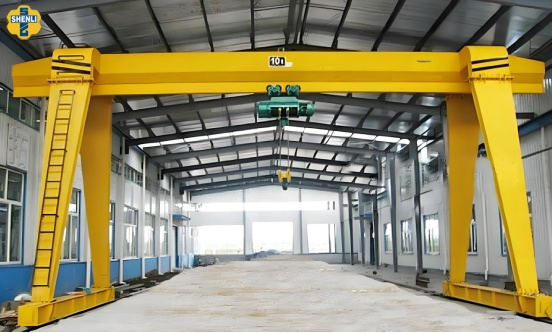
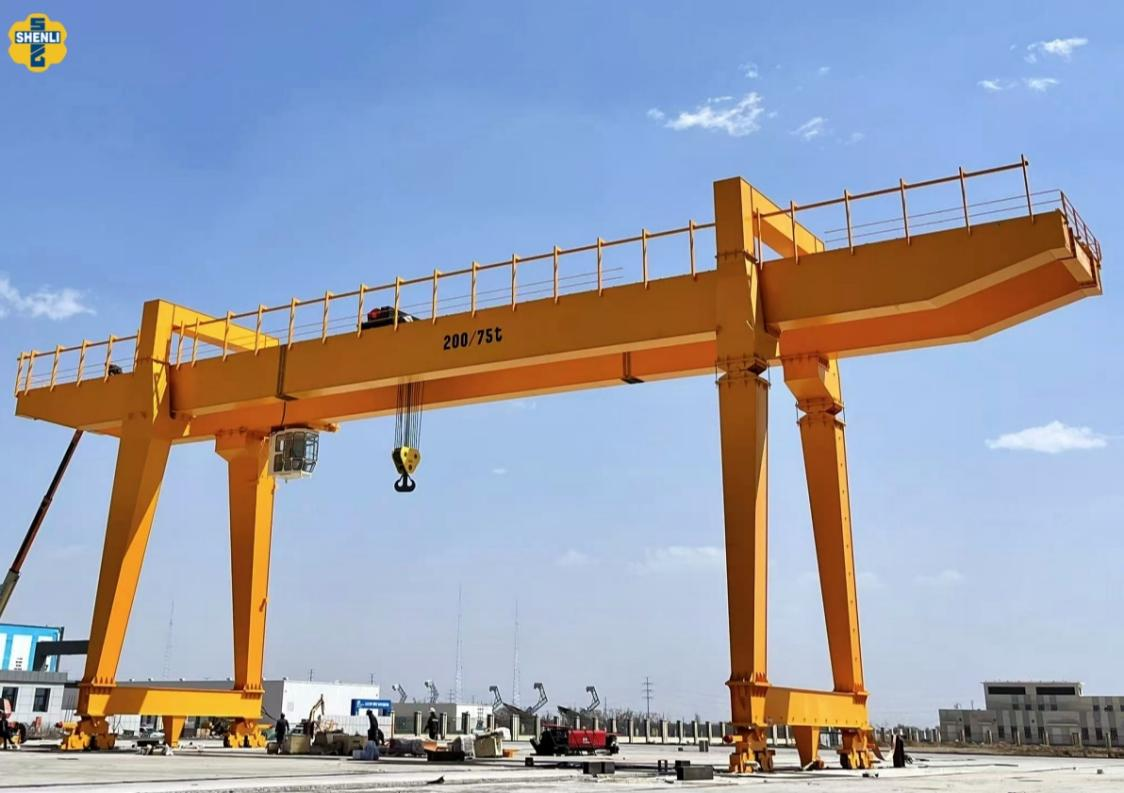
Fixed gantry cranes (1 t – 20 t) — single girder and double girder configurations
-
Small single girder gantry cranes for tight‑space workshops
-
Manual and electric hoists — pendant, remote, or wired control options
-
Free consultation — tell us your workshop size, typical load, lifting frequency, and ceiling height. We will tell you which type fits and give you a project cost breakdown (not just the equipment price).
👉 Contact us today – share your lifting needs, workshop dimensions, and whether you own or rent your building. We will recommend the most practical, cost‑effective gantry crane solution for your small workshop.

Expert in Overhead Crane/Gantry Crane/Jib Crane/Crane Parts Solutions
Eileen
With 20+ years of experience in the Crane Overseas Export Industry, helped 10,000+ customers with their pre-sales questions and concerns, if you have any related needs, please feel free to contact me!
Our Crane Product Range
SLKJcrane provides a wide range of lifting equipment solutions including:
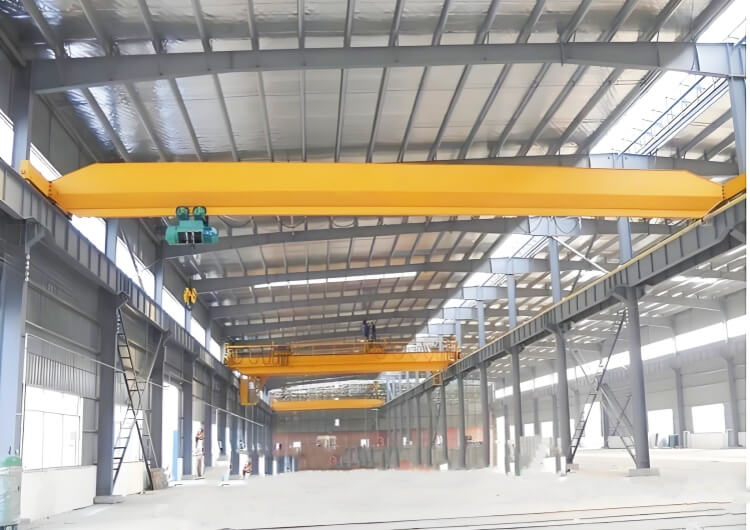
– Single Girder Overhead Crane
– Double Girder Overhead Crane
– Gantry Crane
– Spider Crane
– Marine Crane
Our engineering team can configure safety devices and technical solutions according to project requirements.
FAQ
Not for long periods. Most portable cranes are designed for indoor use. Outdoor exposure causes rust on steel components and degrades caster bearings. If you need outdoor operation, specify a crane with corrosion‑resistant coating and weatherproof casters — and never leave it outside overnight.
Standard portable models go up to 5 t. Some heavy‑duty portable units reach 10 t, but they are significantly more expensive and harder to move by hand. For loads above 10 t in a workshop setting, a fixed crane or rail‑mounted gantry is the correct solution.
In most jurisdictions, yes. A fixed crane requires foundation work — and any permanent structural modification to a building typically requires a permit. Check with your local building department. For portable cranes: no permit needed, because you are not modifying the building.
Two people with hand tools can assemble a 1‑2 t portable gantry crane in 15 to 45 minutes, depending on the model. Some knock‑down designs are even faster — basically adult Lego.
No. Once the foundation is poured and the crane is bolted down, it stays there. If you need to change your shop layout, you are looking at demolition and a new foundation. This is the single biggest reason small workshops choose portable cranes instead.
Both can be safe, but portable has an advantage: you can roll the crane to the work piece, which means you never have to drag a heavy load across the shop floor to reach the crane. Moving heavy loads manually is where most shop injuries happen. However, if you operate alone, ensure your portable crane‘s casters lock securely — and never, ever move it with a suspended load.
Equipment only: 500–500–1,500 for a basic steel model. Add 150–150–500 for a manual chain hoist, or 800–800–2,000 for an electric hoist. No foundation or installation costs beyond your own time.
Latest Blog
Lorem ipsum dolor sit amet, consectetur adipiscing elit, sed do eiusmod tempor incididunt ut labore et dolore magna aliqua
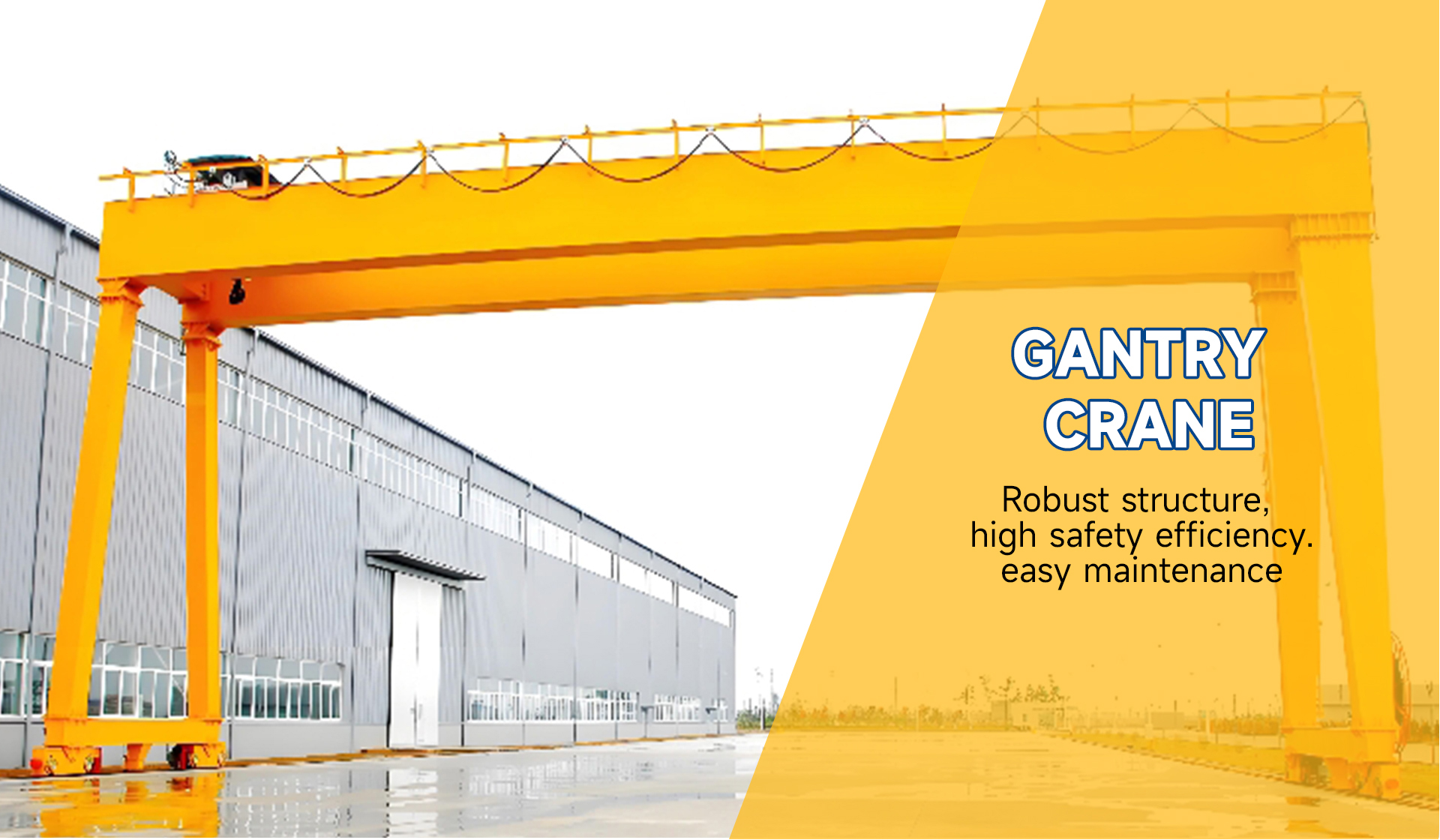
Gantry Crane Price Guide 2026
Gantry Crane Price Guide 2026: Cost by Tonnage, Type & Configuration Table of Contents Why a Gantry Crane
Hidden Costs of Importing a Gantry Crane
Hidden Costs of Importing a Gantry Crane: Shipping, Customs and Installation Guide Why Is a Gantry Crane Quote
Used vs New Gantry Crane: Total Cost of Ownership Explained
Used vs New Gantry Crane: Which One Has Lower Total Cost of Ownership (TCO)? Introduction When purchasing a
Gantry Crane Predictive Maintenance: How IoT Sensors Reduce Downtime
Gantry Crane Predictive Maintenance: How IoT Sensors Reduce Downtime Why Does Gantry Crane Downtime Cost So Much? Gantry
Contact Us Now
Have questions about our cranes or need help?
Reach out to our friendly team for expert support and guidance.
We are here to help you power your journey towards a greener future !
Address: Crane Industry Park, Xinxiang City Henan Provice
Hot Sales
Single girder overhead cranes
Double girder overhead cranes
Spider cranes