
Best Gantry Crane for Precast Concrete Yards: Selection Guide and Cost Factors
Table of Contents
-
Why Gantry Cranes Are Essential for Precast Concrete Yards
-
Types of Gantry Cranes for Precast Yards
-
Step 1:Determine Your Lifting Capacity
-
Step 2:Calculate Span and Lifting Height
-
Step 3:Choose the Right Duty Cycle (CMAA/FEM Class)
-
Step 4:Select Mobility Type (RTG vs Rail‑Mounted)
-
Step 5:Pick the Right Lifting Attachments
-
Step 6:Safety and Control Features
-
Cost Factors and Price Ranges
-
Case Studies
-
Frequently Asked Questions (FAQ)
-
Get the Right Gantry Crane for Your Precast Yard
1. Why Gantry Cranes Are Essential for Precast Concrete Yards
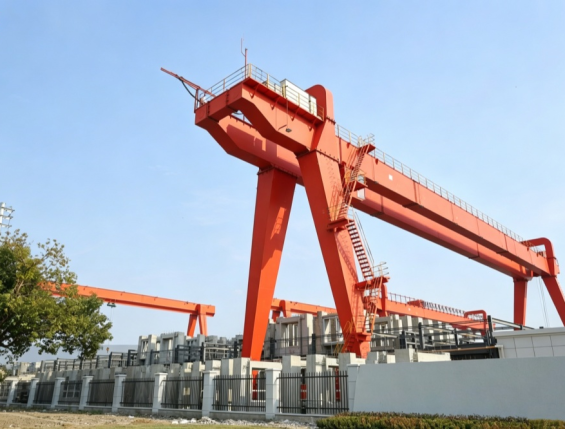
Precast concrete yards are not ordinary storage yards. They are busy production environments where bridge beams, tunnel segments, slabs, wall panels, and other concrete components move continuously between casting beds, curing zones, storage areas, and dispatch bays.
Moving these loads is nothing like lifting pallets or steel coils. A single precast beam can weigh 30, 40, or even 100+ tons. Some beams exceed 25 meters in length, requiring extremely wide working spans and multi-point lifting. Lifting points embedded in the concrete are not always perfectly centred, so the load may tilt slightly when lifted. Concrete is also brittle – sudden shocks, drops, or uncontrolled swings can cause micro-cracks or complete failure.
Standard warehouse cranes are not built for this. Forklifts cannot handle the weight or reach the required height. This is why gantry cranes are the backbone of every modern precast concrete facility.
This guide walks you through every major decision – capacity, span, duty cycle, mobility, attachments, safety, and cost. By the end, you will know exactly which gantry crane fits your precast yard’s workflow, production volume, and budget.
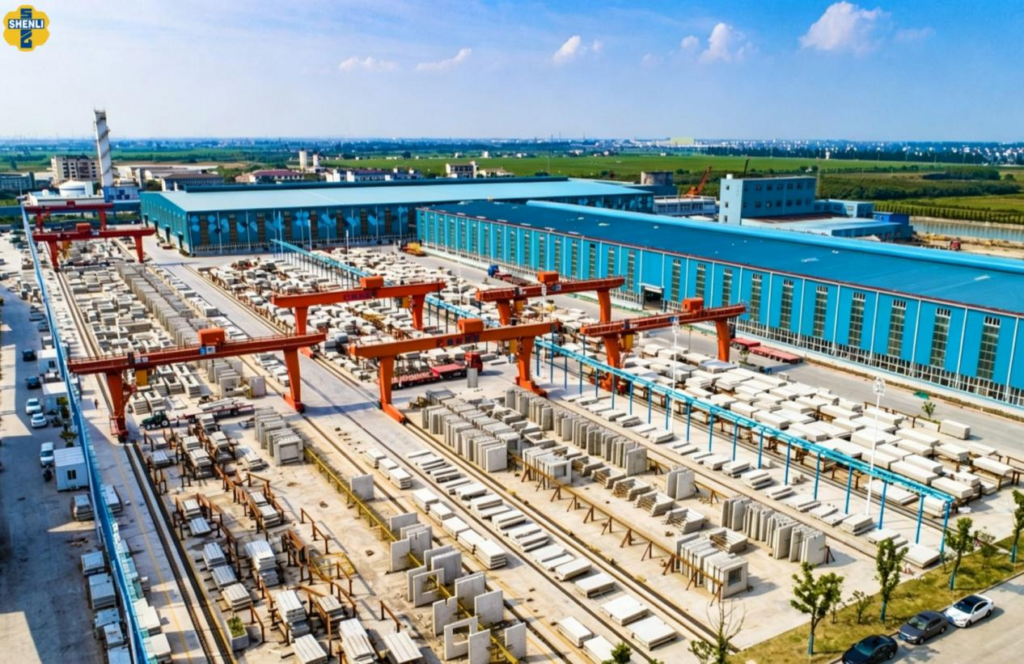
2. Types of Gantry Cranes for Precast Yards
Before diving into selection factors, let us clarify the main gantry crane types used in precast concrete yards.
| Type | Best for | Key features |
|---|---|---|
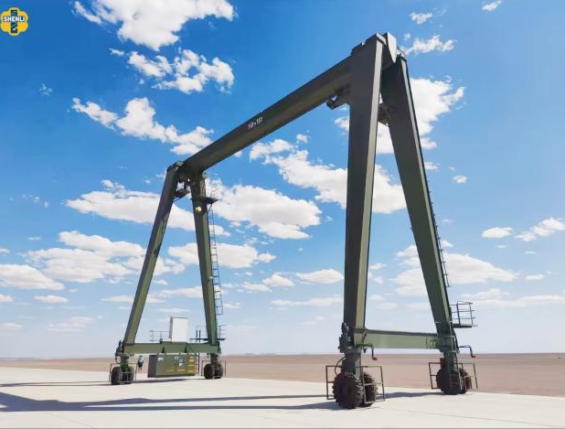
| Rubber‑tyred gantry crane (RTG) | Yards with changing layouts, multiple work zones, no fixed rails | Full yard mobility, no rail installation, flexible steering, suitable for 30–300+ tons, electric/hybrid/diesel power options |
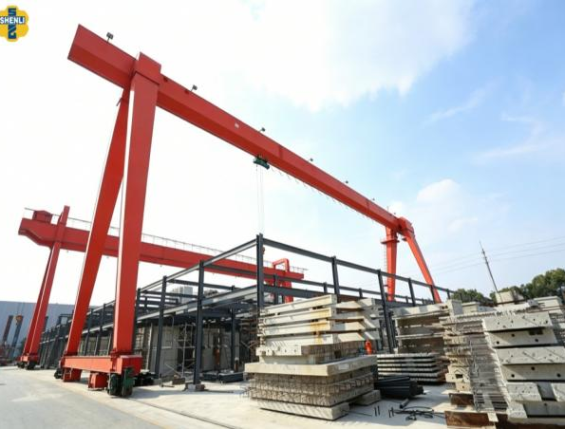
| Rail‑mounted gantry crane (RMG) | Fixed yard layouts, high‑density storage, permanent production blocks | Runs on fixed rails, very high precision, ideal for automated stacking, lower operating cost |
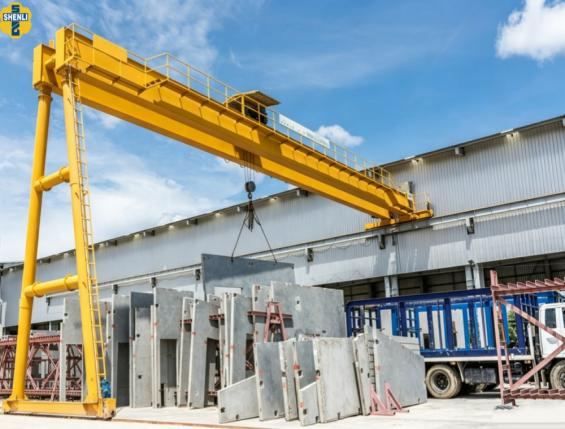
| Full gantry crane (rigid legs) | Heavy‑duty processing, wide spans, outdoor stockyards | Two rigid legs on ground rails, maximum stability, covers entire yard width |
| Semi‑gantry crane | Yards adjacent to existing buildings, space‑constrained layouts | One leg on ground rail, other side on building runway – saves floor space |
For most modern precast yards, rubber‑tyred gantry cranes (RTGs) are the most practical solution because they combine high‑capacity lifting with full yard mobility, eliminating the cost and inflexibility of fixed rail systems. However, large, permanent yards with stable layouts may prefer rail‑mounted systems for lower long‑term operating costs.
Throughout this guide, we focus primarily on the selection factors that apply to all gantry crane types serving precast concrete yards.
3. Step 1:Determine Your Lifting Capacity
This is the single most important number in your crane selection.
3.1 Know Your Heaviest Load
Look at your production schedule. What is the heaviest single concrete component you make today? What about next year, when you win larger contracts?
A precast yard does not handle just one type of product. One day it may be bridge beams, another day box girders, slabs, or tunnel segments. Each behaves differently when lifted – not just in weight, but in shape and balance.
Consider these typical weight ranges for precast concrete components:
| Component type | Typical weight range | Crane capacity recommendation |
|---|---|---|
| Small slabs, wall panels, hollow‑core units | 5–10 tons | 10–15 ton crane |
| Medium beams, floor slabs, columns | 10–20 tons | 20–25 ton crane |
| Large bridge beams, heavy tunnel segments | 20–40 tons | 32–50 ton crane |
| Extra‑heavy bridge girders, combined lifts | 40–60+ tons | 50–100+ ton crane |
| Multiple beams lifted simultaneously | 60–150+ tons | 100–200+ ton double girder |
Do not design for the average – design for the peak. If you occasionally handle 45‑ton beams, specify a crane rated for at least 50 tons. Undersizing to save money today will cost you far more in repairs and downtime when the crane fails under a load it was never meant to carry.
3.2 Add a Realistic Safety Margin
Professional engineers recommend a 10–25% safety margin above your calculated maximum load. This reserve capacity protects your crane from:
-
Dynamic load spikes – when a beam swings during acceleration or deceleration
-
Off‑centre loading – lifting points are not always perfectly centred; the load may tilt
-
Production variations – actual concrete weight often differs from design drawings due to reinforcement, hardware, and mix density
-
Future growth – when you start handling heavier components next year
Here is a simple way to calculate your required crane capacity:
Step 1: Find your heaviest component. Look at your biggest bridge beam or tunnel segment. What is the maximum weight on the drawing?
Step 2: Add the weight of your lifting attachment. A spreader beam, lifting frame, or vacuum lifter can weigh 0.5–3 tons or more, depending on design.
Step 3: Add a safety margin. Multiply your heaviest load (including attachment) by 1.10 to 1.25.
For example, if your heaviest bridge beam is 40 tons and your lifting frame weighs 2 tons:
-
Total working load = 42 tons
-
With 20% safety margin = 50.4 tons
Specify a 50‑ton crane.
Why not just buy the biggest crane available? Because larger cranes cost more – not just in purchase price, but in foundations, electricity, and maintenance. Match the capacity to your real need, plus a reasonable safety margin. Oversizing by 100% wastes money; undersizing by 10% invites disaster.
4. Step 2:Calculate Span and Lifting Height
A crane that can lift the right weight but cannot reach the right place is useless. Span and lifting height must match your yard layout.
4.1 Span – How Wide Must the Crane Cover?
Span is the distance between the inside edges of the crane‘s legs. It determines how much of your yard the crane can serve.
To calculate your minimum required span:
-
Measure the width of your longest component. A 25‑meter bridge beam needs much more span than a 10‑meter slab. In Africa, bridge construction often involves moving precast beams that can exceed 20–30 meters in length.
-
Add clearance on both sides. The lifting attachment extends beyond the component, and operators need safe working space on both sides. A typical rule is to add 0.5–1 meter of clearance on each side.
-
Add room for temporary obstacles. Moulds, curing racks, trucks, and other equipment may sit between the crane‘s legs. Your crane must be able to pass over or around them.
-
Plan for future layout changes. A crane that barely covers today‘s layout will need replacement if you reconfigure your yard next year.
Typical span ranges for precast yards:
| Yard configuration | Typical span | Comments |
|---|---|---|
| Small precast yard, single production line | 10–20 meters | Single girder often sufficient |
| Medium yard, multiple casting beds | 20–30 meters | Single girder up to ~20t, double girder above |
| Large yard, long‑span beams (25–40m) | 30–50+ meters | Double girder or RTG required |
| Rail‑connected production block | 20–40 meters | Rail‑mounted RMG recommended |
For very long components, consider a variable‑span gantry crane that can adjust the distance between legs. This allows the same crane to handle both short slabs and extra‑long bridge beams without repositioning the entire yard.
4.2 Lifting Height – How High Do You Need to Go?
Lifting height is measured from the ground to the hook at its highest position. In a precast yard, lifting height affects:
-
Stacking storage – Can you store cured beams two high or three high? Higher stacking increases yard density and reduces land costs.
-
Feeding processing equipment – Pouring concrete into moulds may require clearance above the casting bed.
-
Loading trucks – A flatbed truck‘s deck is about 1.5 meters high. Your crane must have enough height to lift a beam off the curing racks, clear the truck‘s sides, and place it safely.
Typical lifting height ranges:
| Application | Lifting height | Notes |
|---|---|---|
| Single‑level storage, low moulds | 5–7 meters | Basic precast yard |
| Medium stacking, truck loading | 7–10 meters | Standard for most yards |
| High stacking (3+ levels) | 10–15 meters | Double girder required for stability |
| Very high stacking / tall components | 15–30+ meters | Full gantry or specialty design |
If your yard has limited headroom, consider a low‑headroom double girder design. The compact crane profile adds 20–25% more effective lifting height compared to a single girder in the same building clearance.
5. Step 3:Choose the Right Duty Cycle (CMAA/FEM Class)
This is where many precast yard operators make expensive mistakes. A crane that matches your tonnage but not your usage pattern will fail early – and the repair costs and production losses will far exceed any upfront savings.
5.1 What Is Duty Cycle?
Duty cycle measures how often and how hard a crane works. Two cranes with identical lifting capacity can have very different design lives depending on how they are used.
-
CMAA Class A (standby) – designed for occasional lifts, maybe 2–5 lifts per hour, light loads, infrequent use
-
CMAA Class D (heavy service) – designed for 15–20 lifts per hour, continuous operation, handling near‑capacity loads
-
CMAA Class F (continuous severe service) – designed for 24/7 operation, maximum loads, thousands of cycles per day
5.2 Duty Cycle Requirements for Precast Yards
Most precast concrete yards fall into CMAA Class D / E, or FEM A5/A6 territory.
Here is why:
-
Beams, slabs, and panels move from casting to curing to storage to dispatch – often 50–150 lifts per 8‑hour shift
-
Loads often approach the crane’s rated capacity, especially for heavy bridge beams and tunnel segments
-
Precision positioning is required for stacking, aligning moulds, and loading trucks
-
Many yards run two shifts, meaning the same crane operates 16 hours per day
In the USA and Canada, CMAA publishes specifications for crane manufacturing, including duty ratings from A (lightest) to F (continuous severe service). European yards often reference FEM standards, which classify cranes based on load spectrum and operating time.
| Duty class | Description | Typical precast yard applications |
|---|---|---|
| CMAA Class C / FEM A4 | Moderate service, occasional heavy loads | Small precast yards, low‑volume production (<50 lifts/day) |
| CMAA Class D / FEM A5‑A6 | Heavy service, frequent full loads | Medium to large precast yards, daily beam handling (50‑150 lifts/day) |
| CMAA Class E‑F / FEM A7‑A8 | Continuous severe service | Very high volume yards, 24/7 production, integrated precast plants |
5.3 How to Know If You Need a Higher Duty Class
If you answer “yes” to any of these questions, you need at least CMAA Class D:
-
Does your crane lift near‑capacity loads more than 10 times per hour?
-
Does your crane run for more than 8 hours per day?
-
Do you have multiple shifts using the same crane?
-
Do you handle heavy bridge beams every day, not just occasionally?
-
Are you planning to increase production volume in the next 2–3 years?
Why this matters: A crane with a higher duty class uses better components – larger wheels, heavier‑duty brakes, more robust motors, and stronger structural members. The upfront price difference is relatively small, but the reliability difference over 10 years is huge. A facility processing 200+ beam movements per shift requires A6/A7 equipment. Lower‑volume operations (50–100 daily movements) can use A5. Avoid A3‑A4 for daily beam handling.
6. Step 4:Select Mobility Type (RTG vs Rail‑Mounted)
Your yard‘s layout and how often it changes will determine whether you need a rubber‑tyred gantry crane (RTG) or a rail‑mounted gantry crane (RMG).
6.1 Rubber‑Tyred Gantry Crane (RTG)
An RTG runs on large pneumatic tyres. It does not need fixed rails. It can move freely between yard zones, turn, and even steer crab‑wise (sideways).
Why RTGs work well in precast yards:
-
No rail installation – You avoid the high cost of concrete foundations and steel rails. Just pave the yard surface.
-
Full yard mobility – One RTG can serve casting beds, curing zones, storage areas, and dispatch bays. You do not need multiple cranes.
-
Layout flexibility – When you add a new production line or reconfigure storage, the RTG adapts without civil works.
-
Wide capacity range – RTGs are available from 30 tons up to 300+ tons, covering most precast yard requirements.
-
Power options – Diesel, electric (cable reel), or hybrid. Electric RTGs are becoming standard for yards focused on emissions reduction.
Limitations of RTGs:
-
Higher operating cost than rail‑mounted (tyres, fuel/maintenance for diesel units)
-
Slightly lower positioning precision than rail‑mounted (though modern RTGs with anti‑sway and auto‑steering narrow the gap)
-
Requires a well‑compacted, paved yard surface – not suitable for rough, unpaved ground
When to choose RTG: Your yard layout changes frequently, you need to serve multiple zones with one crane, or you want to avoid the upfront cost of rail installation.
6.2 Rail‑Mounted Gantry Crane (RMG)
An RMG runs on fixed steel rails embedded in concrete. It is locked on a straight path and cannot leave its dedicated block.
Why RMGs work well in some precast yards:
-
Very high precision – ideal for automated stacking and high‑density storage
-
Lower operating cost – electricity is cheap, and rail wear is minimal
-
Excellent for permanent, high‑volume production blocks that never change layout
-
Can achieve very high stacking density, saving land area
Limitations of RMGs:
-
High upfront infrastructure cost – rails, foundations, drainage
-
Zero flexibility – cannot move to another block without laying new rails
-
Layout decisions are permanent once rails are poured
When to choose RMG: Your yard layout is fixed for 10+ years, you prioritise stacking density over flexibility, and you are willing to invest in rail infrastructure.
6.3 Decision Summary
| Your yard situation | Recommended mobility |
|---|---|
| Changing layout, multiple work zones, no fixed rails | RTG (rubber‑tyred) |
| Permanent production block, high‑density storage | RMG (rail‑mounted) |
| You need one crane to serve the whole yard | RTG |
| You are building a new yard and want long‑term lowest operating cost | RMG for main blocks, RTG for flexible zones |
| Budget for rail works is not available | RTG |
7. Step 5:Pick the Right Lifting Attachments
A gantry crane is only as useful as its lifting attachment. Precast concrete yards require specialised tools that standard warehouses never need.
7.1 Spreader Beams and Lifting Frames
For long components like bridge beams, a spreader beam or lifting frame distributes the lifting forces across multiple points, preventing bending, cracking, or uneven stress on the concrete.
A 25‑metre beam lifted from a single point will sag in the middle and could crack. A spreader beam with two or more pick points keeps the beam level and safe. Spreader beams are often paired with dual‑hoist cranes for precise synchronous lifting.
7.2 Vacuum Lifters
For smooth, flat components like wall panels or slabs, vacuum lifters provide a secure, damage‑free grip without penetrating the concrete surface. They are ideal for finished architectural panels where surface appearance matters.
7.3 Polyester Slings and Softeners
Polyester slings with edge protectors or softeners prevent the lifting straps from cutting into sharp concrete edges. For components with rough finishes or exposed aggregate, slings are often gentler than steel lifting beams. However, they require regular inspection for wear and tear.
7.4 C‑Hooks and Coil Grabs
If your yard handles precast products with embedded lifting loops or cores (such as hollow‑core slabs or pipes), C‑hooks or motorised grabs engage directly with the embedded hardware. These attachments speed up the lifting cycle because operators do not need to attach slings manually.
7.5 Magnetic Lifters
For small‑ to medium‑sized ferrous inserts or edge‑lifting applications, magnetic lifters offer quick pick‑up and release. However, they are less common for large concrete components because concrete itself is not magnetic – magnets work only on embedded steel plates.
7.6 Attachment Selection Quick Guide
| Concrete component | Best lifting attachment | Notes |
|---|---|---|
| Long bridge beams (20–50m) | Spreader beam with dual pick points | Use dual hoists for synchronous lifting |
| Heavy tunnel segments | Lifting frame with multiple chains | Balances uneven centre of gravity |
| Wall panels, slabs (flat) | Vacuum lifter or spreader beam | Protects finished surfaces |
| Hollow‑core slabs with cores | C‑hook or motorised grab | Engages embedded hardware directly |
| Rough‑finish components | Polyester slings with edge softeners | Prevents chipping |
| Embedded steel plates | Magnetic lifter | For small to medium components only |
8. Step 6:Safety and Control Features
Precast concrete components are heavy, rigid, and brittle. Dropping a bridge beam or swinging it into a mould can cause catastrophic damage – not just to the component, but to people and equipment.
Your gantry crane should include the following safety and control features as standard or optional upgrades.
8.1 Overload Limiter (Rated Capacity Indicator)
An overload limiter monitors the load in real time. When the load approaches the crane‘s rated capacity (typically 90–95%), it sounds an alarm. If the load exceeds the safe limit, it cuts power to the hoist.
This is not optional – it is required by OSHA and other safety regulations in most countries. For precast yards where beam weights vary and lifting points may be off‑centre, an overload limiter prevents the single most common cause of crane structural failure.
8.2 Limit Switches
Limit switches automatically stop motion at preset points:
-
Hoist upper limit – prevents the hook from hitting the crane structure
-
Hoist lower limit – prevents the drum from running out of wire rope
-
Trolley travel limits – prevents the trolley from running off the end of the bridge
-
Bridge travel limits – prevents the crane from derailing
In a busy precast yard where operators move quickly, limit switches protect the crane from damage when an operator’s attention slips.
8.3 Anti‑Sway Technology
When a 30‑ton bridge beam swings, it is dangerous and inefficient. Operators waste time waiting for the swing to settle before they can safely lower the load.
Anti‑sway systems actively cancel pendulum motion during operation. Using sensors and real‑time control algorithms, the system keeps the load steady even during bridge acceleration and braking.
CMAK‘s HoistSense+ system, for example, uses advanced monitoring and control to transform a standard crane “into an advanced sensor – basically monitoring anything from workload, when to service, which points to check”. Load sway can be reduced by more than 80% compared to manual operation.
Why anti‑sway matters in precast yards: Concrete is brittle. A swinging beam can develop micro‑cracks that are invisible during lifting but cause failure years later in service. Anti‑sway technology protects not only the crane and the operator but also the long‑term integrity of your finished products.
8.4 Variable Frequency Drive (VFD)
VFDs provide stepless speed control on hoisting, trolley, and bridge travel. Instead of only “slow” and “fast”, operators can creep at low speed for precise positioning over a mould or storage rack.
For precast yards where components must be aligned within millimetres, VFDs are not a luxury – they are a productivity tool. A soft start protects the load from sudden jerks, and smooth deceleration prevents the beam from slamming into the storage rack.
Weihua‘s FEM‑DIN double girder gantry crane offers frequency control with a high and low speed ratio of 1:10, increasing work efficiency by more than 20%.
8.5 Radio Remote Control
Radio remote controls allow the operator to stand at the best vantage point – near the beam being hooked, away from the pinch point between the beam and the rack. For precast yards, a radio remote with a multi‑function transmitter significantly improves both safety and efficiency. A backup pendant control (wired) is recommended in case the remote‘s battery fails.
8.6 Weather Protection (Outdoor Yards)
If your precast yard is outdoors – and most are – the crane must be weather‑protected:
-
Corrosion‑resistant coatings – high‑grade paint systems for outdoor exposure
-
Rain covers and enclosures – protect electrical components from moisture
-
Heaters – prevent condensation and ice formation in cold climates
-
Stainless steel hardware – for fasteners and exposed components in coastal areas
In the Netherlands, for example, CMAK equipped a 60‑ton gantry crane with rain covers and standby heaters because the crane operates in day‑night shifts and faces different weather conditions throughout the year.
8.7 Wind Brakes and Rail Clamps
For outdoor gantry cranes, wind brakes or rail clamps are mandatory in most safety codes. These devices automatically engage when wind speed exceeds a preset threshold or when the crane is parked, preventing the crane from rolling on its rails or tyres.
Some local regulations require anemometers (wind speed sensors) for outdoor cranes serving yards in coastal or high‑wind regions.
8.8 Safety Configuration Summary
| Feature | Indoor yard | Outdoor yard | Comments |
|---|---|---|---|
| Overload limiter | Required | Required | Non‑negotiable |
| Upper/lower limit switches | Required | Required | Prevents over‑travel |
| Travel limit switches | Required | Required | Prevents derailment |
| VFD (stepless control) | Recommended | Recommended | Essential for precision |
| Anti‑sway system | Recommended for beams | Recommended for windy conditions | Cuts cycle time, reduces damage |
| Radio remote control | Recommended | Recommended | Improves operator visibility |
| Emergency stop | Required | Required | Required by OSHA/ISO |
| Corrosion protection | Not required | Required | For outdoor exposure |
| Wind brakes / rail clamps | Not required | Required | Prevents wind‑induced rolling |
| Anemometer | Not required | Recommended in wind‑prone areas | Required by some local codes |
9. Cost Factors and Price Ranges
The total cost of a gantry crane for a precast yard includes much more than the equipment price.
9.1 Price Ranges by Capacity
The following price ranges are estimates for standard electric gantry cranes (single girder up to 20 t, double girder above 20 t). Prices are in USD and represent equipment only – not shipping, installation, or attachments.
| Capacity | Typical span | Price range (USD) | Typical precast yard application |
|---|---|---|---|
| 5–10 t | 10–25 m | 18,000–18,000–30,000 | Small slabs, wall panels, light components |
| 10–20 t | 15–30 m | 25,000–25,000–50,000 | Medium beams, floor slabs, columns |
| 20–32 t | 15–35 m | 40,000–40,000–80,000 | Large beams, heavy tunnel segments |
| 32–50 t | 20–40 m | 70,000–70,000–120,000 | Extra‑heavy bridge girders |
| 50–100 t | 25–50 m | 120,000–120,000–200,000+ | Major infrastructure components |
| 100+ t | Custom | 200,000–200,000–500,000+ | Mega‑projects, multiple‑beam lifts |
For specific reference points:
-
10‑ton gantry crane: approximately 38,000–38,000–60,000
-
20‑ton double girder: typically 68,000–68,000–80,000
-
50‑ton double girder: 300,000–300,000–600,000
-
100‑ton gantry crane: 450,000–450,000–880,000
-
20‑ton outdoor double girder for precast beam lifting: 8,500–8,500–95,000 depending on span, height, and customisation
9.2 Cost Factors Beyond the Equipment Price
| Cost component | Budget range (USD) | Notes |
|---|---|---|
| Equipment (crane + hoist + controls) | 18,000–18,000–500,000+ | Largest single cost |
| Lifting attachments (spreader beam, etc.) | 5,000–5,000–50,000+ | Custom designs cost more |
| Rail installation (if rail‑mounted) | 20,000–20,000–100,000+ | Foundation + rails + levelling |
| Shipping and freight | 5,000–5,000–30,000+ | Depends on crane size and destination |
| Installation and rigging | 5,000–5,000–20,000+ | Professional crew required for large cranes |
| Electrical work | 3,000–3,000–15,000+ | Power supply, controls, wiring |
| Site preparation / ground paving (RTG) | 10,000–10,000–50,000+ | Compacted, paved yard surface |
| Training | 1,000–1,000–5,000 | Operator and maintenance training |
| Annual maintenance | 3–8% of equipment cost | Higher for diesel RTGs, lower for electric |
9.3 Operating Cost Considerations
Do not just look at the purchase price. Consider the total cost of ownership over 10 years.
-
Energy: An electric RTG or RMG costs 15–15–30 per shift in electricity. A diesel RTG costs 150–150–300+ per shift in fuel, plus engine maintenance.
-
Tyre replacement (RTG): A set of heavy‑duty RTG tyres costs 20,000–20,000–50,000 and lasts 5–7 years.
-
Maintenance: CMAA Class D cranes use higher‑quality components that last longer but may have higher parts costs. The total maintenance cost over 10 years is usually lower than a cheaper crane that breaks down frequently.
-
Downtime cost: The most expensive cost is not shown on any invoice – it is the production loss when your crane fails in the middle of a pour. A well‑specified crane with proper duty cycle is an insurance policy against that loss.
10. Case Studies
Real projects help illustrate how these selection principles work in practice.
Case Study 1: 60‑Ton Double Girder Gantry Crane – Netherlands
CMAK Crane Systems delivered a 60‑ton double girder gantry crane to Mombarg Beton‘s prefab concrete manufacturing yard in the Netherlands. The crane has two hoists with 30‑ton SWL each and a third supporting hoist with 6.3‑ton SWL. The hoists can work individually or synchronously to transfer and store materials.
Key specifications: cross and long travel speeds up to 31 m/min, hoisting speed up to 5.1 m/min, 8 m lift height. Features include VFD control, thermal switches, limit switches, overload limiters, motorised cable reel, LED floodlights, audible warning system, and emergency stop. The crane operates in day‑night shifts and was equipped with rain covers and standby heaters for weather protection.
Why this crane was chosen: The yard produces standardised and customised prefab concrete basements and lift shafts of different shapes and weights. The dual‑hoist design with synchronous operation allows the crane to handle both large heavy components and smaller pieces efficiently.
Case Study 2: 50‑Ton Double Girder Gantry Crane – Malaysia
HSCRANE delivered a custom 50‑ton double girder gantry crane to a large Malaysian precast concrete factory producing bridge beams, pipe galleries, and wall panels. The crane features an optimised large span design using Finite Element Analysis (FEA) to reduce weight while increasing rigidity. VFD technology provides “soft start” and “soft stop” for both hoisting and travelling mechanisms, protecting expensive moulds and improving ground safety.
For Malaysia‘s hot, humid outdoor climate, the crane received a high‑grade triple‑layer paint system for corrosion protection, double‑layer heat insulation for electrical cabinets, and industrial‑grade dehumidifiers. Safety features include overload limiters, anemometers, and real‑time status screens.
Results: lifting cycle time decreased by 20%, annual maintenance costs dropped by 15%, and VFD technology enabled precise micro‑positioning, greatly reducing the collision rate during lifting.
11. Get the Right Gantry Crane for Your Precast Yard
You have seen the decision framework – capacity, span, duty cycle, mobility, attachments, safety features, and cost. Now it is time to apply it to your specific precast concrete facility.
At SLKJCrane, we design and manufacture gantry cranes for precast yards worldwide. We have helped concrete beam producers, tunnel segment manufacturers, and large‑scale precast plants choose the right lifting equipment for their workflow, production volume, and budget.
What we offer for precast concrete yards:
-
Free application consultation – we study your beam weights, component sizes, yard layout, and daily movement volume
-
Rubber‑tyred gantry cranes (RTG) – 10–300+ tons, single‑beam, double‑beam, and A‑frame configurations, with diesel, electric, or hybrid power options
-
Rail‑mounted gantry cranes (RMG) – for fixed‑layout, high‑density yards
-
Single girder and double girder designs to match your capacity needs
-
Specialised attachments – spreader beams, lifting frames, vacuum lifters, C‑hooks
-
Advanced controls – VFD, anti‑sway, radio remote, automation‑ready PLC
-
Full documentation – CAD drawings, load charts, FEM/CMAA/ISO compliance certificates
-
Worldwide shipping and remote installation guidance
👉 Contact us today – share your beam weights, component lengths, daily lifting frequency, yard dimensions, and whether you operate indoors or outdoors. We will recommend the most cost‑effective gantry crane configuration for your precast concrete yard.

Expert in Overhead Crane/Gantry Crane/Jib Crane/Crane Parts Solutions
Eileen
With 20+ years of experience in the Crane Overseas Export Industry, helped 10,000+ customers with their pre-sales questions and concerns, if you have any related needs, please feel free to contact me!
Our Crane Product Range
SLKJcrane provides a wide range of lifting equipment solutions including:
– Single Girder Overhead Crane
– Double Girder Overhead Crane
– Gantry Crane
– Spider Crane
– Marine Crane
Our engineering team can configure safety devices and technical solutions according to project requirements.
FAQ
Add 20% safety margin to your heaviest beam weight. For a 40‑ton beam, that means a 50‑ton crane. Do not size for the average – size for the peak.
Use the 20‑ton rule. Regularly handle under 20 t and low frequency → single girder can work. Regularly handle over 20 t or high frequency → double girder is the right choice.
If your yard layout changes frequently or you need one crane to serve multiple zones, choose an RTG. If your layout is fixed for 10+ years and you prioritise stacking density and low operating cost, choose rail‑mounted.
Rough range: 30,000forasmall5‑tonRTGto30,000forasmall5‑tonRTGto500,000+ for a large 100‑ton double girder. Add 20–40% for attachments, installation, rail works (if rail‑mounted), and shipping.
Most precast yards handling beams daily need CMAA Class D/E or FEM A5‑A6. Yards with low volume may use Class C. Avoid Class A‑B for daily beam handling.
Measure from the ground to the highest point you need to place a beam, add 1–1.5 m of safety clearance, then add the crane structure height. For typical yards, 7–10 m is standard. For high stacking, 10–15 m or more.
Overload limiter, upper/lower limit switches, emergency stop, anti‑sway system, VFD for smooth control, and (for outdoor) wind brakes/rail clamps plus corrosion protection.
Latest Blog
Lorem ipsum dolor sit amet, consectetur adipiscing elit, sed do eiusmod tempor incididunt ut labore et dolore magna aliqua
Gantry Crane Price Guide 2026
Gantry Crane Price Guide 2026: Cost by Tonnage, Type & Configuration Table of Contents Why a Gantry Crane
Hidden Costs of Importing a Gantry Crane
Hidden Costs of Importing a Gantry Crane: Shipping, Customs and Installation Guide Why Is a Gantry Crane Quote
Used vs New Gantry Crane: Total Cost of Ownership Explained
Used vs New Gantry Crane: Which One Has Lower Total Cost of Ownership (TCO)? Introduction When purchasing a
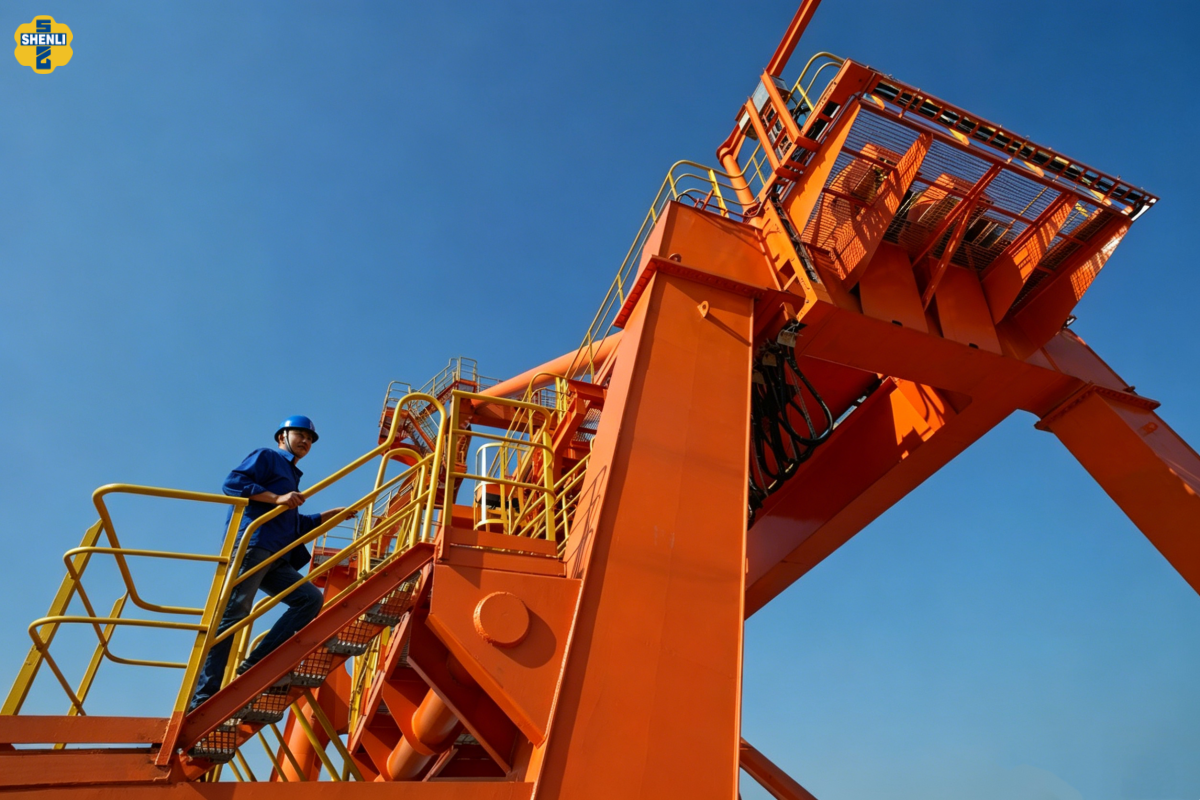
Gantry Crane Predictive Maintenance: How IoT Sensors Reduce Downtime
Gantry Crane Predictive Maintenance: How IoT Sensors Reduce Downtime Why Does Gantry Crane Downtime Cost So Much? Gantry
Contact Us Now
Have questions about our cranes or need help?
Reach out to our friendly team for expert support and guidance.
We are here to help you power your journey towards a greener future !
Address: Crane Industry Park, Xinxiang City Henan Provice
Hot Sales
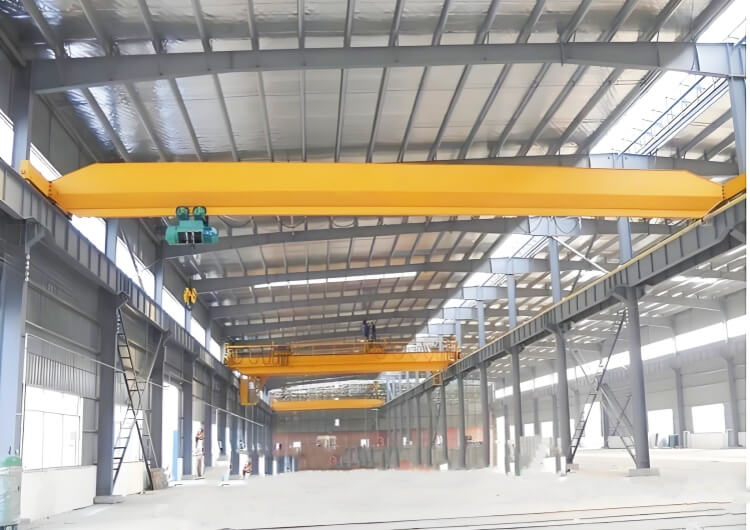
Single girder overhead cranes
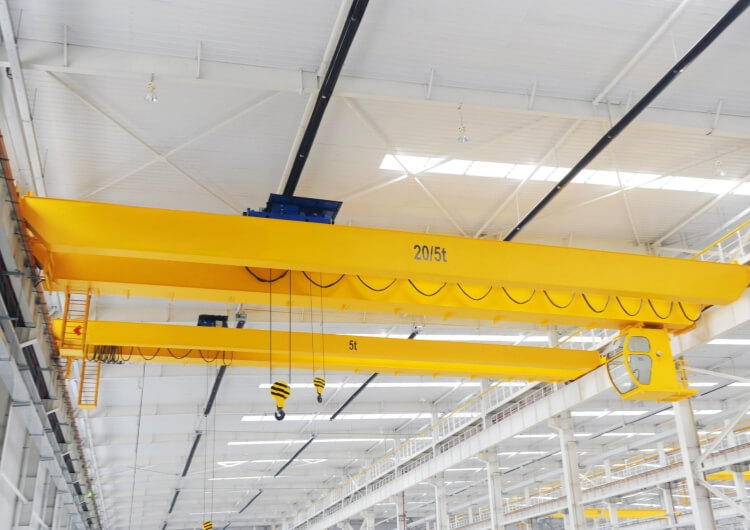
Double girder overhead cranes
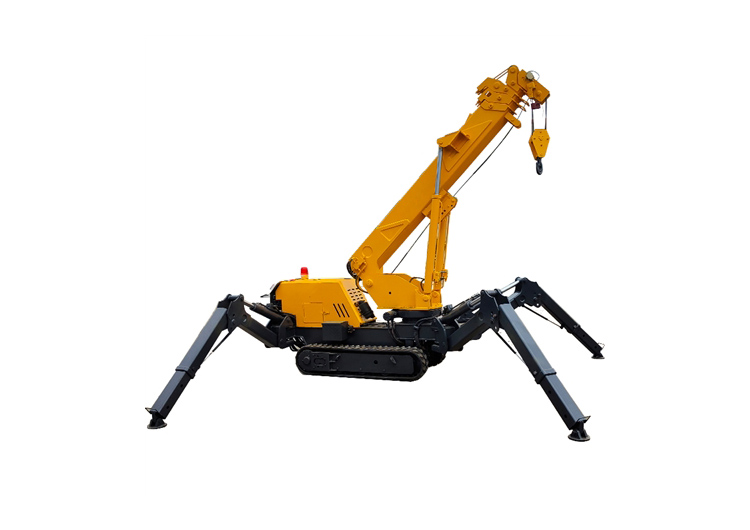
Spider cranes