
Hidden Costs of Importing a Gantry Crane: Shipping, Customs and Installation Guide
Why Is a Gantry Crane Quote Never a Simple Number?
The Nature of a Quote: Not Product Price, But Engineering Cost Breakdown
Many customers ask, when they first request a gantry crane quotation: “How much is a 20‑ton gantry crane?”
If you only look at the equipment itself, the answer is usually an FOB price – perhaps around $30,000. But in real international projects, that number is only the starting point of the cost chain, not the final investment.
A gantry crane is not a standard off‑the‑shelf product. It is an international engineering system that must be shipped, cleared through customs, installed on a prepared foundation, and commissioned before it can operate. Therefore, a quotation should never be a single number; it must be broken down into several cost modules for proper evaluation.
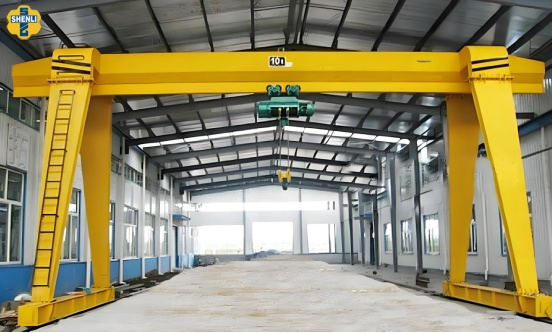
1. Equipment Manufacturing Cost (FOB) – The Visible Starting Point
The FOB price typically covers the crane as it leaves the factory. It includes the main girder steel structure, legs, hoisting mechanism, electrical system, control system, and factory testing.
This part is the most visible cost in the whole project, but it only represents the “crane itself”. It does not include anything related to site delivery.
In other words, FOB answers “is the crane built?” – not “how does it get into operation?”
2. Export Packing and Ocean Freight – Where Costs Begin to Vary
2.1 Export Packing
Depending on shipping distance and ocean conditions, equipment usually requires anti‑rust treatment, steel structure reinforcement, or wooden crating. Port handling and documentation fees also apply.
2.2 Different Transport Methods
Gantry cranes of different sizes and spans require different shipping modes:
| Crane Type | Shipping Method |
|---|---|
| Small gantry crane | Container |
| Medium gantry crane | Flat rack |
| Large double girder gantry crane | Break bulk |
| Extra‑wide span gantry crane | Heavy lift vessel |
The same crane can cost several times more to ship depending on the chosen method – one of the most variable parts of any international gantry crane project.
3. Import Customs Clearance and Taxes – Country‑Determined Costs
Once the equipment arrives in the destination country, it enters the customs and tax stage. This includes:
-
Import duties
-
Value‑added tax (VAT) or GST
-
Customs clearance fees
-
Local inspection fees
Tax systems vary enormously by country. Examples:
-
Some countries: 0–5%
-
Typical markets: 5–15%
-
High‑tariff countries: over 20%
Therefore, this part of the cost cannot be standardised and is almost never included in an FOB quotation – otherwise the quotation would be misleading.
4. Inland Transport – The Most Underestimated Cost
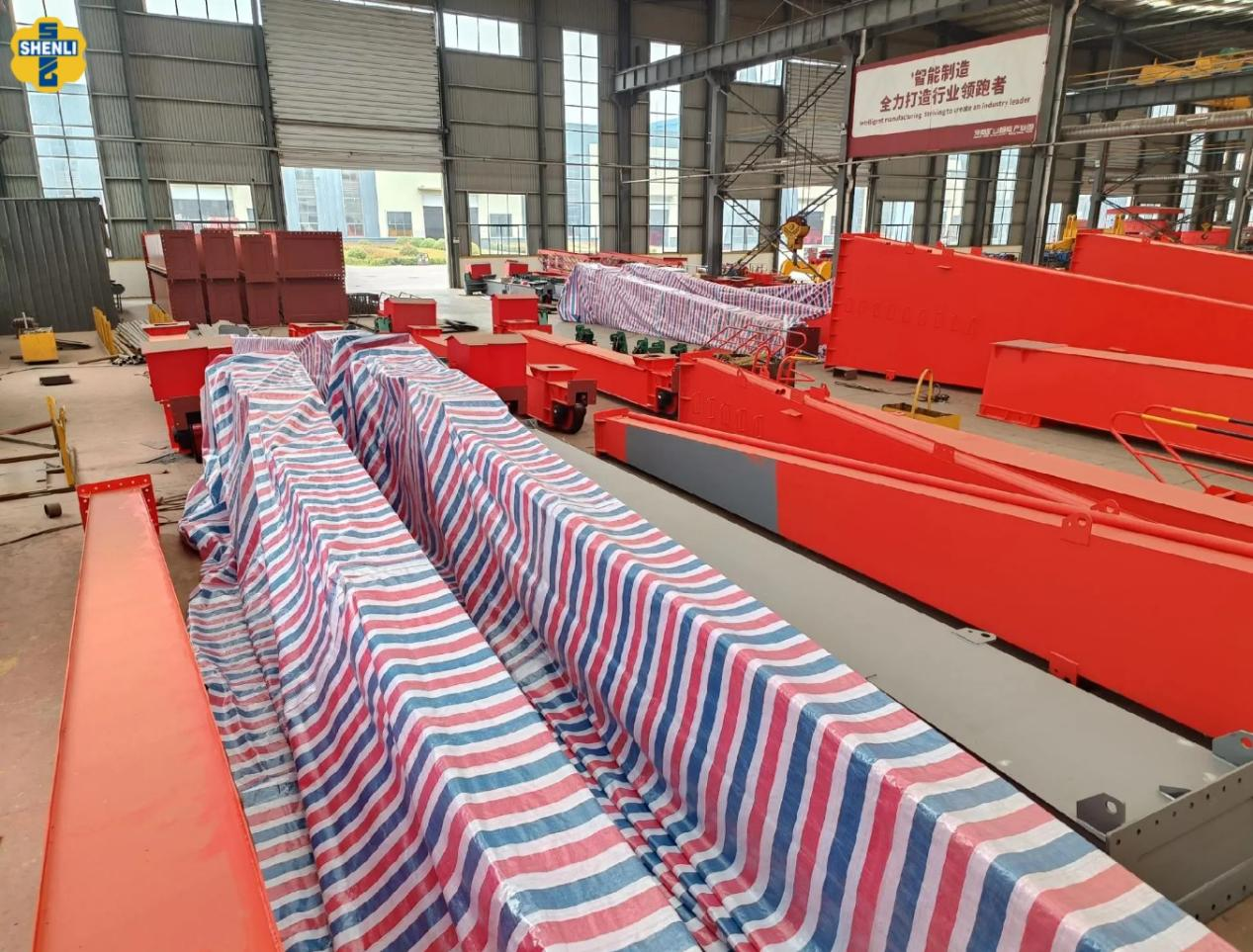
Gantry cranes are over‑dimension cargo. The main girder is often very long. Inland transport is far more complex than moving ordinary machinery. Typical requirements include:
-
Oversized/overweight transport permits
-
Route survey
-
Bridge load capacity assessment
-
Multi‑axle hydraulic trailers
-
Escort vehicles
In regions where the port is far away or roads are difficult, inland transport can cost nearly as much as ocean freight – a major variable in the total project budget.
5. Foundation Work – The Prerequisite for Operation
A gantry crane cannot be used directly on the ground. It needs a proper foundation system, which may include:
-
Concrete foundation
-
Rail beams (for rail‑mounted cranes)
-
Ground treatment
-
Drainage system
-
Embedded power conduits
Different crane types have different foundation requirements:
-
Portable gantry cranes – lower foundation demands
-
Rail‑mounted gantry cranes – full rail and foundation system required
Site geology is also a critical factor. If the ground bearing capacity is insufficient, the foundation design may need to be revised, which can significantly increase both cost and construction time.
6. Installation and Commissioning – The Final Step
After the crane arrives on site, it must be assembled and commissioned. This includes:
-
Main girder lifting
-
Structural alignment
-
Electrical wiring
-
Limit switch adjustment
-
No‑load and load tests
Because of the large size, auxiliary equipment such as mobile cranes or crawler cranes is often required.
The cost of this stage depends not only on the crane itself, but also on site conditions, construction schedule, and local labour costs. It can vary widely from country to country.
7. Why Quotations Must Be Split – Because Project Conditions Are Never the Same
The fundamental reason a gantry crane quotation must be broken down is that every project has completely different execution conditions.
Even the same 20‑ton gantry crane, in different countries and under different site conditions, can have a total cost difference of 30‑50% or more.
Key influencing factors include:
-
Tax structure
-
Distance from port to site
-
Transport infrastructure quality
-
Crane span and weight
-
Foundation type
-
Installation environment
If you only ask for a single lump‑sum price, you risk large budget deviations later, or unclear responsibility boundaries.
8. Industry Standard Quotation Structure
In the international crane industry, quotations are typically structured into three levels:
| Quote Type | What‘s Included | Best for | Key Feature |
|---|---|---|---|
| EXW / FOB | Equipment only, ex‑factory | Buyers with own logistics | Lowest price, but you handle everything after the factory |
| CIF | Equipment + sea freight + insurance | Buyers who can clear customs | Good for project budgeting |
| Turnkey (full installation) | Equipment + freight + customs + installation + commissioning | End users | Most convenient, highest cost |
From an engineering perspective, these three quotation types are essentially different scopes of responsibility – not just different price levels.
Summary: A Quote Is Not a Number – It Is an Engineering System
The reason gantry crane quotations seem complicated is not that suppliers want to make them complex. It is because a gantry crane is itself an international engineering system.
From manufacturing to international shipping, from customs clearance to foundation construction, and then to installation and commissioning – every single step affects the final cost structure.
Therefore, what you really need to focus on is not the equipment price alone, but the full lifecycle cost from factory delivery to operational start‑up.
Only by understanding this can you accurately estimate your project budget and avoid unpleasant cost surprises later.
About SLKJ Crane
At SLKJ Crane, we regularly help overseas customers evaluate shipping, installation, and total landed costs.
With extensive international project experience, we not only design and manufacture gantry cranes, but also help customers optimise transport routes, plan installation sequences, and identify key factors that could affect project budgets in advance.
From small portable gantry cranes to large industrial heavy‑duty gantry cranes, we are committed to providing lifting solutions that balance performance, safety, and long‑term value.

Expert in Overhead Crane/Gantry Crane/Jib Crane/Crane Parts Solutions
Eileen
With 20+ years of experience in the Crane Overseas Export Industry, helped 10,000+ customers with their pre-sales questions and concerns, if you have any related needs, please feel free to contact me!
Frequently Asked Questions (FAQ) About FEM Overhead Crane
For most projects, the largest additional expenses beyond the equipment price are ocean freight, import duties, inland logistics, and installation/commissioning.
Usually not. It depends on the trade term and the specific contract agreement.
Yes. For large equipment or projects in remote areas, inland transport can sometimes cost as much as, or even more than, international shipping.
Installation cost depends on crane size, site conditions, local labour rates, and whether auxiliary lifting equipment is required. It varies significantly by country.
Not necessarily. DDP reduces the buyer‘s logistics burden, but you should always compare DDP against FOB or CIF options to see which gives the best total cost.
A complete budget should include: equipment purchase, freight, insurance, import duties, inland transport, site preparation (foundation), installation & commissioning, and ongoing maintenance.
Gantry Crane Price Guide 2026
Gantry Crane Price Guide 2026: Cost by Tonnage, Type & Configuration Table of Contents Why a Gantry Crane
Hidden Costs of Importing a Gantry Crane
Hidden Costs of Importing a Gantry Crane: Shipping, Customs and Installation Guide Why Is a Gantry Crane Quote
Used vs New Gantry Crane: Total Cost of Ownership Explained
Used vs New Gantry Crane: Which One Has Lower Total Cost of Ownership (TCO)? Introduction When purchasing a
Gantry Crane Predictive Maintenance: How IoT Sensors Reduce Downtime
Gantry Crane Predictive Maintenance: How IoT Sensors Reduce Downtime Why Does Gantry Crane Downtime Cost So Much? Gantry
Contact Us Now
Have questions about our cranes or need help?
Reach out to our friendly team for expert support and guidance.
We are here to help you power your journey towards a greener future !
Address: Crane Industry Park, Xinxiang City Henan Provice