
Gantry Crane Predictive Maintenance: How IoT Sensors Reduce Downtime
Why Does Gantry Crane Downtime Cost So Much?
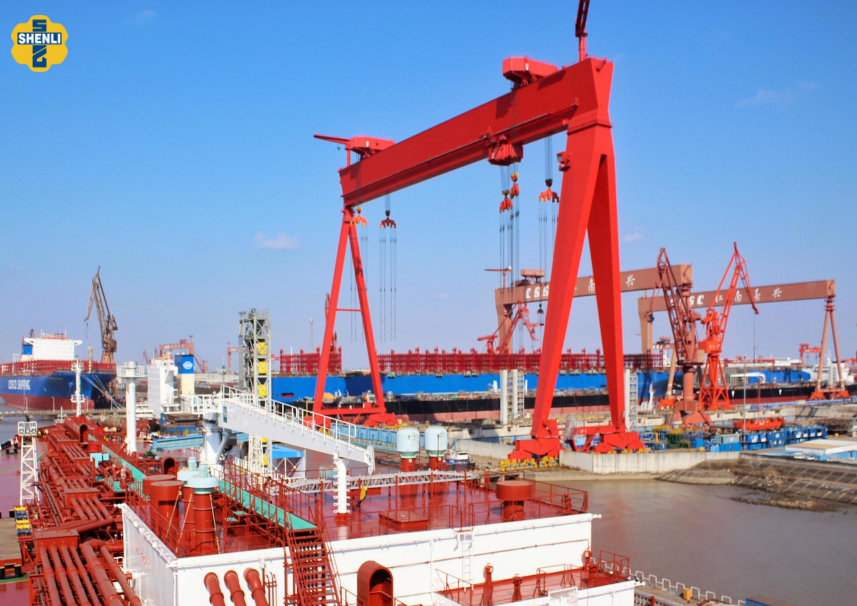
Gantry cranes are essential for material handling in shipyards, ports, logistics yards, and many manufacturing workshops. They are a critical link in the production chain.
When a gantry crane suddenly stops working, the consequences can snowball: interrupted material flow, truck queues, production line stoppages, and even delayed order deliveries.
Often, the biggest headache for businesses is not the repair cost itself, but the ripple effects of unplanned downtime.
That is why more and more companies are shifting their focus from “how to fix a broken crane” to “how to prevent unexpected breakdowns in the first place.” Reducing unplanned downtime and detecting potential faults early has become a key priority for modern crane asset management.
What Are the Problems with Traditional Gantry Crane Maintenance?
Most gantry cranes today still rely on two traditional maintenance approaches:
1. Reactive Maintenance (Run‑to‑Fail)
Repairs are scheduled only after a breakdown occurs.
This approach has low upfront costs, but when a critical component suddenly fails — for example, a hoist gearbox seizes, a motor burns out, or a brake fails — the crane stops immediately.
Beyond the repair bill, the business also incurs additional expenses from production losses and expedited part shipping.
2. Scheduled Preventive Maintenance
To reduce sudden failures, many companies perform regular inspections every quarter, six months, or year.
However, equipment condition does not follow a calendar. Some components are still in good shape when their scheduled replacement comes, so they are replaced early — wasting money. Meanwhile, other components that run under heavy loads may wear out or fail before the next inspection.
The root problem is:
Maintenance schedules are based on time, but equipment failures depend on actual operating conditions.
What Is Gantry Crane Predictive Maintenance?
Although automation configurations vary between projects, most automated gantry cranes rely on several core technologies to operate autonomously.
Instead of guessing when a crane might break down, you use real‑time operating data to decide whether maintenance is needed.
After installing sensors on key parts of the gantry crane, the system continuously records operational data. If an abnormal trend is detected, maintenance staff can intervene early — before a failure occurs.
Thus, the key difference between traditional maintenance and predictive maintenance is:
-
Traditional maintenance focuses on “when to inspect” (time‑based).
-
Predictive maintenance focuses on “whether the crane actually needs maintenance” (condition‑based).
How Do IoT Sensors Monitor Gantry Crane Operating Condition?
A predictive maintenance system is typically built on industrial IoT (Internet of Things) technology. Sensors are installed on critical crane components so that the crane continuously “reports its own health” during operation.
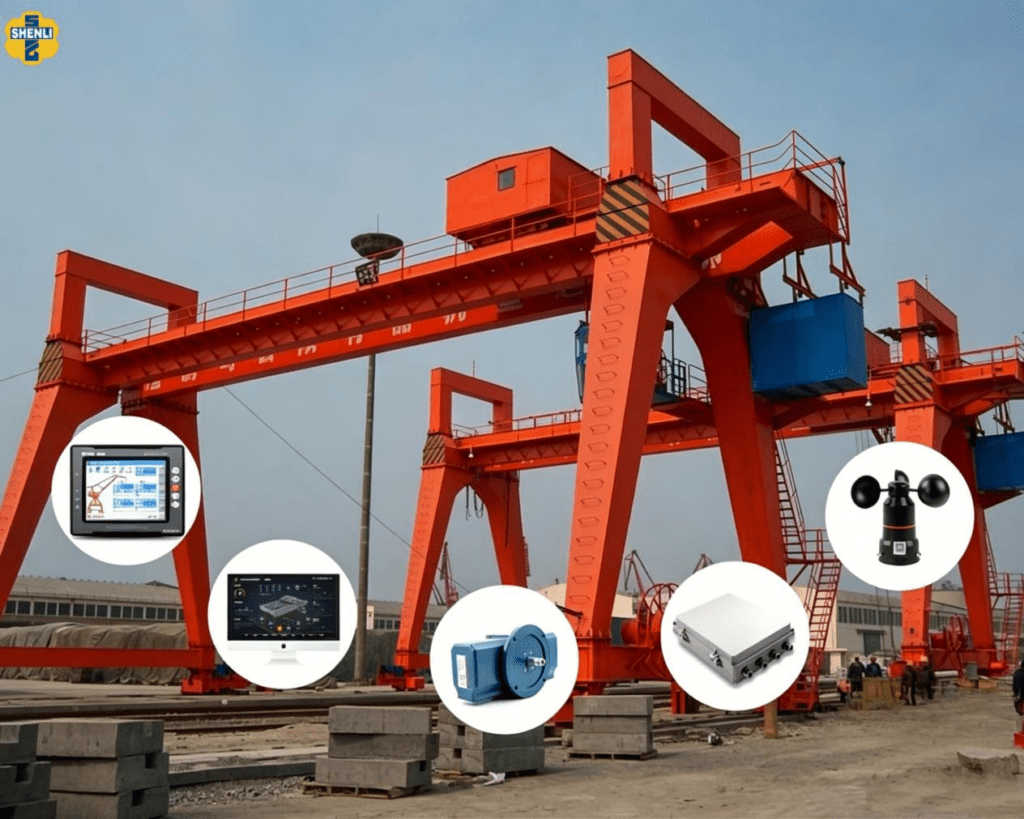
The collected data is uploaded to a monitoring platform, where the system automatically analyzes it for anomalies. Commonly monitored components include:
-
Hoist mechanism
-
Electric motors
-
Gearboxes
-
Bearings
-
Brakes
-
Travel mechanisms (wheels and drives)
-
Electrical control systems
Modern crane condition monitoring systems typically track several key parameters simultaneously. Below are the most common monitoring methods.
1. Vibration Monitoring
If you think of a crane as a human body, vibration data is like its heartbeat.
Many mechanical faults exhibit abnormal vibration before they fully develop. Examples include:
-
Bearing wear
-
Gear damage
-
Coupling misalignment
-
Loose mechanical connections
These issues may not cause immediate shutdown, but vibration values will often show early changes.
2. Temperature Monitoring
Temperature is another critical indicator of equipment health. Many serious faults actually begin with abnormal temperature rise.
When the temperature of a motor, bearing, or brake rises continuously, it often signals:
-
Reduced lubrication effectiveness
-
Increased friction
-
Poor heat dissipation
-
Abnormal electrical system load
3. Load Monitoring
Although a crane may have a rated capacity of, say, 20 tons, in practice it may run close to full load or even overload for long periods.
This does not cause immediate damage, but it accelerates fatigue wear on the steel structure, wire ropes, and mechanical components.
Therefore, recording lifted weight and frequency of use provides a more realistic picture of how the crane is being utilized.
4. Current and Power Monitoring
For motors and electrical systems, current changes often appear even earlier than the fault itself.
When problems such as motor aging, contactor anomalies, poor cable connections, or degrading electrical components occur, the system will usually detect abnormal fluctuations in current or power data first.
What Common Faults Can Predictive Maintenance Detect?
Many people think equipment failures happen suddenly.
In reality, most mechanical faults develop gradually. For example, a bearing does not go from normal to failed overnight; it goes through:
Minor wear → increased vibration → temperature rise → performance degradation → eventual failure
If abnormalities can be caught in the early stages, repair costs are usually much lower. Predictive maintenance is particularly effective at providing early warnings for:
| Monitored Component | Sensor Type | Faults That Can Be Detected |
|---|---|---|
| Electric motor | Temperature sensor | Overheating, insulation aging |
| Bearings | Vibration sensor | Wear, lack of lubrication |
| Gearbox | Vibration + temperature | Gear wear, lubrication issues |
| Brake | Temperature sensor | Reduced braking performance |
| Electrical cabinet | Current monitoring | Electrical faults |
| Hoist mechanism | Load sensor | Overload risk |
Real Life Case: Early Detection of Gearbox Anomaly
A precast concrete factory installed a condition monitoring system on its gantry crane. After a few months of operation, the system detected a continuous rise in vibration data from the hoist gearbox.
Although the crane was still operating normally at the time, maintenance staff acted on the alert and inspected the gearbox. They found early‑stage gear wear.
The company used a planned downtime window to complete the repair, avoiding a breakdown during peak production season.
This case shows that the greatest value of predictive maintenance is not just reducing repair costs — it is buying time to address problems before they disrupt production.
How Does a Condition Monitoring System Help Reduce Downtime?
For equipment managers, the ideal scenario is to detect a problem before it affects production. That way, they can schedule inspections and repairs at a convenient time — for example:
-
Schedule the repair during a weekend or planned downtime
-
Order and prepare spare parts in advance
-
Allocate maintenance staff time without pressure
-
Allow the production department to adjust its plan ahead of time
Thus, even when a potential issue exists, the business can handle it in a controlled manner — rather than scrambling after an unexpected breakdown.
Conclusion
By continuously monitoring crane operating data through sensors, businesses can detect potential problems earlier and address them before they escalate. The value lies not only in lower repair costs, but also in reducing the impact of unplanned downtime on production.
For shipyards, ports, manufacturing plants, and logistics centers that rely on continuous crane operation, knowing the equipment‘s condition in advance is often more important than fast repair after a failure.
As a result, condition monitoring, remote monitoring, and predictive maintenance are evolving from “optional extras” into essential components of modern gantry crane asset management.
Discuss Your Project Requirements
Predictive maintenance needs to be tailored to the actual operating characteristics of each crane. With extensive experience in gantry crane design, manufacturing, and intelligent retrofitting, SLKJ Crane offers solutions for condition monitoring, remote monitoring, and predictive maintenance.
If you are planning a new project or looking to improve the reliability and efficiency of your existing equipment, please contact our technical team. We will provide professional advice based on your specific needs.

Expert in Overhead Crane/Gantry Crane/Jib Crane/Crane Parts Solutions
Eileen
With 20+ years of experience in the Crane Overseas Export Industry, helped 10,000+ customers with their pre-sales questions and concerns, if you have any related needs, please feel free to contact me!
Our Crane Product Range
SLKJcrane provides a wide range of lifting equipment solutions including:
– Single Girder Overhead Crane
– Double Girder Overhead Crane
– Gantry Crane
– Spider Crane
– Marine Crane
Our engineering team can configure safety devices and technical solutions according to project requirements.
FAQ
Yes. Most in‑service gantry cranes can be retrofitted with sensors for condition monitoring without major structural modifications.
Preventive maintenance follows a fixed schedule (time‑based). Predictive maintenance is based on the actual operating condition of the equipment (condition‑based).
Usually not. The system automatically logs data and sends alerts when anomalies are detected.
Yes. There are marine‑grade waterproof and corrosion‑resistant sensors designed for outdoor, salt‑spray, and high‑temperature‑difference environments.
For a crane that is part of a high‑utilization production line, the ROI is very good. For low‑frequency use, a simplified sensor package (e.g., only motor and brake monitoring) can be a cost‑effective alternative.
Latest Blog
Lorem ipsum dolor sit amet, consectetur adipiscing elit, sed do eiusmod tempor incididunt ut labore et dolore magna aliqua
Gantry Crane Price Guide 2026
Gantry Crane Price Guide 2026: Cost by Tonnage, Type & Configuration Table of Contents Why a Gantry Crane
Hidden Costs of Importing a Gantry Crane
Hidden Costs of Importing a Gantry Crane: Shipping, Customs and Installation Guide Why Is a Gantry Crane Quote
Used vs New Gantry Crane: Total Cost of Ownership Explained
Used vs New Gantry Crane: Which One Has Lower Total Cost of Ownership (TCO)? Introduction When purchasing a
Gantry Crane Predictive Maintenance: How IoT Sensors Reduce Downtime
Gantry Crane Predictive Maintenance: How IoT Sensors Reduce Downtime Why Does Gantry Crane Downtime Cost So Much? Gantry
Contact Us Now
Have questions about our cranes or need help?
Reach out to our friendly team for expert support and guidance.
We are here to help you power your journey towards a greener future !
Address: Crane Industry Park, Xinxiang City Henan Provice
Hot Sales
Single girder overhead cranes
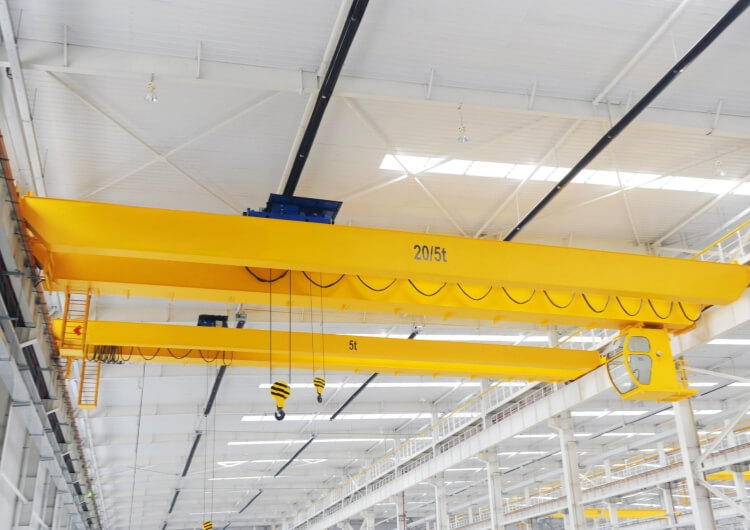
Double girder overhead cranes
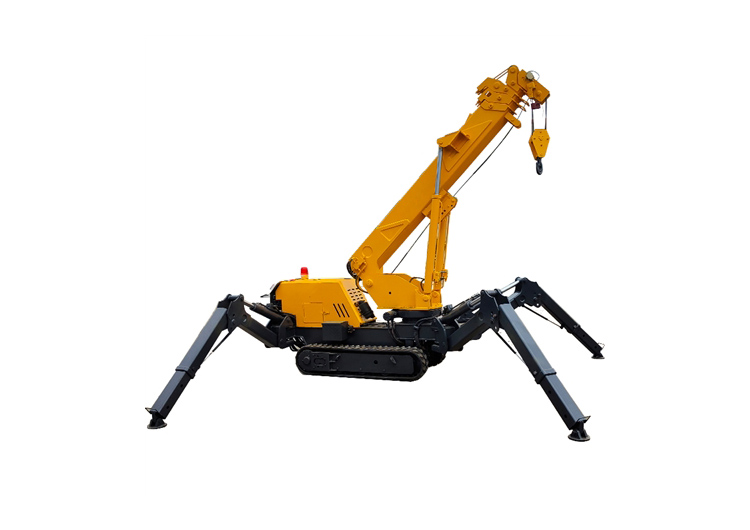
Spider cranes