
European vs Traditional Gantry Crane: Cost, Performance and Long‑Term Value
Table of Contents
Two Different Design Philosophies
What Is a European‑Style Gantry Crane? (It’s Not About Where It‘s Made)
Quick Comparison: European vs Traditional at a Glance
Structural Design: Lightweight vs Heavy‑Duty Conservative
Performance and Operating Efficiency
Initial Cost: The Upfront Difference
Total Cost of Ownership (TCO) – The Full Picture
Application Guide: Which One Fits Your Operation?
Frequently Asked Questions (FAQ)
Need Help Choosing the Right Crane for Your Operation?
1. Two Different Design Philosophies
If you have been following gantry cranes, you may have seen two categories that look similar on paper but behave very differently in real‑world operation: European‑style gantry cranes and traditional gantry cranes.
Many buyers look only at the price tag and make a quick decision. But a crane that costs less upfront can burn through your budget later in energy bills, maintenance, and downtime.
The core difference is this: European cranes follow a lightweight, high‑precision design philosophy based on FEM standards. Traditional cranes follow a classic engineering approach: heavy‑duty, robust, and durable.
Procurement decisions must balance budget, frequency of use, precision requirements, and working environment – not just price or performance alone. This guide objectively compares design, performance, cost, and long‑term value to help you choose according to your real needs.
Let us first clarify what “European” actually means in the crane industry.
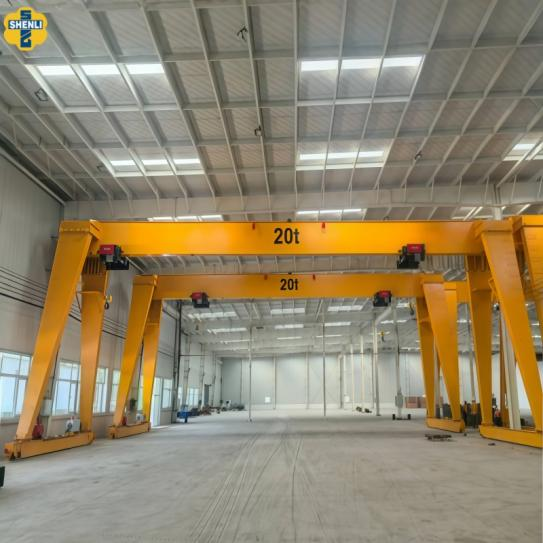
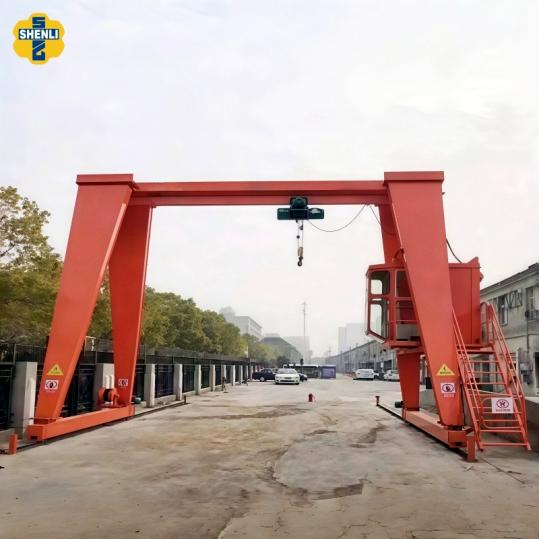
2. What Is a European‑Style Gantry Crane? (It’s Not About Where It‘s Made)
“European” does not necessarily mean the crane is made in Europe – it refers to a design philosophy. European‑style cranes are designed, manufactured, and accepted according to FEM (Fédération Européenne de la Manutention) standards and German DIN standards.
European crane design follows three priorities:
Lightweight but strong. These cranes use finite element analysis (FEA) to remove every kilogram of steel that isn’t doing real work. The result? They weigh 20–30% less than traditional cranes of the same capacity, while still meeting all strength, stiffness, and stability requirements.
Compact and space‑saving. European cranes have a low‑headroom design – overall crane height is reduced by 20–25%, giving more usable lifting height under the same building clearance.
Modular components. Instead of all‑welded structures, European cranes use modular components. When replacement is needed, you swap the module rather than cutting and welding on site.
In contrast, traditional cranes (sometimes called “Chinese standard” or “Soviet‑design” cranes) are mature, time‑tested machines. Their design philosophy favours robust construction and strong adaptability: heavier girders, generous safety margins, solid and impact‑resistant structures. They perform well in harsh environments, are easy to maintain, and have widely available spare parts.
3. Quick Comparison: European vs Traditional at a Glance
Below is a side‑by‑side comparison of key differences.
| Feature | European‑Style Gantry Crane | Traditional Gantry Crane |
|---|---|---|
| Design standard | FEM / DIN (European standards) | Historical Chinese / Soviet standards |
| Design philosophy | Lightweight, precision, compact | Heavy, conservative, rugged |
| Self‑weight | 20‑30% lighter | Heavier (30%+ heavier) |
| Lifting height | 20‑25% higher under same clearance | Lower (due to taller crane structure) |
| Energy consumption | 25‑40% lower | Higher (larger motor power) |
| Wheel pressure | 10‑20% lower | Higher |
| Control system | Full VFD stepless speed control | Traditional two‑speed or limited inverter |
| Positioning accuracy | ±1 mm | ±10 mm |
| Anti‑sway | Electronic anti‑sway (swing angle ±0.25°) | None or basic |
| Maintenance interval | 6‑8 months (modular design) | ~3 months (welded structure, more wear) |
| Design service life | Up to 25 years (FEM standard) | 15‑20 years |
| Failure rate | Up to 40% lower | Moderate (higher fault tolerance) |
| Operating noise | <74 dB | Moderate |
| Initial cost | 15‑25% higher | Lower |
Now let us walk through the most important differences in detail.
4. Structural Design: Lightweight vs Heavy‑Duty Conservative
This is the most fundamental difference between the two crane types.
European‑style gantry crane: Emphasis on lightweight and refined design
European‑style cranes typically optimise structural weight through:
Higher‑strength steel. Some European designs use better steel grades to reduce dead weight while meeting strength and stiffness requirements.
Optimised structural calculations. Using finite element analysis (FEA), stress areas are optimised, removing unnecessary material while keeping safety margins.
Compact box‑section girders. The main girder is often a box section, with compact end beams and modular connections – balancing strength, transport efficiency, and ease of installation.
In real projects, European‑style gantry cranes generally offer:
Lighter self‑weight – typically 10–30% lighter than traditional designs for the same capacity (depending on manufacturer and application)
Lower wheel pressure – which can be friendlier to runway beams and foundations
Higher utilisation of headroom – especially valuable in height‑restricted buildings
Therefore, European designs are often advantageous when the existing building has limited load capacity, low headroom, or when a new facility aims to reduce construction costs.
Traditional gantry crane: Emphasis on ruggedness and adaptability
Traditional cranes follow a different, well‑proven technical path.
Their structures tend to be conservatively designed – larger sections, higher safety margins, and stronger components. They have a long track record in complex, heavy‑load, and harsh environments.
Advantages of this approach include:
Mature, widely used technology
Familiar to maintenance crews
Generally lower manufacturing and repair costs
Good adaptability to high‑dust, high‑temperature, outdoor, and heavy‑duty conditions
The trade‑off is higher dead weight and potentially greater demands on building structures. Still, for many medium‑ to low‑frequency, heavy‑industrial applications, traditional cranes remain a reliable and economical choice.
5. Performance and Operating Efficiency
Beyond structural differences, the two types also differ in control methods.
Speed control and positioning accuracy
Many European‑style gantry cranes come with: full VFD control, stepless speed regulation, smooth start/stop. For precision lifting, mould handling, and equipment assembly (e.g., in machinery, automotive, or mould shops), they allow more gentle speed control and reduce impact.
However, traditional gantry cranes are increasingly equipped with VFDs as well – especially mid‑ to high‑end configurations – so their running smoothness has improved significantly. Thus, it is not accurate to say “traditional = low precision”; the difference largely depends on the specification level.
Load sway control
For high‑frequency or precision operations, load sway affects both efficiency and safety.
Some European cranes offer optional electronic anti‑sway systems, intelligent control algorithms, and automatic deviation correction – reducing load swing and improving positioning speed.
Traditional cranes can also be fitted with anti‑sway systems, but European solutions tend to be more standardised and mature.
Energy consumption
Because of their lighter self‑weight, higher drive efficiency, and wider use of VFDs, European‑style gantry cranes often perform well in energy saving – especially under high‑frequency operation.
But the actual savings are not fixed; they depend on usage frequency, load factor, motor efficiency, and control system configuration.
For applications that run many hours every day, the energy difference becomes significant. For low‑frequency use, the benefit may be modest.
6. Initial Cost: The Upfront Difference
Let‘s be honest: a European‑style gantry crane has a higher price tag.
Reasons include more sophisticated structural design, higher‑spec electrical control systems, and better components (gearboxes, motors, electrical parts).
Industry data shows that a European crane costs roughly 15‑25% more than a traditional crane of the same specifications.
For a 10‑ton gantry crane with a 15‑20 metre span:
European equipment: approx. 21,000–21,000–28,000
Traditional equipment: approx. 17,000–17,000–23,000
If your budget is extremely tight, traditional might seem the obvious choice.
But the equipment price is not the only cost. The total project cost – including building requirements, installation, and infrastructure – is often much closer between the two options than the equipment price alone suggests.
Weihua Global‘s analysis of purchasing data from over 200 industrial facilities found that although European cranes have a 15‑25% higher initial equipment cost, their total installed project cost is only 3‑7% higher when building and infrastructure savings are included.
Why? Because European cranes often eliminate the need for structural reinforcement.
Lower wheel pressure may allow lighter runway beams, saving 2,500–2,500–5,000 in structural steel. Reduced building height requirements can save 40–40–80 per square foot.
7. Total Cost of Ownership (TCO) – The Full Picture
Many customers really care about: “Which one saves me more money over 10 years?” The answer is not fixed – it depends entirely on your operating pattern.
Scenarios where European cranes tend to offer better TCO
High‑frequency operation (multiple shifts per day)
High load factor
High electricity cost
Need for precision lifting
Limited building headroom
Long‑term use (10+ years)
In these cases, lower energy consumption, less impact wear, and higher efficiency can gradually offset the higher upfront investment.
Scenarios where traditional cranes are more economical
Infrequent use
Rough, heavy‑duty work
Low precision requirement
Budget‑sensitive purchase
Shorter expected service life
Here, the lower purchase price often delivers better value for money.
In other words: It’s not that one type is always cheaper – it’s about matching the crane to your usage pattern.
8. Application Guide: Which One Fits Your Operation?
Choose a European‑style gantry crane if:
Your facility has limited ceiling height – the low‑headroom design can add 20‑25% more usable lifting height compared to a traditional crane in the same building.
Your crane will operate daily or on a high‑frequency schedule – the efficiency and reliability benefits pay back quickly with regular use.
Energy costs are a concern – the 25‑40% energy saving matters more the more you run the crane.
You require precision positioning – for handling expensive moulds, finished goods, or materials that must be placed accurately without damage.
Load sway is a problem in your current operation – the electronic anti‑sway system reduces swing angle by more than 80% compared to manual operation.
You are building a new facility – the lower building height requirement and reduced structural load can save significantly on construction costs.
You plan to keep the crane for 15+ years – the longer service life (up to 25 years) and lower TCO make European cranes the better long‑term investment.
Choose a traditional gantry crane if:
Budget is limited and you cannot stretch to the higher upfront cost.
Usage frequency is low – only occasional lifting.
Working conditions are rough – high dust, impact loads, or extreme temperatures where a simpler, more rugged design is preferred.
High precision control is not required – approximate positioning is acceptable.
You are more concerned with initial investment than long‑term operating costs.
Your maintenance team is more familiar with traditional designs and spare parts are easier to source locally.
9. Need Help Choosing the Right Crane for Your Operation?
Note: the original section number is “11”.
You have seen the differences between European and traditional gantry cranes – weight, height, energy savings, maintenance, and long‑term cost. Now it is time to apply that knowledge to your specific facility.
At SLKJCrane, we manufacture both European‑style gantry cranes (FEM/DIN compliant) and high‑quality traditional gantry cranes. We help customers choose based on their actual usage pattern, building constraints, and budget – not on a one‑size‑fits-all recommendation.
We provide:
Free consultation – compare European vs traditional for your specific application
European‑style gantry cranes: lightweight, low headroom, VFD control, anti‑sway
Traditional gantry cranes: cost‑effective, robust, reliable
Full documentation: CAD drawings, load charts, FEM/ISO/ASME compliance (where applicable)
Worldwide shipping and installation guidance
👉 Contact us today – tell us your load weight, span, lifting height, daily usage frequency, and building constraints. We will recommend the most cost‑effective crane type for your budget and long‑term needs.

Expert in Overhead Crane/Gantry Crane/Jib Crane/Crane Parts Solutions
Eileen
With 20+ years of experience in the Crane Overseas Export Industry, helped 10,000+ customers with their pre-sales questions and concerns, if you have any related needs, please feel free to contact me!
Our Crane Product Range
SLKJcrane provides a wide range of lifting equipment solutions including:
– Single Girder Overhead Crane
– Double Girder Overhead Crane
– Gantry Crane
– Spider Crane
– Marine Crane
Our engineering team can configure safety devices and technical solutions according to project requirements.
FAQ
No. “European‑style” refers to the design standard (FEM/DIN), not the country of origin. Many high‑quality European‑style cranes are manufactured in Asia under international quality standards.
Typically 15‑25% more than a traditional crane of the same capacity and span.
Typically 2‑3 years through lower energy consumption, reduced maintenance, and higher productivity. In high‑usage facilities, payback can be as short as 1‑2 years.
European cranes consume 25‑40% less energy than traditional cranes of the same capacity. For a 10‑ton crane running 8 hours per day, that translates to roughly 1,000–1,000–2,000 per year in electricity savings.
Designed service life is up to 25 years under FEM standards, compared to 15‑20 years for traditional cranes.
Often yes. The lighter self‑weight and lower wheel pressure mean European cranes place less demand on building columns, foundations, and runways.
Heavy manufacturing (steel, automotive, machinery), ports and logistics, wind energy, precast concrete, and any industry requiring high daily usage or precision load handling.
Latest Blog
Lorem ipsum dolor sit amet, consectetur adipiscing elit, sed do eiusmod tempor incididunt ut labore et dolore magna aliqua
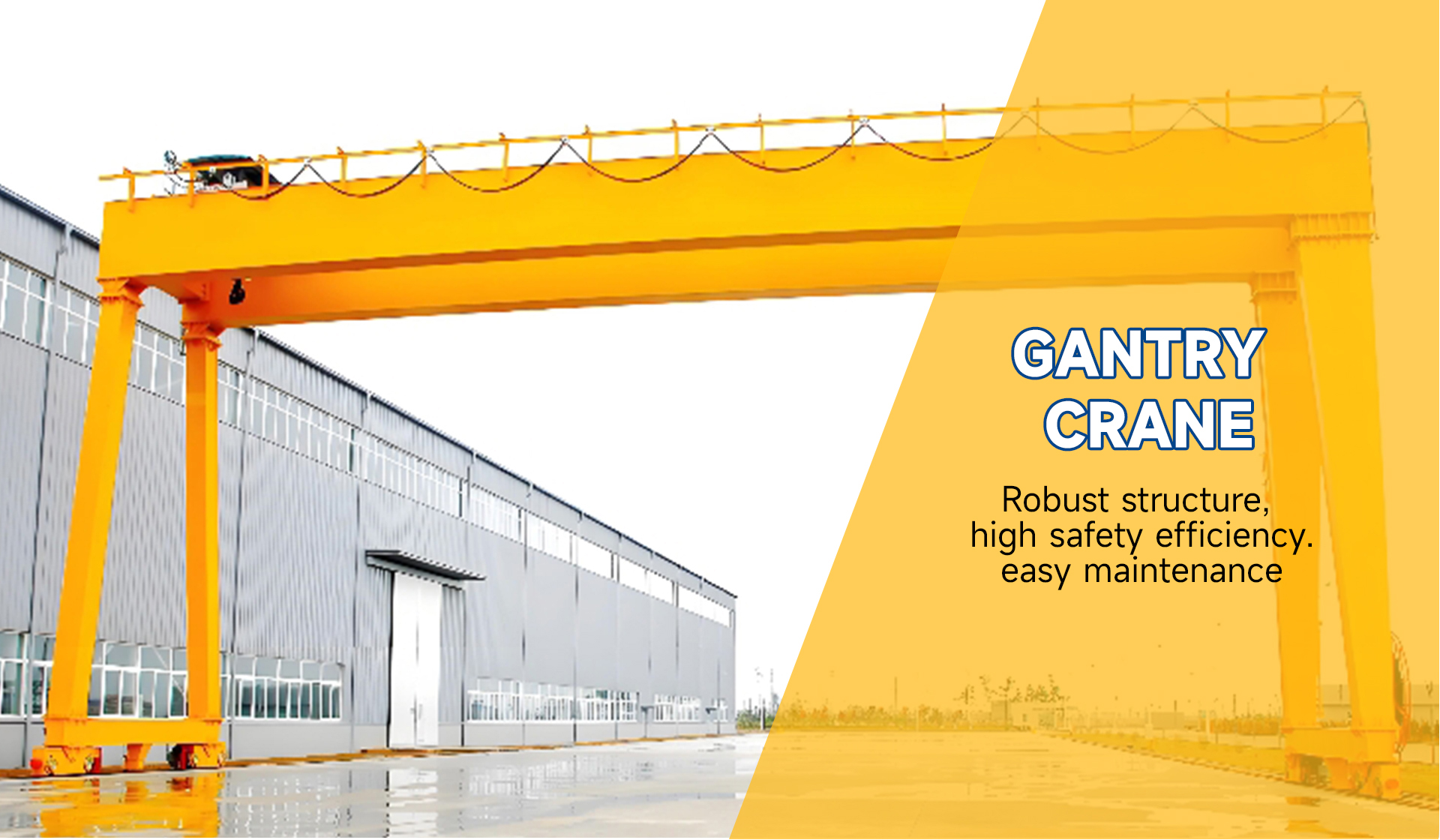
Gantry Crane Price Guide 2026
Gantry Crane Price Guide 2026: Cost by Tonnage, Type & Configuration Table of Contents Why a Gantry Crane
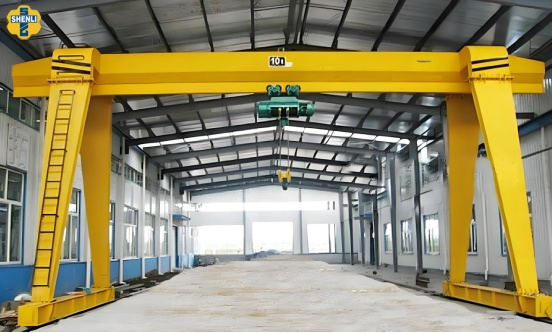
Hidden Costs of Importing a Gantry Crane
Hidden Costs of Importing a Gantry Crane: Shipping, Customs and Installation Guide Why Is a Gantry Crane Quote
Used vs New Gantry Crane: Total Cost of Ownership Explained
Used vs New Gantry Crane: Which One Has Lower Total Cost of Ownership (TCO)? Introduction When purchasing a
Gantry Crane Predictive Maintenance: How IoT Sensors Reduce Downtime
Gantry Crane Predictive Maintenance: How IoT Sensors Reduce Downtime Why Does Gantry Crane Downtime Cost So Much? Gantry
Contact Us Now
Have questions about our cranes or need help?
Reach out to our friendly team for expert support and guidance.
We are here to help you power your journey towards a greener future !
Address: Crane Industry Park, Xinxiang City Henan Provice
Hot Sales
Single girder overhead cranes
Double girder overhead cranes
Spider cranes