
Gantry Crane Span Guide: How to Choose the Right Span for Stability, Cost and Performance
Introduction
When buyers select a gantry crane, lifting capacity is usually the first parameter they discuss. However, span is just as important. The wrong span can increase steel weight, wheel load, foundation cost, energy consumption and daily operating difficulty. A well-selected span helps the crane cover the working area safely without unnecessary cost.
What Does Gantry Crane Span Mean?
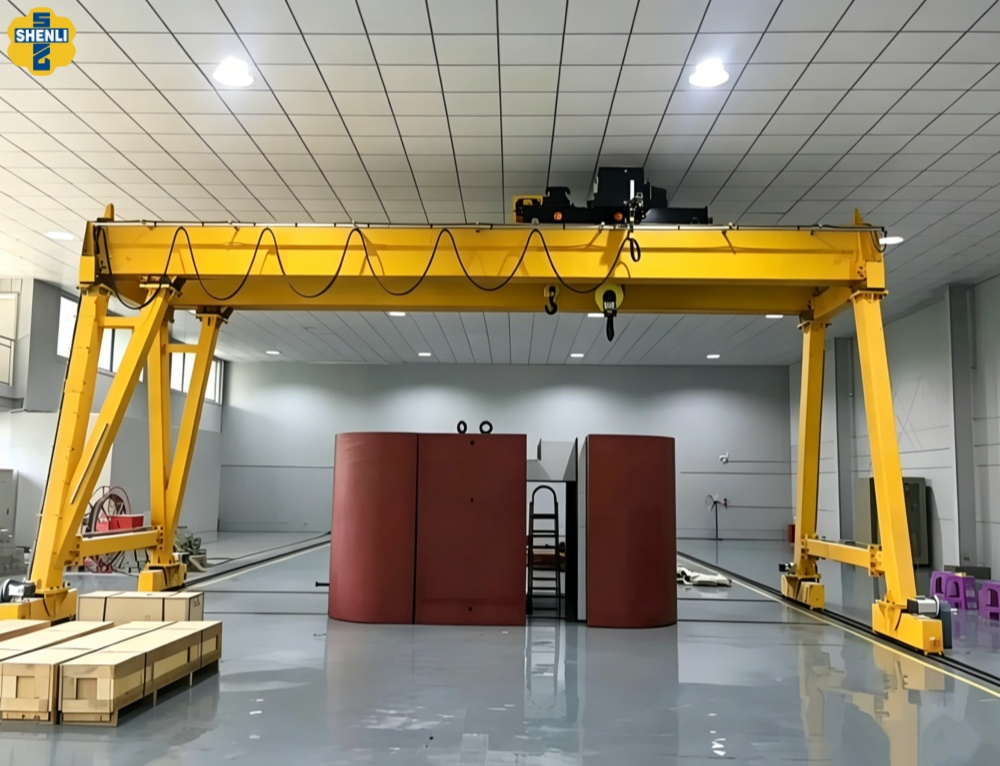
Gantry crane span normally refers to the center-to-center distance between the two crane travelling rails. It should not be confused with the actual working width. Because of trolley travel limits and structural clearance, the hook cannot reach the legs completely.
Effective working width = Crane span – left and right approach distance
For most industrial gantry cranes, the approach distance is usually around 200-400 mm on each side. For example, a 20 m span with 350 mm approach distance on both sides gives an effective working width of about 19.3 m. If your real operating area needs 19.5 m, a 20 m span may not be enough.
Why Span Is Not “The Bigger, The Better”
A larger span may look safer at first, but it often creates hidden costs. As span increases, the main girder becomes heavier, deflection becomes harder to control, wheel pressure increases, and the foundation may need reinforcement. A crane that is too wide can also move more slowly and consume more power during long-term operation.
- Too small: the crane cannot cover the required working area, creating dead zones and manual handling risks.
- Too large: steel weight, wheel load, foundation demand and transport cost increase unnecessarily.
- Correct span: covers the work area with practical clearance and reasonable future allowance.
How Span Affects Stability and Structure
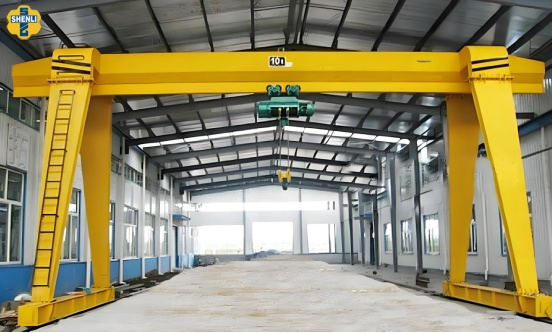
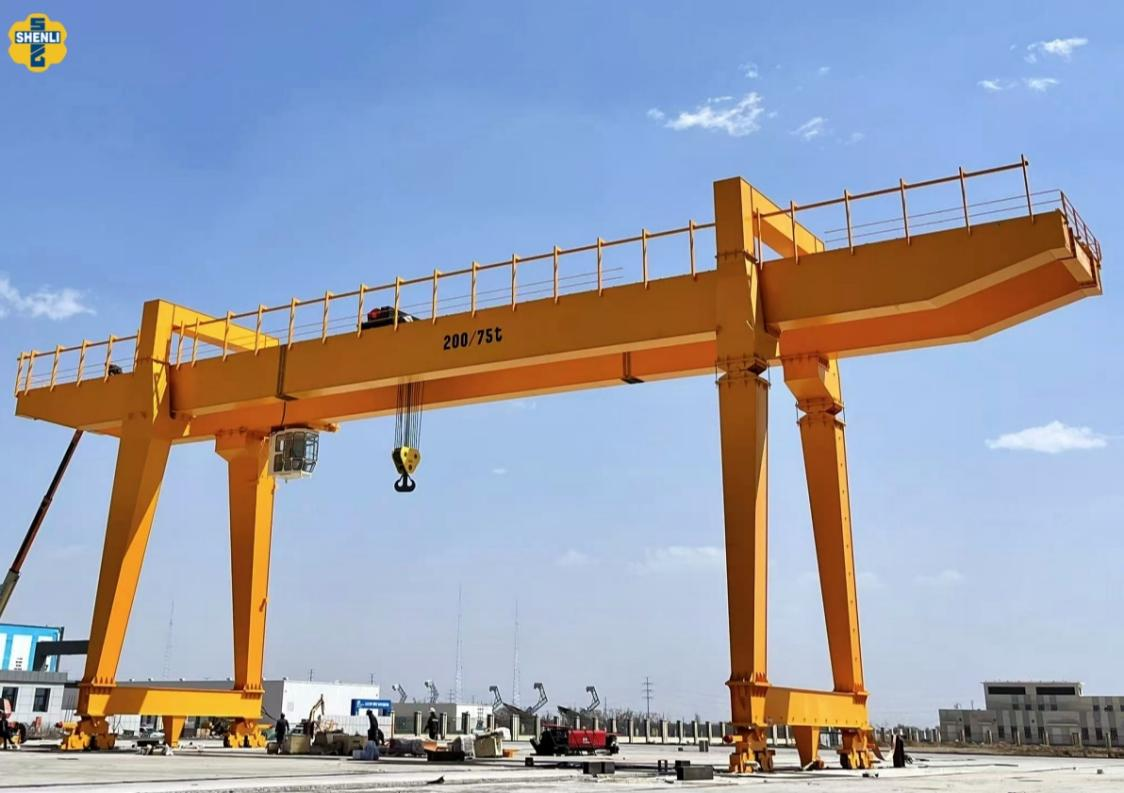
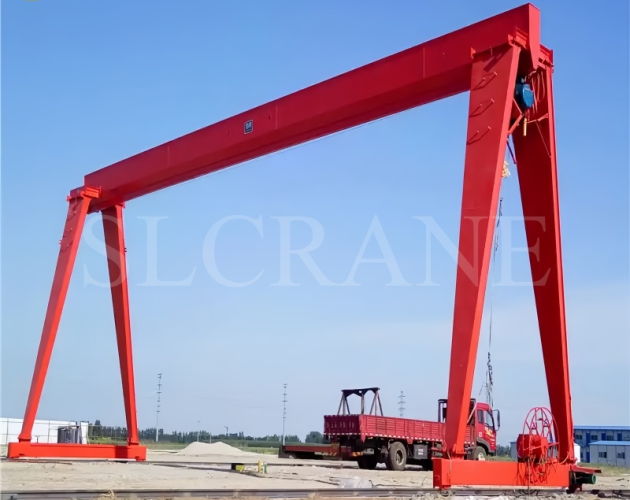
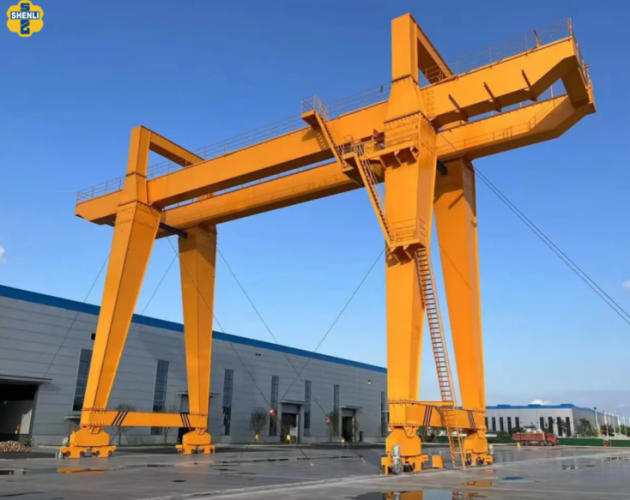
For medium spans and moderate loads, a single girder gantry crane can be an economical solution. For spans above about 25 m or capacities above about 20 ton, a double girder gantry crane is usually preferred because it provides better stiffness, load distribution and deflection control.
For long-span outdoor applications, wind load, lateral force, trolley position and ground condition must all be reviewed carefully. In heavy-duty applications, the crane may require stronger box girders, rigid/flexible leg design, or more detailed structural verification.
How Span Affects Wheel Load and Foundation Cost
Wheel load is one of the most easily underestimated factors in gantry crane projects. A longer span means a heavier bridge structure. When the trolley travels close to one side, the load moment also increases the pressure on the wheel group. If the ground or slab cannot support the wheel load, additional foundation work may be required.
Typical Span Reference by Application
Application | Typical Span Range | Selection Note |
Small workshop / garage | 6-12 m | Portable gantry crane usually covers the main work station. |
Medium fabrication workshop | 15-20 m | Single girder gantry crane is often suitable for light to medium duty. |
Heavy manufacturing | 20-30 m | Double girder design is recommended when load or span increases. |
Warehouse / logistics yard | 15-30 m | Span should match storage layout and truck/forklift aisle width. |
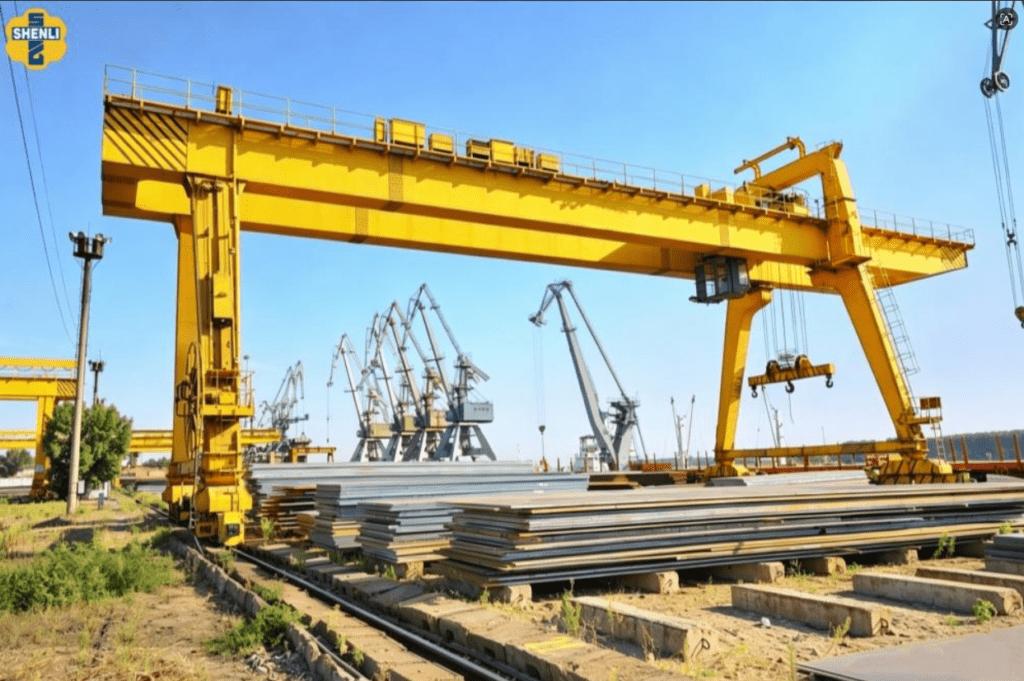
Precast concrete yard | 25-40 m | Long-span double girder cranes are common for large casting beds. |
Outdoor storage yard | 25-50 m+ | Ground condition and wheel load become major cost factors. |
Common Mistakes When Choosing Gantry Crane Span
- Measuring from wall to wall instead of rail center to rail center.
- Assuming nominal span equals actual working width.
- Ignoring hook approach distance on both sides.
- Selecting a larger span only because “bigger seems better”.
- Reducing span too much to save cost and creating uncovered working areas.
- Forgetting to verify ground bearing capacity and wheel load.
- Copying another project’s crane span without checking your own layout.
How to Choose the Right Span
- Define the real working area. Measure the area that must be covered by the hook, not only the building width.
- Confirm load size and handling route. Consider the width of materials, trucks, storage rows and operator access.
- Calculate effective working width. Subtract the approach distance from both sides of the crane span.
- Check ground and foundation conditions. Verify whether the floor or outdoor yard can support the calculated wheel load.
- Add reasonable future allowance. A small allowance can help future layout changes, but excessive span will increase cost.
Need Help Choosing the Right Gantry Crane Span?
SLKJcrane helps customers select practical gantry crane spans based on lifting capacity, working area, ground condition and operating environment. Send us your load weight, required working width, lifting height and site layout. Our engineering team will recommend a cost-effective crane configuration for your project.
Expert in Overhead Crane/Gantry Crane/Jib Crane/Crane Parts Solutions
Eileen
With 20+ years of experience in the Crane Overseas Export Industry, helped 10,000+ customers with their pre-sales questions and concerns, if you have any related needs, please feel free to contact me!
Our Crane Product Range
SLKJcrane provides a wide range of lifting equipment solutions including:
– Single Girder Overhead Crane
– Double Girder Overhead Crane
– Gantry Crane
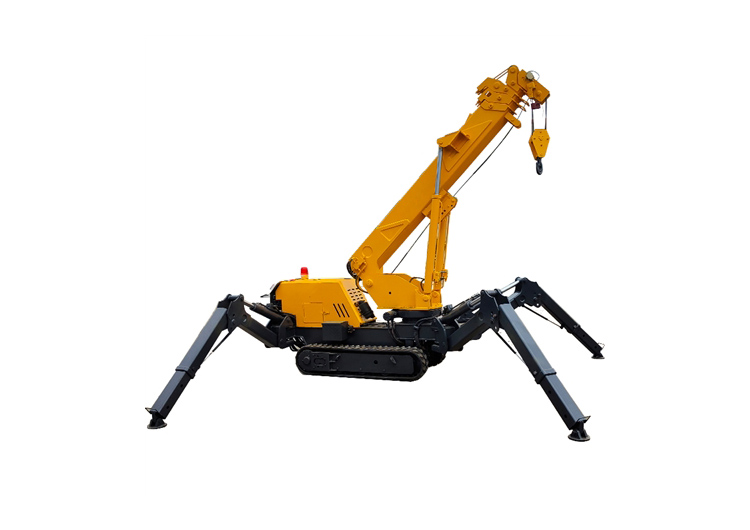
– Spider Crane
– Marine Crane
Our engineering team can configure safety devices and technical solutions according to project requirements.
FAQ
Span is the rail center-to-center distance. Working width is the actual area the hook can reach after deducting approach distance.
No. Excessive span increases structural weight, wheel load, foundation cost and energy consumption.
For spans above about 25 m, capacities above about 20 ton, or heavy-duty applications, double girder design is usually recommended.
Usually not economically. Increasing span often requires replacing the main girder, legs and runway layout.
Latest Blog
Lorem ipsum dolor sit amet, consectetur adipiscing elit, sed do eiusmod tempor incididunt ut labore et dolore magna aliqua
Gantry Crane Span Guide
Gantry Crane Span Guide: How to Choose the Right Span for Stability, Cost and Performance Introduction When buyers
Portable vs Fixed Gantry Crane
Portable vs Fixed Gantry Crane: Which Is Better for Small Workshops? Table of Contents The Problem Every Small
How to Choose a Gantry Crane for Rail Maintenance Depots
How to Choose a Gantry Crane for Rail Maintenance Depots In railway depots, metro maintenance bases, and locomotive
Best Gantry Crane for Precast Concrete Yards
Best Gantry Crane for Precast Concrete Yards: Selection Guide and Cost Factors Table of Contents Why Gantry Cranes
Contact Us Now
Have questions about our cranes or need help?
Reach out to our friendly team for expert support and guidance.
We are here to help you power your journey towards a greener future !
Address: Crane Industry Park, Xinxiang City Henan Provice