
Anti Sway Technology in Gantry Cranes: Do You Really Need It?
Table of Contents
-
A Problem Every Crane Operator Knows
-
First, Let‘s Look at the Real Cost of Load Swing
-
The Hidden Costs You Might Be Overlooking
-
How Does Anti‑Sway Technology Actually Work?
-
When Does Anti‑Sway Make Financial Sense?
-
The ROI Argument – Why Many Users Install It Even If They Could Skip It
-
Can You Add Anti‑Sway to an Existing Crane?
-
Decision Guide – Who Really Needs Anti‑Sway?
-
Frequently Asked Questions (FAQ)
-
Get a Clear Answer for Your Operation
1. A Problem Every Crane Operator Knows
You have probably seen this scene before.
An operator carefully positions the hoist over a steel coil, lifts it, drives across the workshop — and then stops. The load keeps swinging back and forth. The operator waits. They make a few fine adjustments, wait again, and only when the load finally settles do they lower it safely into place. The whole operation takes roughly twice as long as the empty travel time.
This is not bad luck, nor is it poor operator skill. This is physics.
Load swing is a natural result of suspending a heavy object from a rope or cable. The hoist rope acts like a pendulum. When the crane accelerates, the load lags behind; when the crane brakes, the load swings forward. Even a skilled operator cannot completely eliminate this effect — they can only manage it by slowing down and waiting for the motion to settle.
Many plant managers eventually ask a straightforward question: Do I actually need to invest in anti‑sway technology, or can I just keep working around it?
This guide explains what anti‑sway technology does, how much it costs, and — most importantly — when it makes financial sense to install it, and when you can safely leave it off.
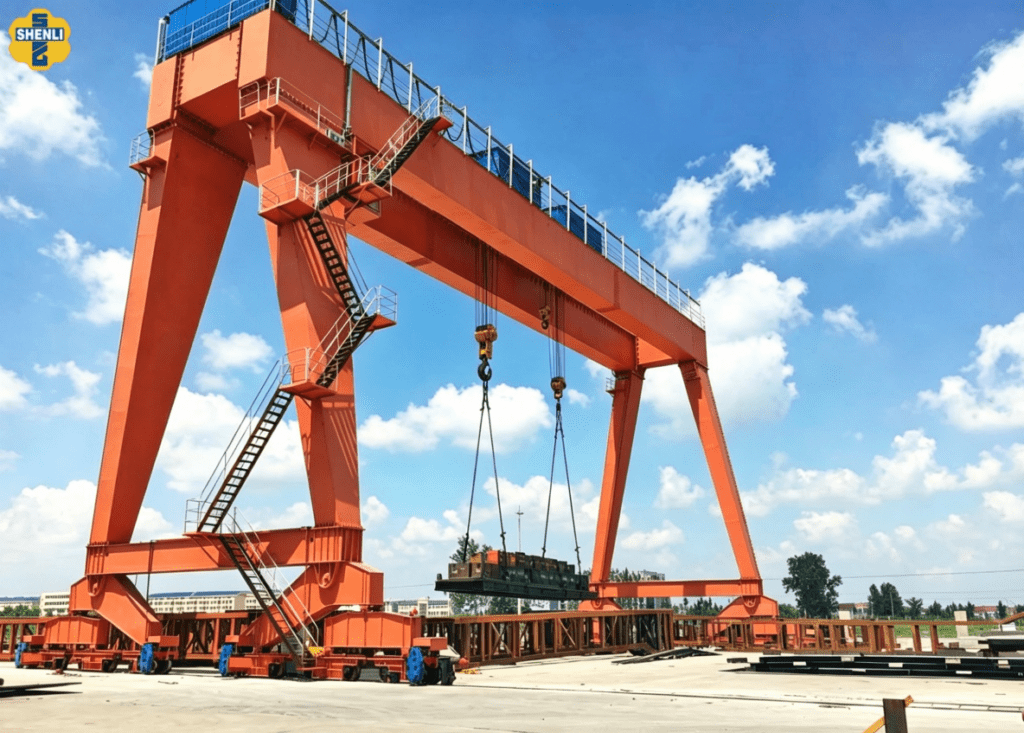
2. First, Let‘s Look at the Real Cost of Load Swing
2.1 Time wasted on every lift
A suspended load behaves like a pendulum. When the crane accelerates, the load lags behind the suspension point. When the crane brakes, the load swings forward past where it should stop, then swings back. In a frictionless environment it would swing forever — but real‑world air resistance and rope friction gradually dampen the motion.
The problem is that natural damping takes time. Operators cannot lower the load until the swing is small enough for safe placement. Experienced operators learn to “drive into the swing” to kill the motion faster, but this still adds measurable time to every cycle.
Research suggests that in precision applications — for example, container handling, where loads must be positioned within millimetres — countering swing can occupy up to 30% of the average move time. For a crane active for eight hours per day, that is roughly two and a half hours per day spent waiting on swing instead of moving material.
Another study published in an IEEE journal found that load swing can consume up to 20% of total production time in crane‑dependent operations.
A 2026 review of container gantry crane innovations noted that AI‑based anti‑sway can reduce load settling time from 30 seconds to under 5 seconds per lift. For a facility processing 100 lifts per day, that difference adds up to about 40 minutes per day — roughly 170 hours per year — of recovered productive time.
Manufacturers and field tests have consistently shown that adding sway control can improve crane productivity by 25% to 50%, with well‑designed systems reducing load sway by 85‑95%.
The pattern across all this data is clear: load swing is not a minor nuisance. In moderate‑to‑high frequency operations, it represents a serious productivity leak that directly affects throughput, cycle times, and labour efficiency.
2.2 What the dispersion curve tells you
Another way to understand the productivity impact is by looking at cycle time distribution.
When an operator repeats the same move many times, the cycle times form a bell curve (Gaussian distribution). Most lifts take an average amount of time. Some take longer because the load swung more or the operator had to reposition. Some take less time because conditions were favourable.
When you add an anti‑sway system, something interesting happens. The dispersion narrows. Not only does the average cycle time drop, but the variation between cycles also reduces significantly. Each lift takes more nearly the same amount of time.
From a production planning perspective, this matters almost as much as the absolute time saving. When cycle times are consistent, you can plan capacity more accurately, schedule maintenance with confidence, and reduce the need for overtime buffers.
For fully automated crane operations, anti‑sway is not optional at all — it is foundational. A crane with uncontrolled load swing cannot reliably execute automated travel‑to‑position sequences.
3. The Hidden Costs You Might Be Overlooking
Beyond lost time, load swing creates several other costs that rarely appear on a spreadsheet — until something goes wrong.
3.1 Safety risks
This is the most serious hidden cost.
Data from the US Bureau of Labor Statistics shows that roughly 37% of crane accidents are load‑related — workers being crushed by swinging loads, dropped loads, or unstable loads. OSHA recorded 5,190 workplace fatalities in 2024, with about 14% (around 725 deaths) from struck‑by hazards. Of those, swinging loads accounted for approximately 20%.
A 5‑ton load swinging into a piece of equipment can cause damage costing tens of thousands of dollars. The risk to personnel standing between a swinging load and fixed machinery is even more severe. If a swinging load hits a person, the consequences can be fatal. Moreover, facilities must maintain safety buffer zones around the crane‘s travel path to avoid personnel exposure, which reduces usable floor space and lowers storage density.
3.2 Equipment wear
The way operators manage load swing also damages equipment.
Skilled operators use a technique called “jogging” — tapping the controls in short bursts to counter‑act the swing. This prevents severe swinging, but the repeated starts and stops place extra stress on the crane’s drive system, brakes, and structural components.
Excessive load movement also accelerates wear on cables, bearings, rails, and motors. Every jolt and vibration transfers into the mechanical system.
A well‑designed anti‑sway system reduces stress and wear on the crane‘s mechanical systems by eliminating the need for corrective jogging. Lower maintenance frequency and fewer component replacements mean lower total operating cost over the crane’s life.
3.3 Operator fatigue
Without anti‑sway, an operator must constantly anticipate how the load will move during acceleration, braking, and turning. This is mentally demanding and leads to rapid fatigue.
With anti‑sway, the system automatically suppresses load swing. The operator can run the crane at full speed and focus only on hooking and unhooking loads. This also greatly reduces the training period for new operators.
For facilities with high staff turnover or frequent new hires, this advantage is especially valuable. It avoids the problems of low efficiency and higher accident rates that often come with inexperienced operators.
4. How Does Anti‑Sway Technology Actually Work?
If you are not familiar with how these systems work, it helps to understand the basics before making a decision.
4.1 The core principle
Anti‑sway is not mechanical — it is algorithmic.
The system uses the crane‘s existing variable frequency drives (VFDs). Instead of simply obeying the operator’s acceleration command directly, the anti‑sway controller calculates an optimised speed profile. It determines the best acceleration and deceleration ramps to move the crane while keeping the suspended load stable.
Think of it this way. If you push a trolley carrying a tall glass of water, you intuitively accelerate slowly and brake slowly to avoid spilling. Anti‑sway algorithms do the same calculation — but automatically, for every movement.
The system is integrated into the crane‘s VFD firmware. When the operator commands the crane to move, the anti‑sway algorithm modifies the acceleration and deceleration pattern, which then controls the load’s pendulum motion.
4.2 Three main types of anti‑sway systems
Industry practice distinguishes three categories.
Passive systems use additional cables attached to the load to physically restrict sway. These are the most mechanically complex and require permanent maintenance. For most industrial gantry cranes, passive systems are not a practical choice.
Active closed‑loop systems measure the actual sway angle using sensors — often cameras with image processing — and adjust crane motion in real time. These are highly effective but require additional hardware, cost more, and need case‑by‑case adjustment. They are typically used on outdoor container cranes exposed to wind and other external disturbances.
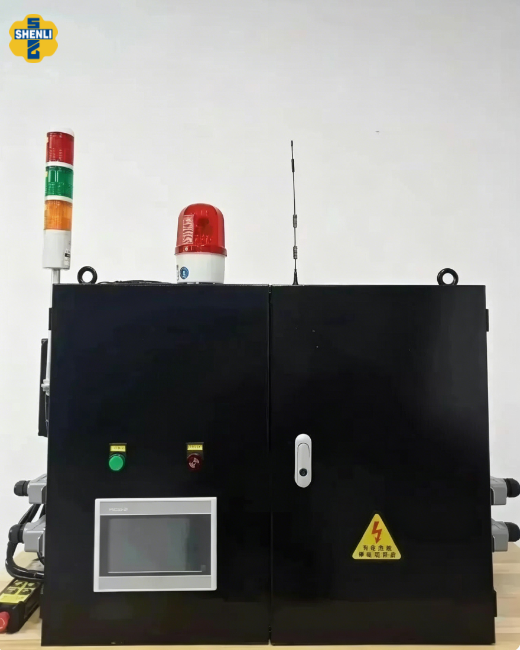
Active open‑loop systems (sometimes called sensorless anti‑sway) obtain all necessary information from the crane‘s existing drives. No additional sensors are required. These systems are the simplest to implement and increasingly the industry standard for indoor and moderate‑duty applications.
For most workshop and industrial gantry crane applications, open‑loop electronic anti‑sway is the most practical solution. It adds no mechanical complexity and can often be enabled as a software upgrade on modern VFDs.
A 2021 study published in Discover Applied Sciences described a VFD‑based anti‑sway system that achieved effective sway reduction with minimal additional components. The main advantage was noted as “simplicity and low cost combined with the low swaying of the load.”
5. When Does Anti‑Sway Make Financial Sense?
Not every crane needs anti‑sway. The decision depends on how your crane is actually used.
5.1 Run the numbers for your operation
A basic way to estimate potential savings:
Annual time saved (hours) = Lifts per day × Time saved per cycle (hours) × Operating days per year
If you run 50 lifts per day, save 15 seconds per cycle, and operate 250 days per year:
Annual time saved = 50 × 0.0042 hours × 250 = 52 hours
At $50 per hour for labour and overhead, that is about $2,600 per year in direct labour savings. Over a 10‑year crane life, that is $26,000 — well above the typical cost of adding anti‑sway as a software option on modern VFDs.
If you run 100 lifts per day and save 30 seconds per cycle:
Annual time saved = 100 × 0.0083 hours × 250 = 207 hours
At $50 per hour, that is over $10,000 per year. Over 10 years, $100,000. The investment case is clear.
These figures do not include reduced product damage, fewer accidents, lower maintenance costs, or reduced operator fatigue. Those benefits add even more value.
5.2 High frequency operations – strong case
If your crane runs 50+ lifts per day or operates for more than 8 hours per shift, anti‑sway almost always pays for itself. The time savings accumulate quickly, and the safety benefits provide strong additional justification.
The 25‑50% productivity improvement reported in field tests applies most directly to these high‑frequency environments.
5.3 Precision lifting – strong case
Even at lower frequencies, if your loads require precise placement — mould alignment in a foundry, positioning a steel coil on a slitting line, stacking pre‑cast concrete panels — anti‑sway delivers faster payback. The cost of one dropped or damaged load can exceed the price of the anti‑sway option.
5.4 Low frequency, low‑precision operations – weaker case
If your crane handles fewer than 20 lifts per day, each load is tolerant of rough positioning, and you have experienced operators, anti‑sway may not be a high priority.
6. The ROI Argument – Why Many Users Install It Even If They Could Skip It
Here is why. The marginal cost of adding open‑loop anti‑sway to a new crane with modern VFDs is relatively small.
The feature is software‑enabled; there are no additional mechanical components to buy, install, or maintain. Once installed, anti‑sway works on every lift for the crane‘s entire 20‑year service life.
Beyond the direct productivity gains, the hidden savings alone — reduced product damage, fewer safety incidents, and lower component wear — often justify the investment.
From a risk perspective, anti‑sway reduces exposure to load‑related incidents. Load‑related accidents account for 37% of crane accidents. OSHA data indicates swinging loads contribute to about 20% of struck‑by fatalities. For a facility with a strong safety record, this is insurance against low‑probability, high‑consequence events. For a facility with an average record, it is a direct path to fewer incidents.
Many operators also report reduced training burden. New crane operators can work productively sooner when anti‑sway handles the dynamics that would otherwise take months of practice to master.
7. Can You Add Anti‑Sway to an Existing Crane?
This is one of the most common questions from existing crane owners.
The answer depends on the age and drive system of your crane.
For cranes already equipped with modern variable frequency drives from reputable manufacturers (Schneider Electric, ABB, Siemens, and others), adding anti‑sway can be as simple as loading new firmware onto the drives. No additional hardware is required.
For older cranes with fixed‑speed contactor controls or older VFDs, a retrofit is still possible but typically requires replacing the drive system. The cost then includes new VFDs, control panel modifications, and potentially new motors.
If you have a 20‑year‑old crane with outdated controls and the rest of the crane is also nearing end of life, a full anti‑sway retrofit may not make financial sense. However, if the crane is structurally sound and the only limitation is older controls, upgrading the drive system to modern VFDs with anti‑sway firmware can extend the crane‘s useful life while improving its productivity.
To get an accurate quote for retrofitting your specific crane, a site assessment is required. But for any crane built in the last 10‑15 years with modular drives, the upgrade path is typically straightforward and cost‑effective.
8. Decision Guide – Who Really Needs Anti Sway?
Here is a straightforward way to decide whether anti‑sway belongs on your next gantry crane.
Strongly consider anti‑sway if you answer “yes” to any of these:
-
Your crane averages more than 50 lifts per day
-
Your operation runs two or more shifts on the same crane
-
Your loads require millimetre‑precision positioning
-
Your facility has a high density of personnel or equipment near crane travel paths
-
You plan to add automation features in the future
-
You train new crane operators regularly or have high operator turnover
-
Your product or load is fragile and easily damaged by sway‑induced contact
You can likely skip anti‑sway if you answer “yes” to most of these:
-
Your crane handles fewer than 20 lifts per day
-
Cycle time is not a bottleneck in your process
-
Positioning tolerance is generous (±50mm or more)
-
Your operators are highly experienced and comfortable
-
The crane operates in a low‑traffic area with minimal personnel exposure
The simple version: high frequency, high precision, high consequence → anti‑sway pays. Low frequency, coarse positioning, robust loads → manual operation is fine.
9. Get a Clear Answer for Your Operation
Every workshop and manufacturing facility is different. The right answer depends on your actual lift count, your product type, your available floor space, and your safety requirements.
At SLKJCrane, we manufacture gantry cranes for workshops, factories, and industrial facilities worldwide. We do not push anti‑sway as an automatic add‑on. We help you decide based on your actual operating data.
We offer:
-
Free consultation to evaluate whether anti‑sway makes sense for your application
-
Gantry cranes with open‑loop electronic anti‑sway as a software‑enabled option on modern VFD systems
-
Retrofits for existing cranes with compatible drive hardware
-
Full documentation, including load charts, control specifications, and installation guides
👉 Contact us today – share your average daily lift count, typical load weight, positioning precision requirements, and whether you operate indoors or outdoors. We will recommend the most practical, cost‑effective configuration for your operation, with or without anti‑sway.

Expert in Overhead Crane/Gantry Crane/Jib Crane/Crane Parts Solutions
Eileen
With 20+ years of experience in the Crane Overseas Export Industry, helped 10,000+ customers with their pre-sales questions and concerns, if you have any related needs, please feel free to contact me!
Our Crane Product Range
SLKJcrane provides a wide range of lifting equipment solutions including:
– Single Girder Overhead Crane
– Double Girder Overhead Crane
– Gantry Crane
– Spider Crane
– Marine Crane
Our engineering team can configure safety devices and technical solutions according to project requirements.
FAQ
No system completely eliminates swing. But well‑designed anti‑sway can reduce load sway by 85-95%, to the point where the load remains stable enough for safe, accurate positioning in most applications.
Open‑loop electronic anti‑sway adds no moving parts. It is software running on the crane‘s existing VFDs. There are no additional mechanical components to inspect, lubricate, or replace. A well‑designed system requires no subsequent adjustments after setup.
Yes, if the crane has modern variable frequency drives. On many systems, adding anti‑sway is simply loading new firmware onto the drives. For cranes with old contactor controls, retrofitting is possible but requires upgrading the drive system, which adds cost.
No. In fact, most operators find that anti‑sway makes the crane easier to run. The system works automatically. The operator commands crane motion normally; the anti‑sway algorithm handles the acceleration and deceleration profiles.
For outdoor cranes exposed to strong winds, open‑loop anti‑sway has limitations — the system cannot compensate for external forces like gusts. In these environments, closed‑loop systems with sensors provide better performance but at higher cost. For indoor and sheltered outdoor applications, open‑loop anti‑sway works effectively.
Latest Blog
Lorem ipsum dolor sit amet, consectetur adipiscing elit, sed do eiusmod tempor incididunt ut labore et dolore magna aliqua
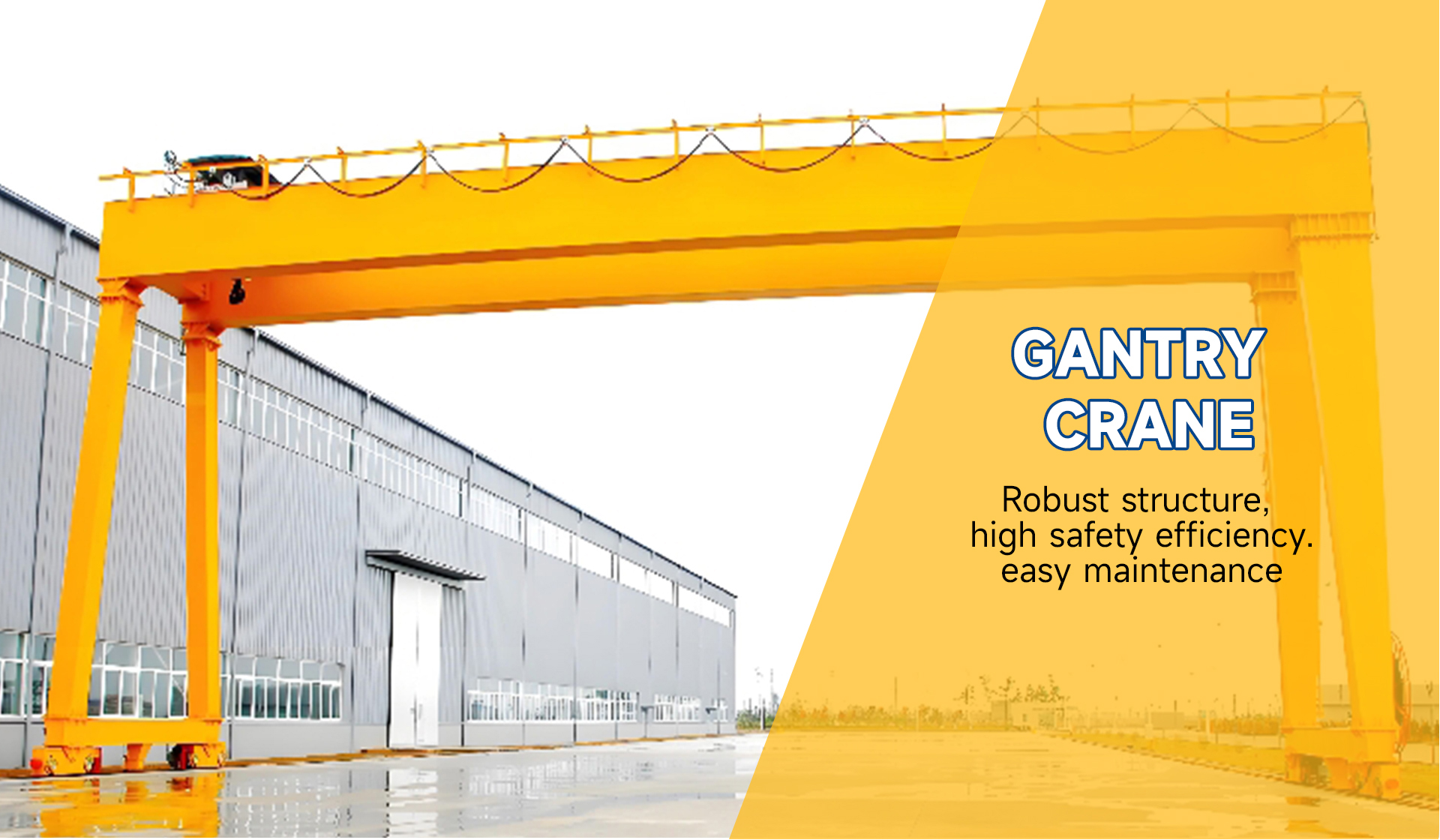
Gantry Crane Price Guide 2026
Gantry Crane Price Guide 2026: Cost by Tonnage, Type & Configuration Table of Contents Why a Gantry Crane
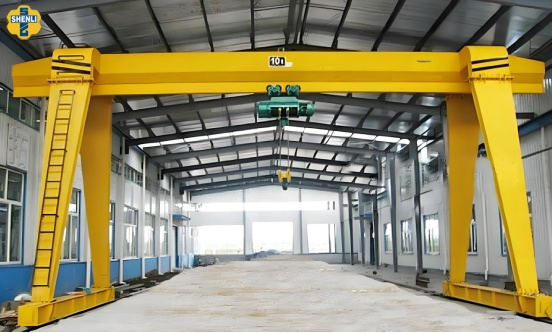
Hidden Costs of Importing a Gantry Crane
Hidden Costs of Importing a Gantry Crane: Shipping, Customs and Installation Guide Why Is a Gantry Crane Quote
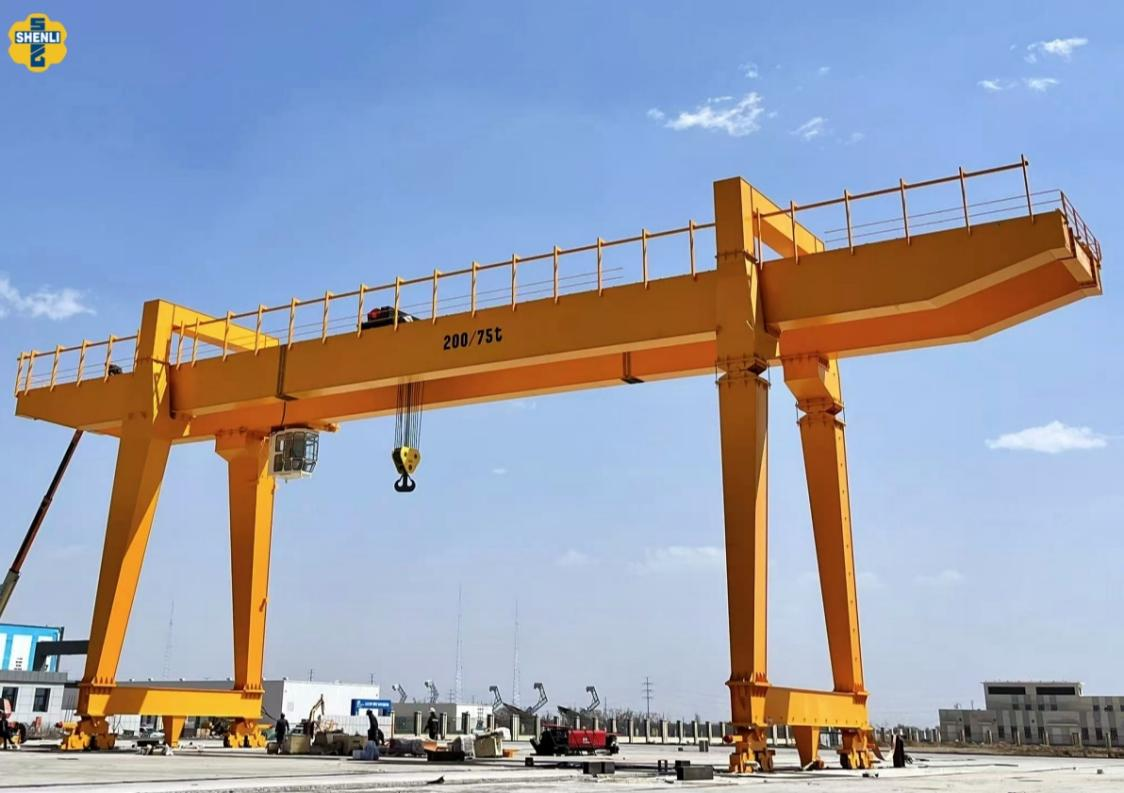
Used vs New Gantry Crane: Total Cost of Ownership Explained
Used vs New Gantry Crane: Which One Has Lower Total Cost of Ownership (TCO)? Introduction When purchasing a
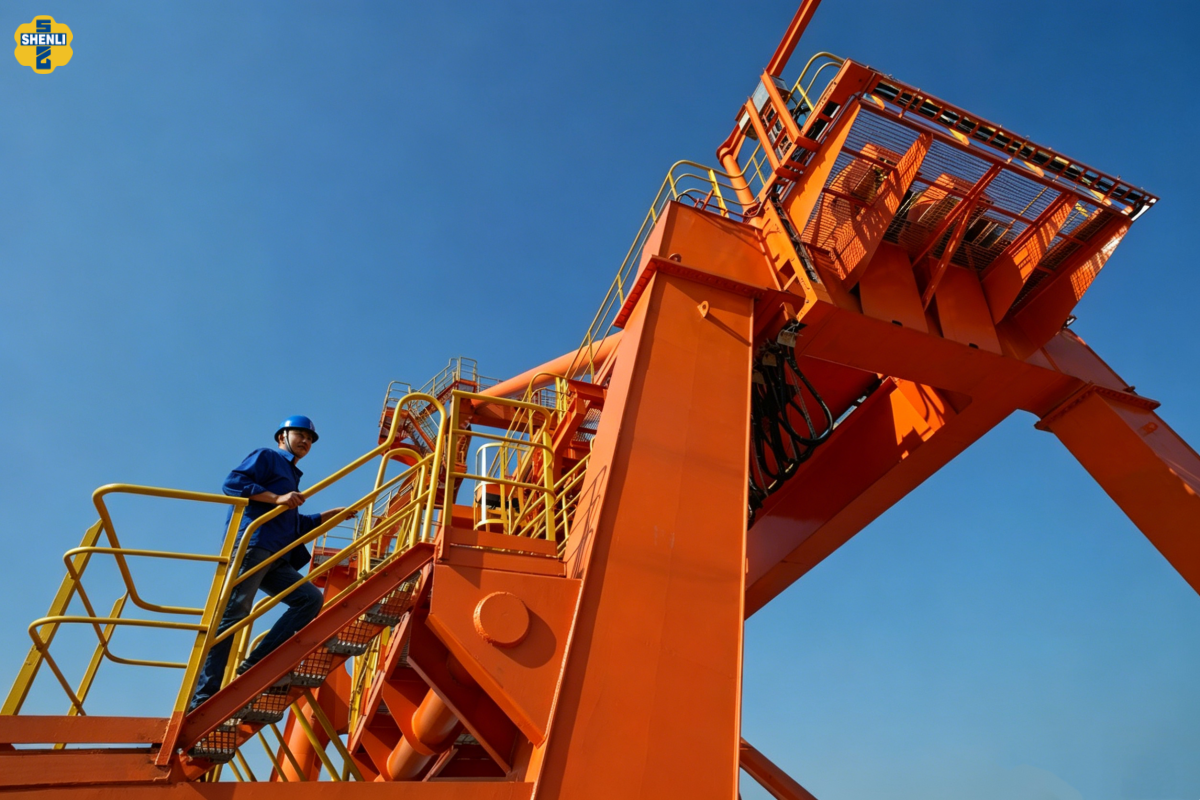
Gantry Crane Predictive Maintenance: How IoT Sensors Reduce Downtime
Gantry Crane Predictive Maintenance: How IoT Sensors Reduce Downtime Why Does Gantry Crane Downtime Cost So Much? Gantry
Contact Us Now
Have questions about our cranes or need help?
Reach out to our friendly team for expert support and guidance.
We are here to help you power your journey towards a greener future !
Address: Crane Industry Park, Xinxiang City Henan Provice
Hot Sales
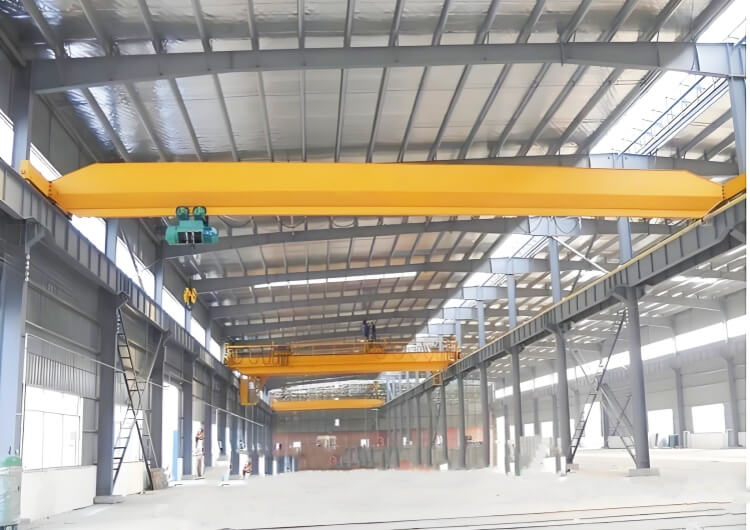
Single girder overhead cranes
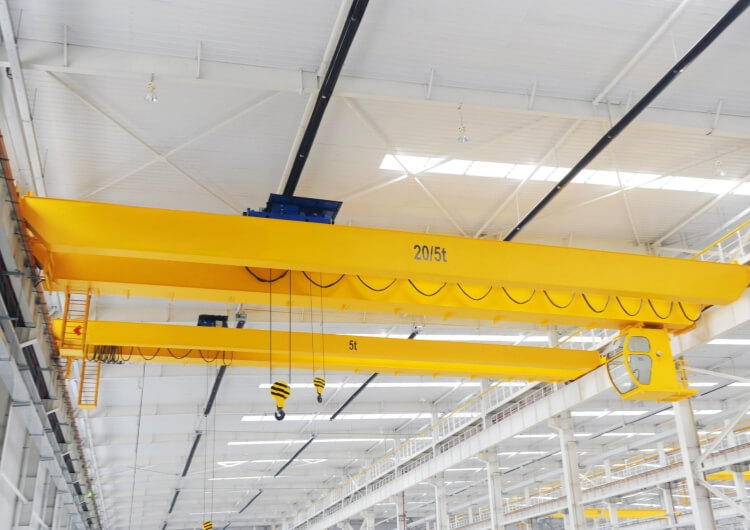
Double girder overhead cranes
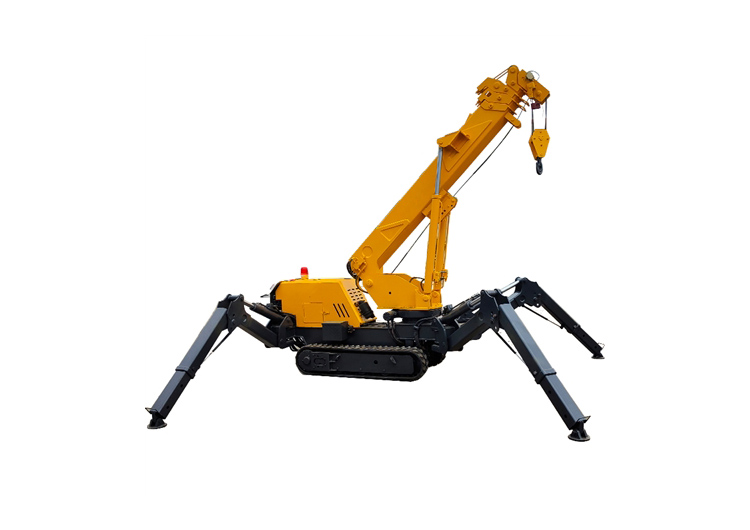
Spider cranes