
Where Spider Cranes Really Shine: 7 Typical Applications & Real Project Scenarios
When people ask me about spider cranes, they often start from the technical side:
“How many tons can it lift? What boom length do I need?”
But in real life, the decision usually begins with a much simpler question:
“Where exactly will I use this machine, and what problems can it actually solve for me?”
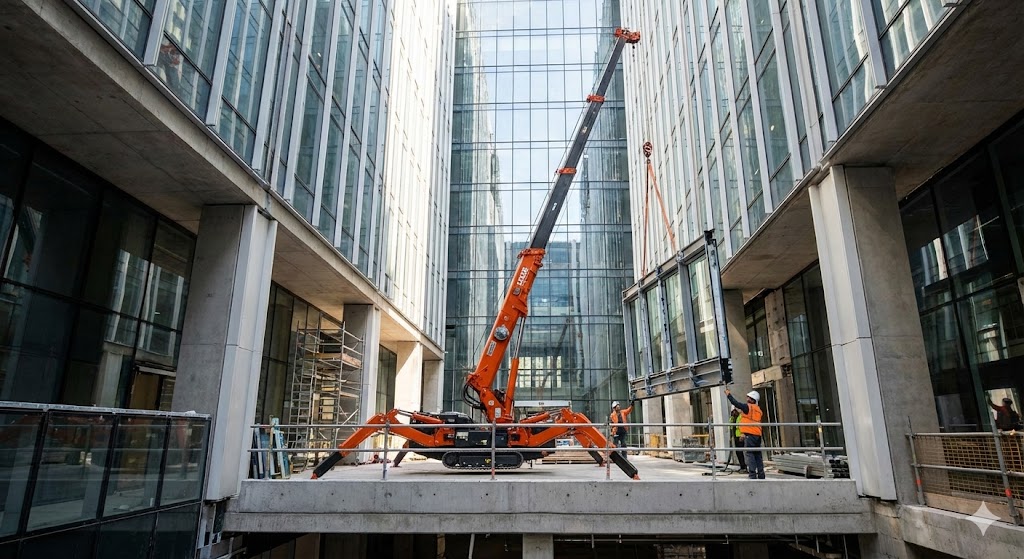
Spider cranes are not just “small versions of big cranes”. They were created for constrained spaces and complicated terrain. The compact chassis, multi-legged outriggers and low ground pressure allow them to go into places where traditional cranes simply cannot enter.
If you want a basic introduction to what a spider crane is, you can read my general overview here:
👉 Spider Crane Guide
If you want a detailed step-by-step selection logic (capacity, radius, height, power, safety margin), I’ve also written this article:
👉 How I Choose the Right Spider Crane
In this third article, I will focus on something different: where spider cranes really shine, based on seven typical applications I keep seeing in real projects.
1. Indoor Glass, Atrium and Façade Installation (with Vacuum Lifters)
If you ask me where spider cranes are used most often, indoor glass and façade work is definitely at the top of the list.
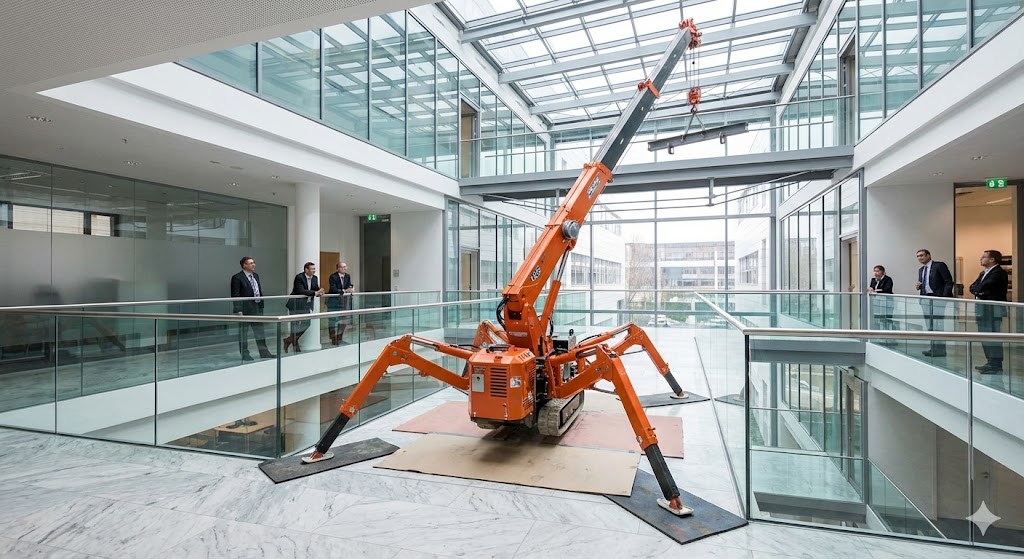
Typical scenarios
-
Glass curtain wall units in shopping mall atriums
-
Large glass panels in office lobbies and hotel receptions
-
Skylights, roof glazing and glass roofs
-
Balcony and high-level window replacement inside finished buildings
The pain point is always the same:
The glass panels are large, heavy and fragile, the space is tight, and the building is already finished – so you can’t simply drive a big crane inside or remove half of the façade.
Why a spider crane fits so well
In these jobs I usually look at a 1–2 t spider crane with:
-
Pure electric or hybrid power, for low noise and zero/low emissions
-
A tip height of around 16–22 m with main boom plus jib
-
A stowed width within 0.8–1.0 m so it can pass through doors and sometimes elevators
-
Very smooth hydraulics and fine “creep” control for micro-movements
We almost always combine the crane with a vacuum glass lifter. The crane handles the main lifting and positioning, and the glass lifter gives us safe handling without hand-holding the glass.
From my own experience, the real value of the spider crane here is precision without shock. When we install a heavy glass panel at height, the last 100–200 mm of movement matter more than the first 10 meters. If the crane can move the load millimetre by millimetre, without jerks, the risk of damage drops dramatically.
2. Equipment Installation and Replacement in Malls and Commercial Complexes
Modern shopping centres and mixed-use complexes are full of heavy equipment hidden behind a “beautiful” façade: escalators, air-handling units, chillers, signage structures, kitchen equipment for restaurants, and so on.
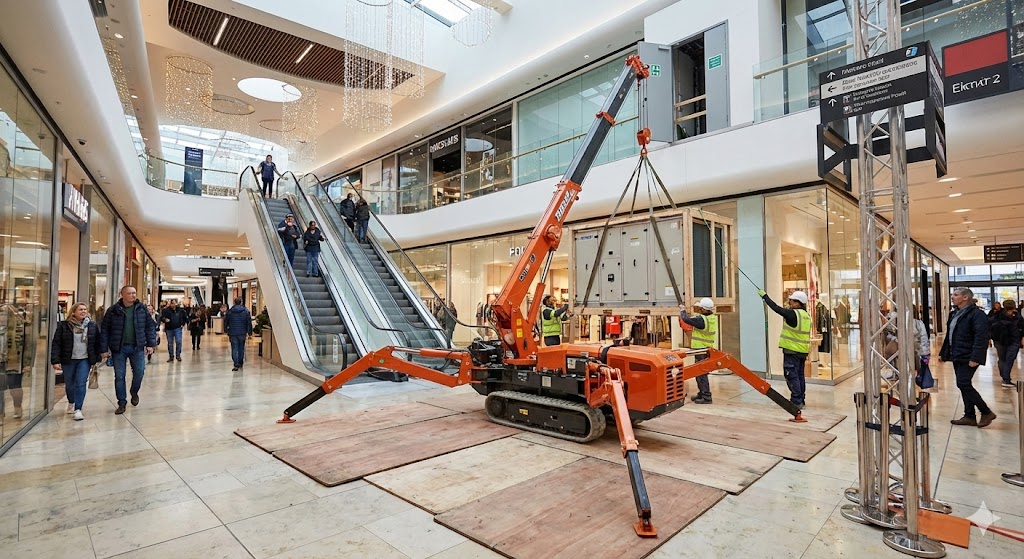
Typical scenarios
-
Lifting AHUs or small chillers into plant rooms inside a mall
-
Installing or replacing escalators and moving walks in confined central spaces
-
Hoisting heavy commercial kitchen equipment into back-of-house areas
-
Handling large signs or decorative steel structures inside an atrium
The challenge is that access routes are narrow, floors are often finished, and the building owners don’t want their tiles, glass or ceiling damaged.
Why a spider crane works here
For these jobs, I usually select a 2–3 t class spider crane with:
-
Low ground pressure so it can work on finished floors with proper mats
-
Compact dimensions that can pass through back corridors and service entrances
-
The option for electric operation inside and diesel outside
-
Enough reach to lift from a truck in the loading bay into the atrium or plant room
The multi-legged outrigger system lets us set the crane up in irregular spaces: one leg extended further into a corridor, one tucked in near a column, and so on. In many malls, this is literally the only way to get a serious lifting tool close to the final position.
3. Factory Equipment Moving and Machine Relocation (CNC, Presses, Production Lines)
The third application where I see spider cranes again and again is in factories and industrial facilities.
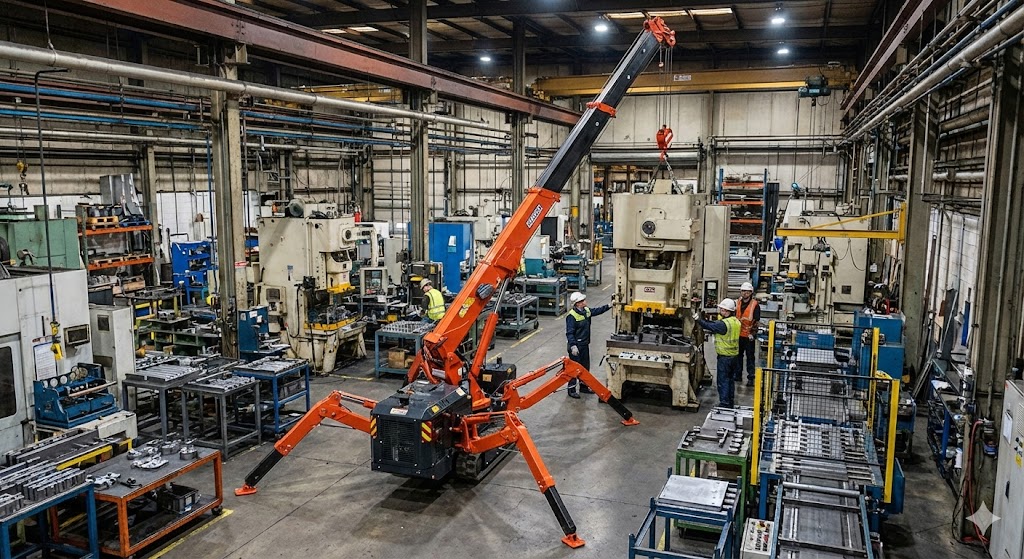
Typical scenarios
-
Installing or relocating CNC machines, presses and injection moulding machines
-
Replacing pumps, motors and compressors in tight process areas
-
Moving and re-aligning equipment during production line upgrades
-
Working in mezzanines or elevated platforms inside plants
In these facilities, the main difficulty is not the weight itself, but the combination of heavy machines + dense layout + limited headroom.
Why spider cranes are a good fit
Compared with a traditional mobile crane, a spider crane:
-
Has a much smaller footprint, so it can sit between existing machines
-
Has lower ground pressure, which is important on suspended slabs and mezzanines
-
Can use its outriggers to bridge over obstacles, instead of moving whole lines of equipment
For factory work, I usually recommend:
-
2–3 t class for general equipment lifting
-
Tip heights around 15–20 m are usually enough inside plants
-
Electric or hybrid models for indoor use
-
Self weight in the 3–5 t range, which is still manageable for many industrial floors with proper planning
More than once, I’ve seen a spider crane save days of work compared with building special gantries or disassembling half a production line.
4. Rooftop HVAC Units, Water Tanks and Small Transformers
Rooftop work is another field where spider cranes really prove their value.
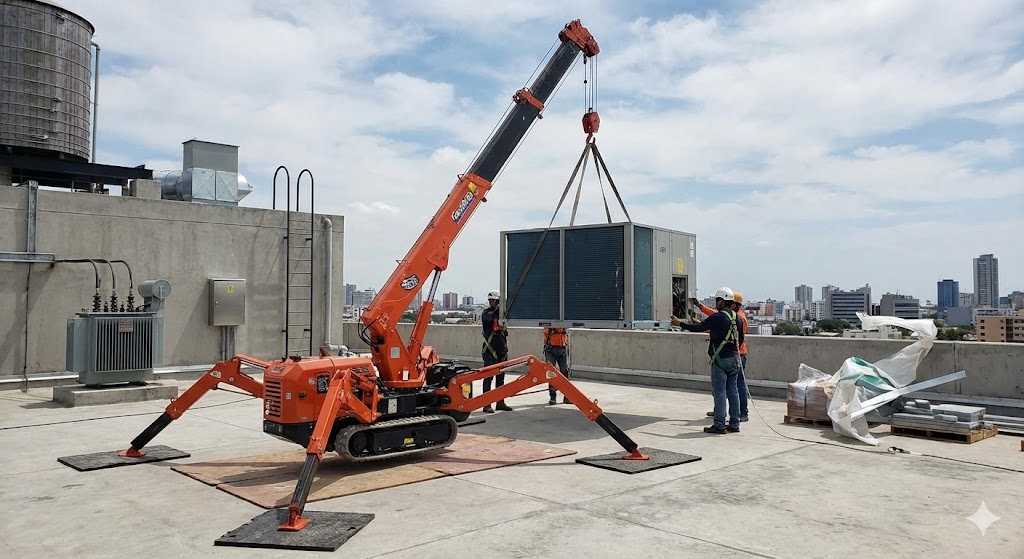
Typical scenarios
-
Lifting rooftop HVAC units (condensing units, AHUs, small chillers)
-
Installing water tanks, small transformers or electrical equipment on roofs
-
Working on podium slabs or plant decks in high-rise buildings
The main constraints here are:
-
The structural capacity of the roof
-
Access – how to get the crane itself up there
-
Wind and weather, especially at height
How I usually approach these jobs
For rooftop applications, I pay particular attention to:
-
Capacity: often 2–4 t is enough
-
Tip height: around 20–25 m if we need to reach across a roof or up a level
-
A strong load chart in the 8–14 m radius range
-
Detailed structural checks for outrigger reactions and floor loads
In some projects, we bring a spider crane to the roof by service ramp, large freight elevator or even by crane-and-crane method (a tower crane or big mobile lifting the spider crane onto the roof). Once there, the spider crane handles all the local lifting.
On rooftop jobs we often spend more engineering time on designing outrigger mats and load-spreading than on the crane itself. For me, that’s a good sign. It means everyone understands that structural safety comes first.
If you want to see how I calculate capacity, radius, height and safety margins in more detail, you can cross-check with my selection article:
How To Choose The Right Spider Crane
5. High Rise Buildings, Light Wells and Internal Courtyards
Modern high-rise projects often have internal courtyards, light wells and narrow gaps between buildings. These areas are typical “too narrow for a mobile crane, too awkward for a tower crane” zones.
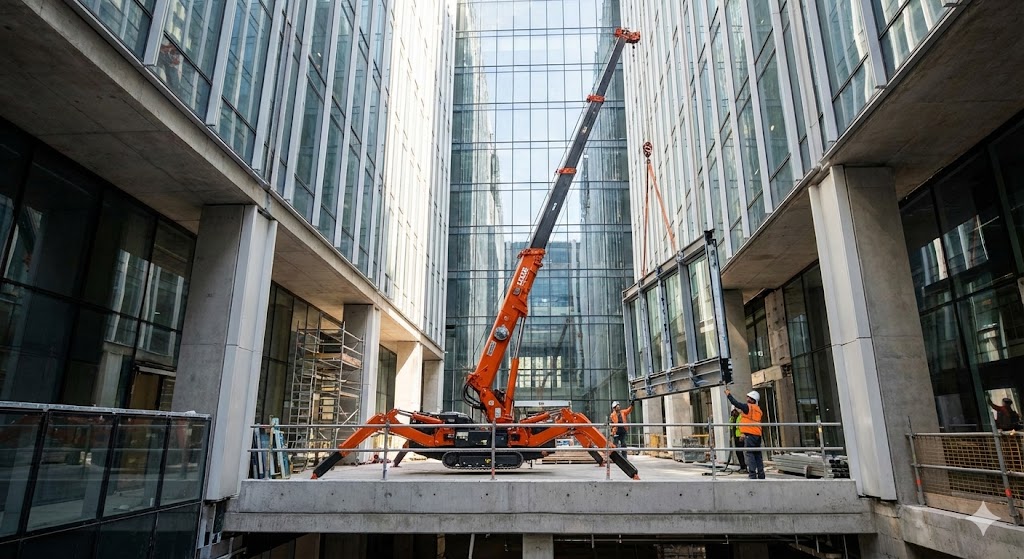
Typical scenarios
-
Lifting materials in enclosed courtyards surrounded by high façades
-
Installing steel or glass structures in internal atriums or light wells
-
Handling equipment in narrow spaces between two buildings where no truck can enter
How a spider crane solves the puzzle
When I look at these situations, I think in two directions:
-
Can we position the spider crane inside the courtyard or light well?
-
Or can we place it on an adjacent slab, podium or rooftop, and reach in with the boom?
In both cases, the critical characteristics are:
-
Very compact transport dimensions (sometimes under 800 mm width)
-
A solid working range at medium radii, not just a big “maximum reach” on paper
-
The ability to stabilise on uneven or slightly sloped surfaces using the multi-legged outriggers
This is where the “spider” part of a spider crane is not just a marketing word. Being able to set each leg at a different angle and height, and still keep the superstructure level, is exactly what makes these jobs possible.
6. Bridges, Footbridges and Narrow Urban Sites
Spider cranes also show up on bridges and narrow urban sites, where space for set-up is very limited and access for big cranes is poor.
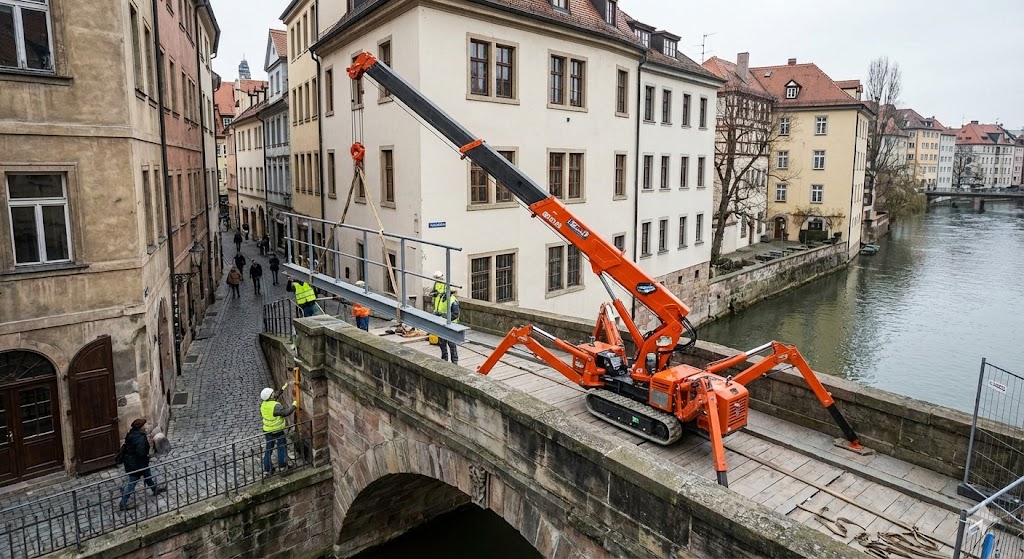
Typical scenarios
-
Installing beams, edge units or sign gantries on bridge decks
-
Working on pedestrian bridges where the structure cannot carry a large crane
-
Lifting components in narrow streets, alleys or lanes in city centres
-
Handling equipment in rail stations and platforms with restricted access
Why they are useful on infrastructure projects
On bridges and tight urban sites, the advantages I rely on are:
-
Low weight and low ground pressure, which is kind to bridge decks and old road surfaces
-
The ability to work on narrow decks or even on one half of the road while traffic is managed on the other side
-
Flexible outrigger positioning on uneven, cambered or sloped surfaces
-
Compact transport size, so the crane can reach the site through temporary access roads or narrow approaches
In many city projects, we simply don’t have the luxury of closing roads or bringing in very large cranes. A spider crane gives us a way to do smaller but critical lifts with much less disruption.
7. Maintenance and Repair Work (Glass Replacement, Façade Checks, Ceilings and Lighting)
The last application is sometimes overlooked, but it is very important for ongoing maintenance and repair.
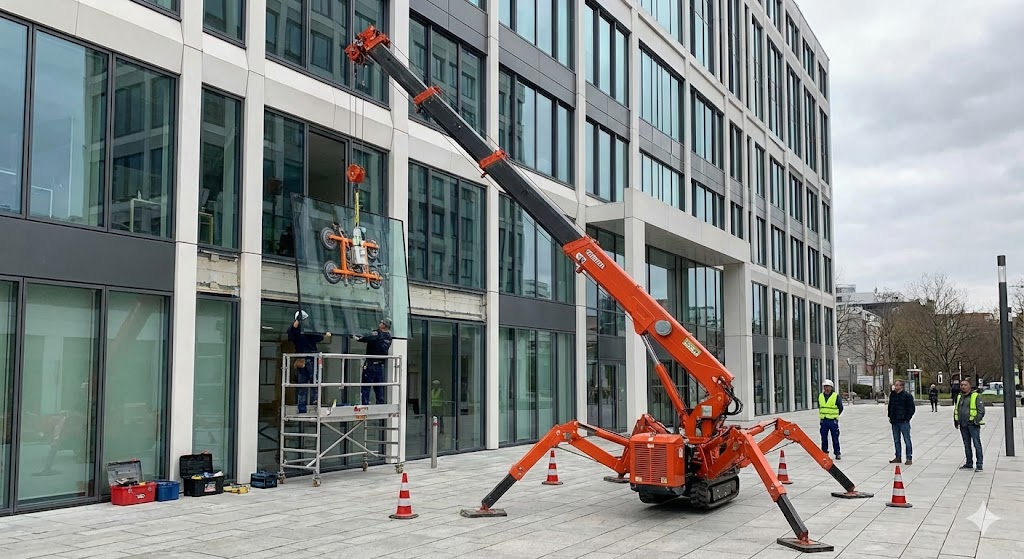
Typical scenarios
-
Replacing broken or damaged glass panels in existing façades
-
Local façade repairs and inspection work
-
Removing and reinstalling ceiling structures in atriums
-
Changing heavy light fittings, decorative features or small mechanical units indoors
For building owners, facility management companies and maintenance contractors, these jobs are never as “glorious” as new-build projects, but they happen every year. A spider crane can be the difference between a quick, clean repair and a painful, scaffold-heavy operation.
Why spider cranes make maintenance easier
For maintenance, I’m not chasing maximum capacity. I care more about:
-
How easily the crane can enter finished buildings without damaging floors
-
Whether we can set up in tight corners next to escalators, atrium balustrades or columns
-
How fine the micro-movement control is for delicately removing and reinstalling components
Many clients who buy a spider crane for new projects later tell me they end up using it a lot for maintenance contracts as well. Once the machine is there and your team is trained, it becomes a very flexible tool for all sorts of “one-off” lifting tasks.
What These Applications Have in Common: A Quick Technical Summary
Looking back at all seven scenarios, a few technical themes keep appearing. When I evaluate whether a spider crane is the right tool, I always come back to these points.
1. Dimensions and Access
The core idea of a spider crane is compactness.
-
Can the machine pass through standard doorways and corridors?
-
Can it fit into elevators or lift shafts, if needed?
If the answer is no, the crane will never reach the place where it can create value. I talk more about this in the general Spider Crane Guide, but here you can already see how important access is in real applications.
2. Ground Pressure and Weight Distribution
Compared with traditional cranes, spider cranes have much lower ground pressure.
-
That’s why they can work on mezzanines, upper floors and delicate surfaces (with the right mats).
-
Low ground pressure is also important on lawns, paving and older concrete in city centres.
3. Power Source and Emissions
Indoor work forces us to think seriously about exhaust and noise.
-
Electric-powered or hybrid models are ideal for low-emission and low-noise environments.
-
Diesel engines are still very practical outdoors, but we must control where and how long we run them.
4. Stability and Outriggers
The multi-legged stabiliser system is the heart of a spider crane.
-
Each leg must be adjustable to span over obstacles and to stand on uneven or sloped ground.
-
When used properly, this system allows the crane to remain stable in places where a normal crane would be unsafe.
5. Precision and Hydraulics
Applications like glass installation or equipment positioning demand very smooth, jerk-free control.
-
The hydraulic system must allow fine micro-movements under load.
-
In practice, we often combine the crane with vacuum lifters or special lifting tools to make the operation even more precise.
6. Lifting Capacity and Reach
Even though spider cranes are small, they still need to provide serious lifting capacity within a tiny footprint.
-
The important thing is not just the “maximum tonnage”, but what capacity you actually get at your critical radius and height.
-
In tight spaces, the ability to use the full working envelope safely matters more than the single biggest number on the data sheet.
Final Thoughts: Let Your Main Applications Guide the Investment
If you look at spider cranes only from the spec sheet, it’s easy to get lost in tons, kilowatts and metres. Once you look at them from the application side, things become much clearer:
-
If you do a lot of indoor glass and façade work, start from a compact, electric 1–2 t class.
-
If your work mixes construction sites and factory lifting, a 2–3 t class is often the backbone machine.
-
If you have regular rooftop and infrastructure jobs, you may justify a 3–4 t class with strong reach and careful structural planning.
-
And if you are responsible for maintenance and repair, a spider crane can become your “hidden weapon” for difficult one-off tasks.
We focus on designing and building spider cranes for sale, not on running a rental fleet, so my own thinking is always long-term:
Will this spider crane earn its keep on many different projects over many years?
If you can describe your main applications in a similar way to the seven scenarios above, it becomes much easier for me to recommend a concrete model and configuration – and to make sure the crane really shines in the places where you need it most.

Expert in Overhead Crane/Gantry Crane/Jib Crane/Crane Parts Solutions
Eileen Hu
With 20+ years of experience in the Crane Overseas Export Industry, helped 10,000+ customers with their pre-sales questions and concerns, if you have any related needs, please feel free to contact me!
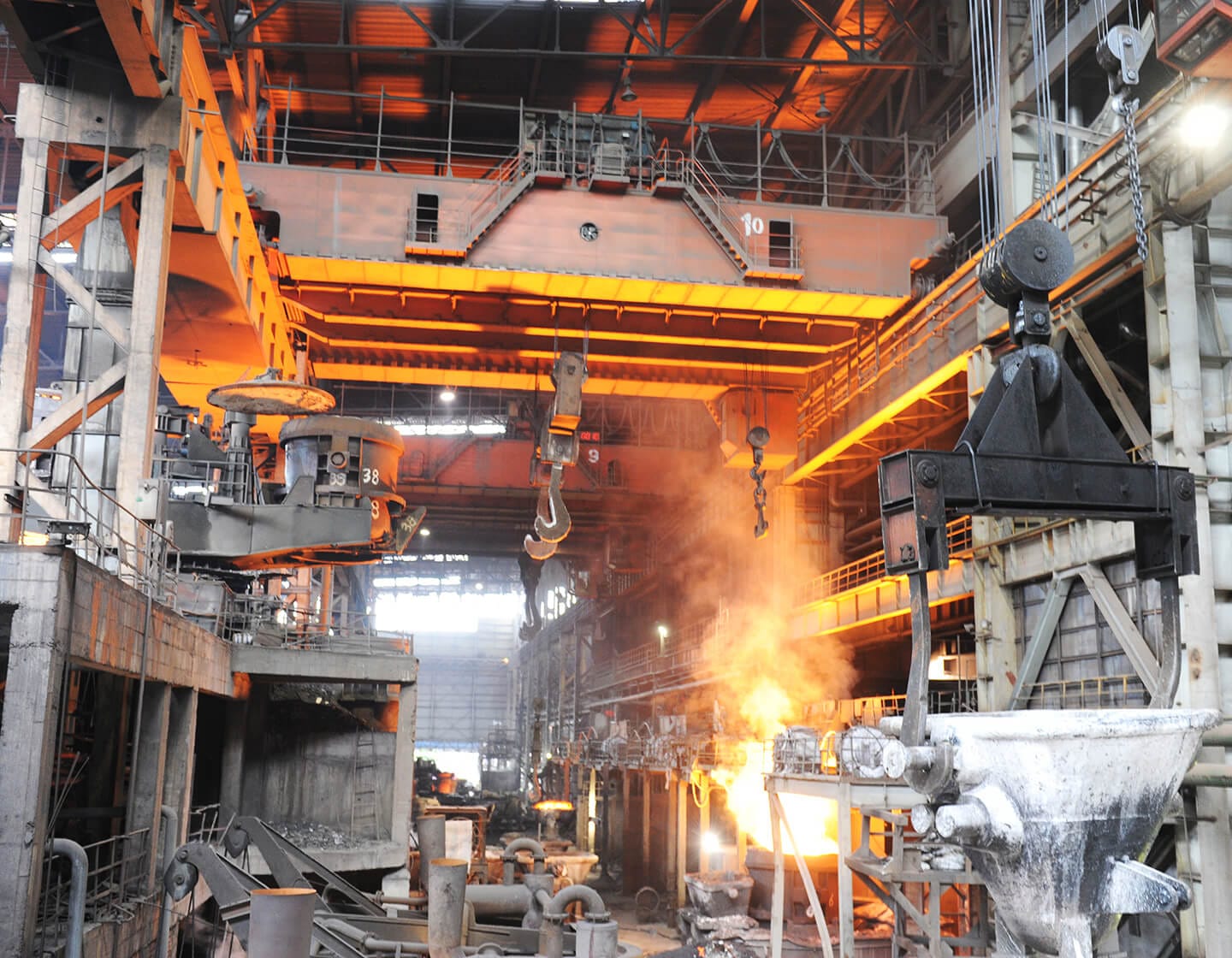
Cranes as the Backbone of Modern Steel Plants
Cranes as the Backbone of Modern Steel Plants How the Right Steel Plant Crane Solutions Drive Efficiency, Safety,
Where Spider Cranes Really Shine: 7 Typical Applications & Real Project Scenarios
Where Spider Cranes Really Shine: 7 Typical Applications & Real Project Scenarios When people ask me about spider
How To Choose The Right Spider Crane
How To Choose The Right Spider Crane (Mini Crawler Crane) for a Project – My Practical Experience When
Low Headroom Wire Rope Hoist for Tight Workshops | SLKJCrane
Cost Saving Low Headroom Wire Rope Hoist for Tight Workshops When I visit customers’ workshops and warehouses, I
Contact Us Now
Have questions about our cranes or need help?
Reach out to our friendly team for expert support and guidance.
We are here to help you power your journey towards a greener future !
Address: Crane Industry Park, Xinxiang City Henan Provice
Hot Sales
Single girder overhead cranes
Double girder overhead cranes
Spider cranes