
Cost Saving Low Headroom Wire Rope Hoist for Tight Workshops
When I visit customers’ workshops and warehouses, I often hear the same complaint:
“My building isn’t high enough. The hoist and beam take up too much space, and the hook can’t lift the load high enough.”
In modern plants, warehouses, and assembly lines, material handling is a daily job. But traditional lifting equipment usually needs a lot of headroom. In low or medium-height buildings, the hoist body and trolley can easily “eat up” the available lifting height. The result is simple but painful: you pay for a building, but you can’t use its full space.
This is exactly why I started to design and supply low headroom wire rope hoists – also called ultra-low headroom hoists. With a more compact structure and smarter layout, they help my customers gain extra lifting height without touching the building structure, while also controlling investment and running cost.
What Is a Low Headroom Wire Rope Hoist?
A low headroom wire rope hoist is a special type of factory lifting equipment designed for limited space above the hook. You may also see it called:
-
Low headroom electric wire rope hoist
-
Low building type hoist
-
Ultra-low headroom hoist
Compared with a conventional wire rope hoist, the low headroom model is built to minimize its own height dimension in the lifting direction. In simple words: I move and compress the hoist body so that the hook can travel higher, even when the building height stays exactly the same.
For customers, this usually means:
-
You can lift taller machines, molds, or workpieces
-
You can use a lower building instead of building a higher one
-
You can often avoid expensive structural modifications to an existing workshop
In many real projects, a low headroom hoist helps the customer gain up to 600–700 mm extra lifting height, which is decisive for some machines and production lines.

How I Increase the Available Lifting Height
The key design idea is simple but powerful:
“Sacrifice my own height to give you more effective lifting stroke.”
To achieve this, I use several structural optimizations:
-
Coaxial compact layout: I arrange the lifting motor, gearbox, and drum in a compact, coaxial way so the whole lifting unit becomes shorter in height.
-
Side-mounted trolley design: Instead of hanging the hoist body far below the beam, I move the main hoist unit closer to the side of the running beam or I-beam.
-
Higher hook position: Because the hoist body sits higher and tighter to the beam, the hook can move closer to the beam bottom, which directly increases the available lifting height under the hook.
From the user’s side, you don’t need to change your building. You just replace a traditional hoist with a low headroom model, and suddenly your effective working space grows.

Compact Structure and Smooth, Stable Running
Because the low headroom hoist sits closer to the beam and has a more compact body, the center of gravity is lower and more balanced.
This gives you several benefits:
-
Better running stability along the beam, with less sway
-
Less vibration when starting and stopping
-
Higher positioning accuracy when you need to put a load down gently in a narrow area
For many of my customers in machining workshops and assembly lines, this stability is just as important as the lifting height itself. It directly affects safety, product quality, and working efficiency.
Modular Design for Easier Maintenance
From a manufacturer’s point of view, I always think beyond the sale. I also care about what happens after you put the hoist into daily operation.
That’s why I use a modular design for the low headroom hoist:
-
Main components (motor, gearbox, drum, brake, control box, trolley frame) are modular units
-
This makes production, assembly, and installation faster
-
It also makes inspection, maintenance, and part replacement more convenient
For you, the result is a lower life-cycle cost. When something wears out after years of work, your maintenance team doesn’t have to fight against a “black box”. They can quickly access and replace the right module.
Safety Features You Can Rely On
When we talk about lifting equipment, safety always comes first.
Our low headroom wire rope hoist usually comes with multiple safety protections as standard:
-
Upper limit switch
Prevents the hook from over-traveling upward and hitting the hoist body. It protects the equipment and avoids “over-hoisting” accidents. -
Overload limiter
When the actual load exceeds the rated capacity, the hoist will cut off the lifting circuit to protect both people and equipment. -
Phase sequence protection
If the incoming power phase sequence is wrong, the protection device stops the hoist from running in the wrong direction. This avoids unexpected movements caused by wiring errors. -
Emergency stop button
In case of any abnormal situation, the operator can hit the emergency stop to cut the power immediately and freeze the movement. -
Rope guide
Guides the wire rope to wind neatly onto the drum, reducing the risk of rope disorder, overlapping, or damage.
On top of these, I also offer options like over-speed protection, thermal protection for motors, and protection grade upgrades depending on the working environment.
Easy to Operate, Even for New Operators
In many workshops, the crane operator is not a full-time job. Sometimes technicians, warehouse workers, or maintenance staff need to operate the hoist as part of their daily routine. So I try to make the hoist:
-
Safe and forgiving
Overload cut-off, instant brake when power is off, hook with safety latch – all help reduce operation risk. -
Comfortable to control
I provide pendant control and radio remote control options. With a remote, the operator can stand at a safe position away from the load, with a clear view and enough distance. -
Simple to maintain
The hoist has an efficient cooling design. It can handle higher duty cycles without the motor overheating. In many normal workshops, daily maintenance can be as simple as checking and cleaning the wire rope, lubricating key points, and making routine inspections.
My goal is that even a new operator, after simple training, can work safely and confidently with this hoist.
Main Application Scenarios
Because of its strong space advantage, the low headroom wire rope hoist is widely used in many fields where height is limited or space is tight. Typical applications include:
-
Workshops and warehouses with limited building height
Especially old plants being upgraded, or new buildings with relatively low clear height. -
Automatic production lines
Used as the lifting mechanism for overhead monorails, suspended cranes, or gantry systems to move parts between stations. -
Equipment installation and maintenance
In power plants, hydropower stations, pump stations, and other equipment-dense areas, the hoist helps install and maintain large pumps, valves, generators, and other heavy components. -
Steel structure construction and assembly
Inside buildings, to lift and position steel beams, columns, and other structural elements. -
Automotive manufacturing and repair
For lifting engines, vehicle bodies, and heavy tooling in assembly and repair lines.
Wherever you struggle with low ceiling height but still need reliable lifting, a low headroom hoist is usually one of the most cost-effective solutions.
Core Technical Range and How I Match It to Your Industry
To cover different workshop sizes and industries, I usually design and supply low headroom wire rope hoists in the following ranges:
-
Rated capacity: approx. 0.5 t – 20 t
-
0.5–8 t: for most small and medium workshops, machining shops, and logistics areas
-
10–20 t: for larger workshops, assembly lines, and heavy-duty processes
-
-
Lifting height: approx. 6 m – 30 m
-
6–9 m: small workshops or mezzanine-type buildings
-
12–18 m: medium-height industrial buildings
-
20–30 m: larger plants or certain outdoor applications
-
-
Hoisting speed: approx. 0.35–8 m/min
-
Single speed, dual speed, or frequency inverter control
-
Slow speed for precise operations (mold alignment, fine assembly)
-
Higher speed for general material handling with higher efficiency
-
-
Trolley travel speed: approx. 10–30 m/min
-
Can be customized depending on the length of your workshop, process rhythm, and required efficiency
-
-
Duty class (working group): typically M3–M5 (or similar ISO/FEM classes)
-
This allows the hoist to work reliably in most daily production scenarios with repeated cycles.
-
When I communicate with customers, I don’t just throw these numbers at them. I always connect each parameter with their real working condition:
How heavy is the load? How often do you lift per hour? How high does the hook need to go? How tight is the space? This is the basis of a correct configuration.
How I Help You Choose the Right Low Headroom Hoist
Many buyers tell me they feel confused when reading hoist specifications. So my team and I usually guide them through a few key questions:
-
What is your maximum load – and how much safety margin do you need?
If your heaviest load is 3 tons, we often recommend at least a 5-ton hoist to keep enough safety and flexibility. -
What lifting height do you really need?
We calculate from floor level to the highest point the hook must reach, then combine that with your building height and beam position to choose the right hoist model. -
How much building headroom do you actually have?
The clear distance from floor to beam bottom (or from the top of rail to ceiling) is crucial for low headroom solutions. The more accurately you measure, the better I can design. -
What is your power supply?
I can design for different three-phase voltages and frequencies (e.g. 380 V/50 Hz, 415 V/50 Hz, 440–480 V/60 Hz, etc.). -
What is your working environment?
-
Normal indoor workshop
-
High temperature / high humidity
-
Dusty / slightly corrosive environment
-
Outdoor area
-
-
Do you have any special requirements?
For example:-
Explosion-proof area → we can discuss explosion-proof hoist solutions
-
Metallurgical or foundry use → we can provide metallurgical hoist with higher protection and heat resistance
-
Special control system integration → we can connect to your existing PLC or automation system
-
If at any point you feel that selection is difficult, you can simply send me your building drawings, process layout, and basic requirements. My engineering team will prepare a tailor-made low headroom hoist solution for you.
Why Work With Us
I know there are many hoist suppliers in the market. What I focus on is:
-
Complete certifications and licenses
We have the necessary special equipment production licenses and type test certificates required in this industry. -
Years of manufacturing and engineering experience
My team has been working on cranes and hoists for many years. We are not just trading; we design, produce, and support the equipment ourselves. -
Real technical support throughout the lifecycle
From selection and design, to installation guidance, to after-sales maintenance – you can always reach us for practical solutions, not just sales talk.
Ready to Turn Your “Low Ceiling” Into a High Value Space?
If you are still struggling with limited building height and inefficient material handling, a low headroom wire rope hoist might be exactly what you need.
You are welcome to contact me and my team for:
-
Free technical consultation and layout suggestions
-
A customized low headroom hoist solution based on your actual building and process
-
A detailed quotation with transparent configuration and options
Let’s make your “small” space release big lifting capacity and efficiency – safely, reliably, and at a reasonable cost.


Expert in Overhead Crane/Gantry Crane/Jib Crane/Crane Parts Solutions
Eileen Hu
With 20+ years of experience in the Crane Overseas Export Industry, helped 10,000+ customers with their pre-sales questions and concerns, if you have any related needs, please feel free to contact me!

Overhead Crane Safety Devices
Overhead Crane Safety Devices: 7 Essential Protection Systems for Overhead and Gantry Cranes Introduction Overhead cranes and gantry
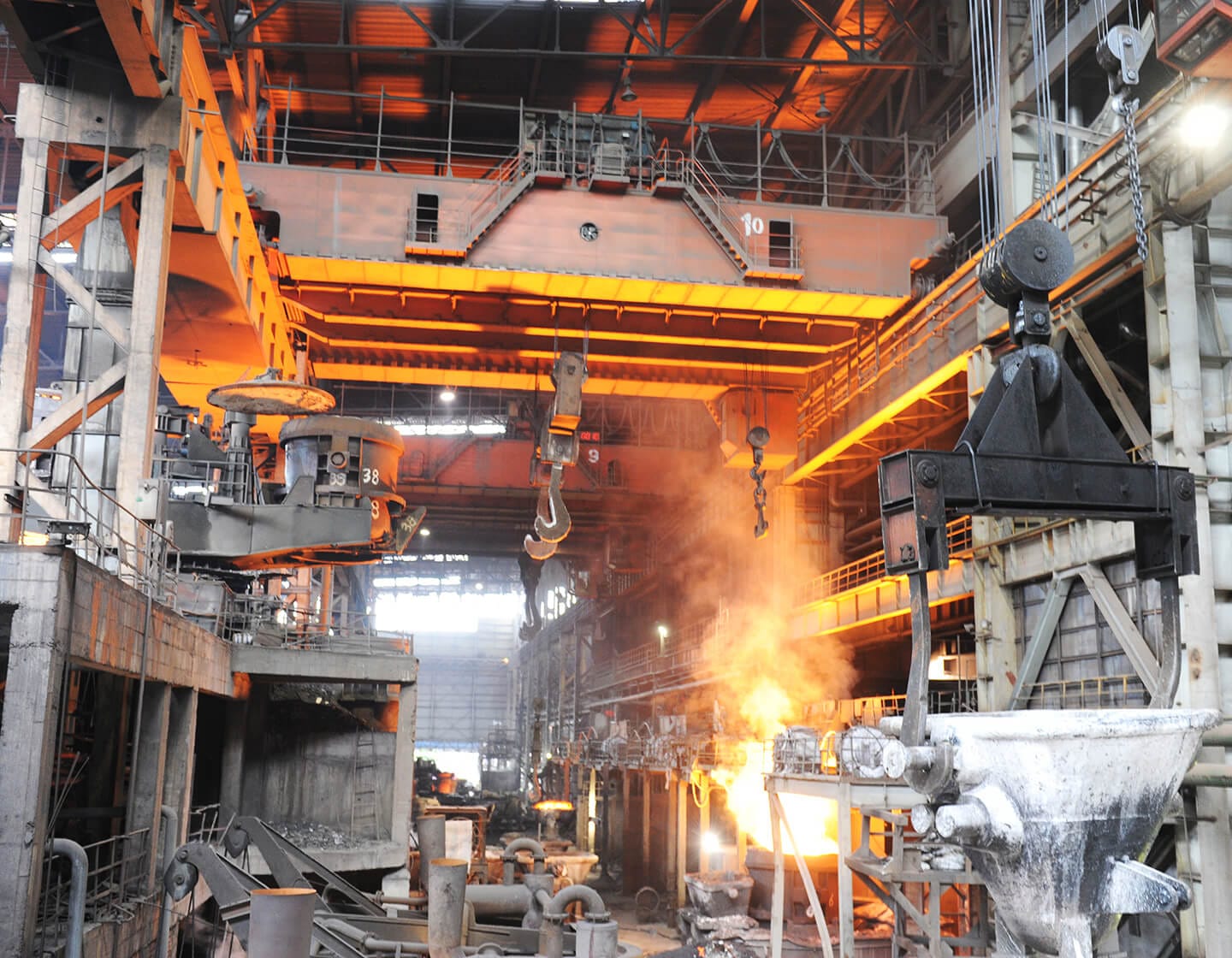
Cranes as the Backbone of Modern Steel Plants
Cranes as the Backbone of Modern Steel Plants How the Right Steel Plant Crane Solutions Drive Efficiency, Safety,
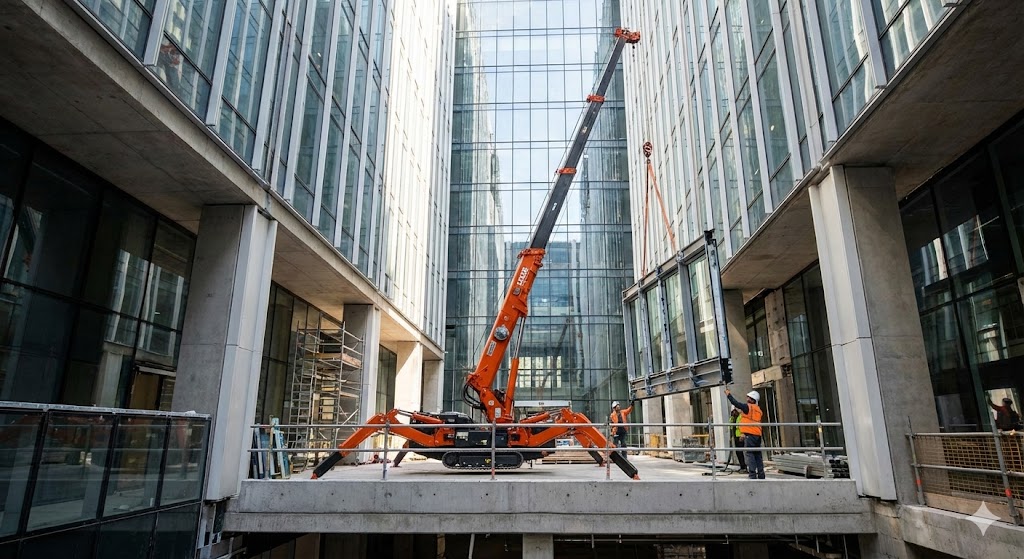
Where Spider Cranes Really Shine: 7 Typical Applications & Real Project Scenarios
Where Spider Cranes Really Shine: 7 Typical Applications & Real Project Scenarios When people ask me about spider
How To Choose The Right Spider Crane
How To Choose The Right Spider Crane (Mini Crawler Crane) for a Project – My Practical Experience When
Contact Us Now
Have questions about our cranes or need help?
Reach out to our friendly team for expert support and guidance.
We are here to help you power your journey towards a greener future !
Address: Crane Industry Park, Xinxiang City Henan Provice
Hot Sales
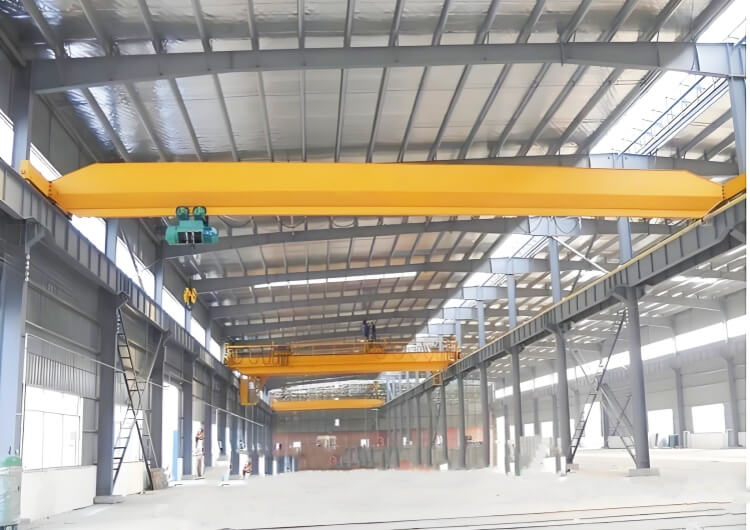
Single girder overhead cranes
Double girder overhead cranes
Spider cranes