
How to Select the Right Overhead Crane for Steel Mills: A Complete Selection Guide
In the high-stakes environment of steel production, overhead cranes (bridge cranes) are the lifeblood of operational efficiency and safety. From handling scrap metal and transporting molten steel to moving finished steel billets and coils, every stage of production relies on robust lifting solutions. Selecting the correct steel mill crane is not just about performance; it directly impacts equipment longevity, operator safety, and overall ROI.
This guide explores the critical factors in selecting an industrial overhead crane tailored for the rigorous demands of a steel plant.
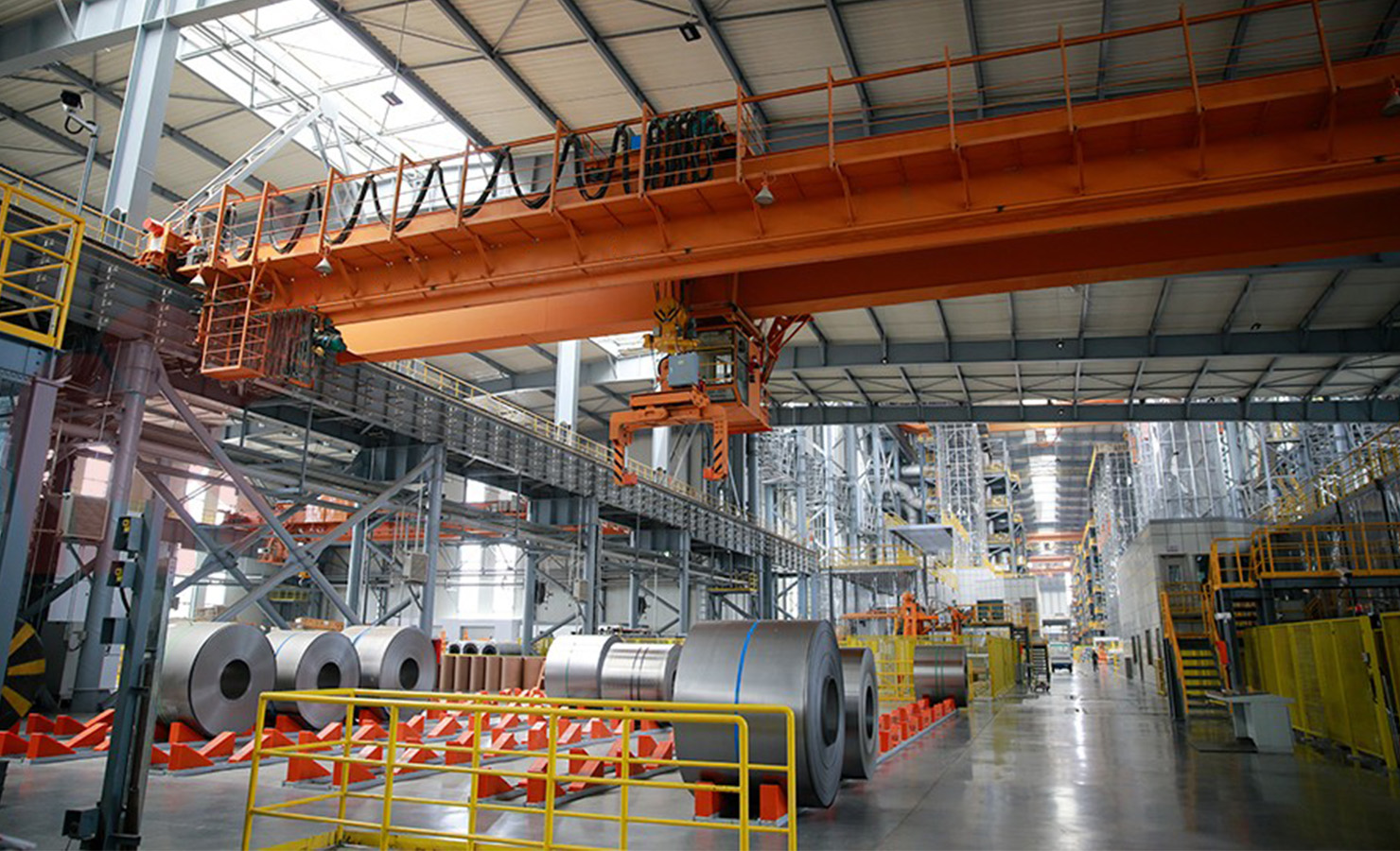
1. Identify Steel Production Processes and Lifting Requirements
Before choosing a crane, you must map out the specific production stages. Different zones in a steel mill have vastly different technical requirements. Common operations include:
- Scrap Charging: Feeding scrap into electric arc furnaces.
- Molten Steel Handling: Transporting ladles via ladle cranes.
- Continuous Casting: Handling semi-finished steel billets.
- Rolling Mills: Moving heavy steel coils.
- Storage & Logistics: Warehouse handling of raw materials and finished goods.
Key Insight: A ladle overhead crane requires extreme heat resistance and high safety redundancy, whereas a warehouse crane focuses more on speed and precision.
2. Determine the Rated Lifting Capacity
- Billet or Slab Handling: 10 – 50 tons.
- Heavy Material Transport: 50 – 150 tons.
- Ladle Cranes: 100 – 300+ tons.
Selecting a capacity that is too low creates severe safety risks, while over-specifying leads to unnecessary procurement and maintenance costs. A balanced assessment of material weight and operational frequency is essential.
3. Choose the Specific Type of Steel Mill Crane
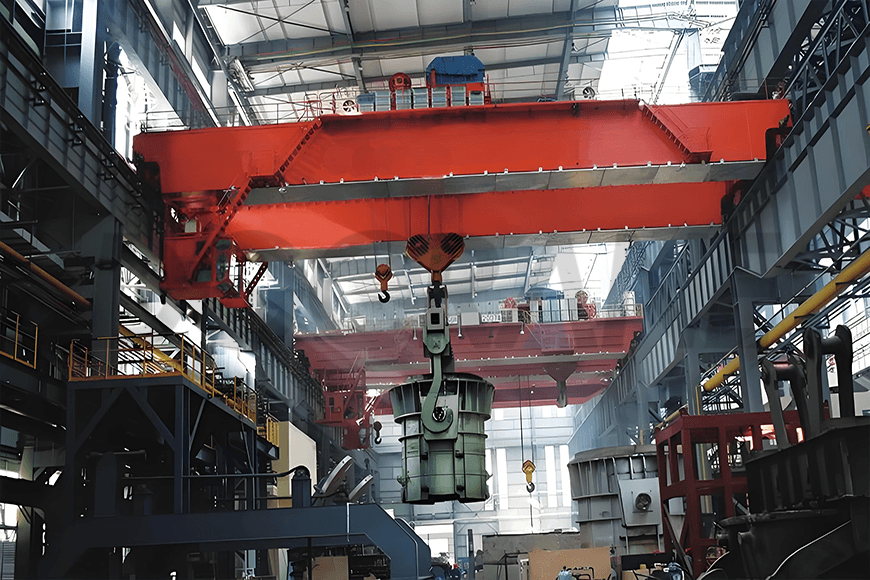
1. Ladle Crane
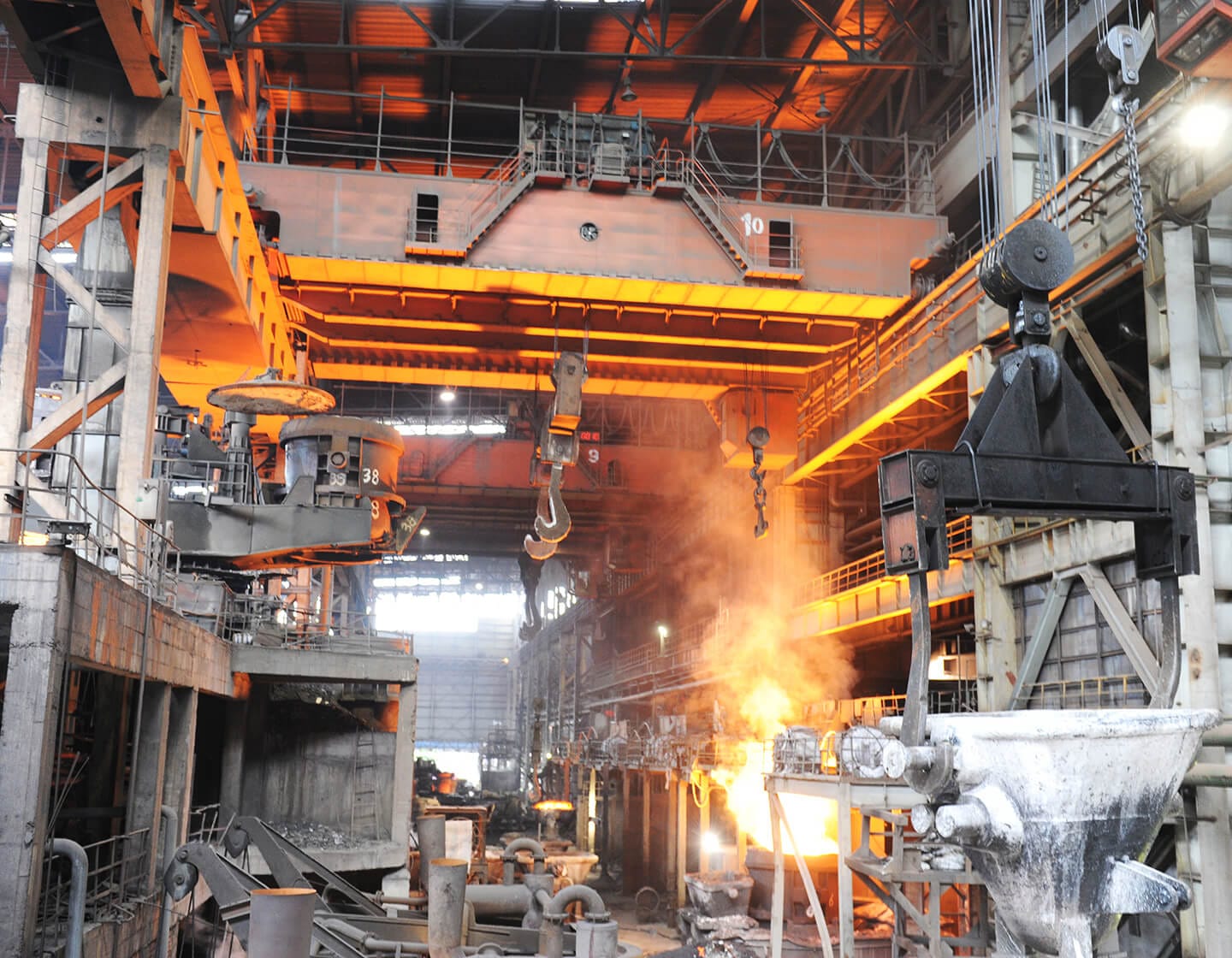
Ladle cranes are primarily used to transport high-temperature molten steel from steelmaking furnaces to continuous casting equipment. Due to the extreme nature of the environment, they require exceptionally high safety performance.
These cranes must be equipped with:
High-safety redundancy design
Dual braking systems
High-temperature resistant electrical systems
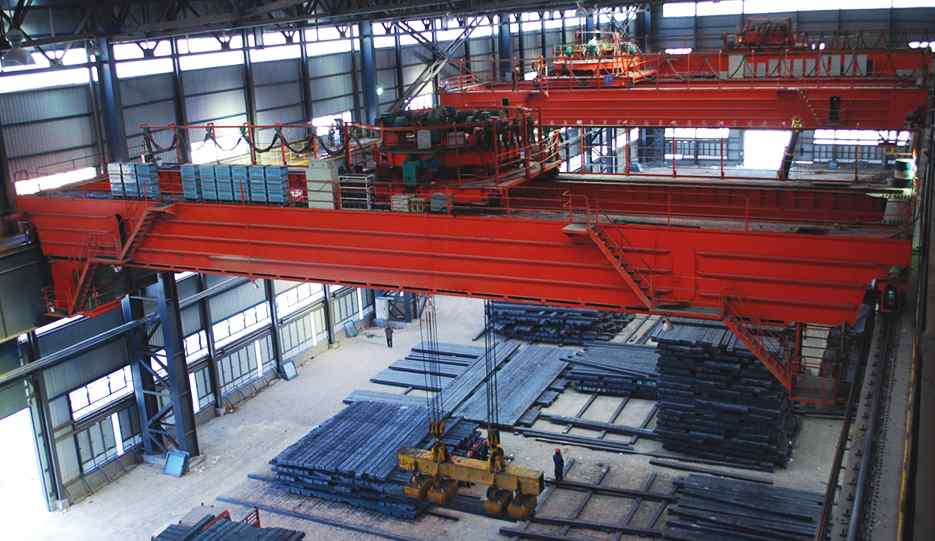
2. Billet Handling Crane
Billet handling cranes are primarily used for transporting semi-finished materials such as steel billets and slabs.Key characteristics include:
High operational frequency: Designed for heavy-duty cycles and continuous use.
High lifting capacity: Engineered to handle the significant weight of bulk steel products.
Stable control systems: Required for precise positioning and to minimize load swing during rapid transport.
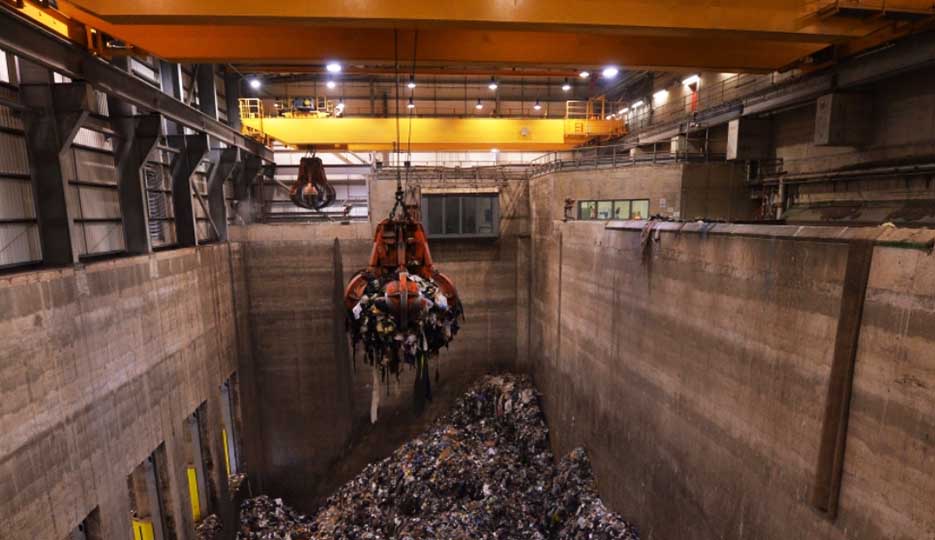
3. Scrap Charging Crane
Scrap charging cranes are primarily used to charge scrap steel into Electric Arc Furnaces (EAF).
Common configurations include:
- Grab bucket attachments: Often equipped with orange-peel grabs or powerful electromagnets to handle irregular scrap pieces.
- High-strength structural design: Built to withstand the intense mechanical impact and vibrations associated with loading heavy debris.
- Heavy-duty workload capacity: Engineered for continuous, high-intensity operations in harsh melting shop environments.
4. Coil Handling Crane
Coil handling cranes are widely used in rolling mills for the lifting and transport of large steel coils.
- Specialized lifting attachments: Usually equipped with C-hooks, hydraulic tongs, or vacuum lifters designed specifically for the inner or outer diameter of the coils.
- Precision positioning systems: Necessary for the dense storage and accurate placement of coils on conveyor lines or transport vehicles.
- Anti-sway technology: Essential for maintaining stability during movement to prevent damage to the high-value finished products and ensure worker safety.
4. Consideration of Crane Working Class (Duty Cycles)
Steel production is typically a continuous operation; therefore, the crane’s working class must meet high-intensity operational demands.
The crane working classes (Duty Groups) are generally categorized as:
Light Duty: For infrequent use and light loads.
Medium Duty: For regular use with varying loads.
Heavy Duty: For frequent use near rated capacity.
Severe/Ultra-Heavy Duty: For continuous, high-speed operations under maximum load.
In the steel industry, most overhead cranes fall under Heavy Duty (e.g., A6/A7) or Severe Duty (e.g., A8) classifications. If a lower working class is selected, it often leads to severe component wear, increased failure rates, and shortened equipment lifespan.
5.Consideration of Special Environmental Conditions in Steel Mills
The environment in a steel mill is typically harsh, placing much higher demands on equipment. Factors include:
High-temperature environments
Heavy dust and particulate matter
Humidity or corrosive gases
Continuous, high-intensity operation
Therefore, overhead cranes for steel mills generally require:
High-temperature resistant electrical systems: Including heat-insulated control rooms and specialized cooling units.
Dust-proof design: Sealed housings and filtration systems to prevent conductive dust from entering electrical components.
Reinforced steel structures: Enhanced fatigue resistance and thermal expansion considerations for long-term structural integrity.
High-reliability cable systems: Use of heat-resistant cables (such as silicone or Teflon-coated) and heavy-duty cable tracks.
Standard industrial cranes often fail to maintain long-term stable operation if deployed directly into a steel mill environment without these specialized modifications.
6. Typical Failure Case: Reducer Failure Due to Insufficient Working Class
Case Background
A steel mill’s continuous casting workshop purchased a 50-ton overhead crane primarily for billet handling. To reduce initial investment costs, a Medium Duty crane was selected. While it operated normally at first, the hoisting mechanism’s reducer began failing frequently after approximately 18 months of service.
Failure Symptoms
The equipment exhibited the following issues:
Abnormal temperature rise in the reducer.
Severe gear wear and pitting.
Accelerated lubricant contamination (metal filings in the oil).
Significant noise increase in the hoisting mechanism.
Eventually, the reducer gears failed during a high-load lifting operation, leading to an emergency shutdown and extensive repairs.
Root Cause Analysis
Technical inspection revealed that the primary cause was under-specifying the working class. The continuous casting environment involves:
High-frequency cycles (near-constant movement).
Operations near rated capacity (heavy lifting).
Long daily running hours (24/7 production).
The original Medium Duty design was simply not engineered to withstand these actual operating conditions.
Improvement Solution
The mill ultimately upgraded the equipment with the following modifications:
Hoisting mechanism replaced with a Heavy Duty (A7/A8) rated system.
Upgraded reducer structure using high-strength alloy steel gears.
Enhanced lubrication and heat dissipation systems (forced oil cooling).
Result: Stable operation with a significantly lower failure rate.
7. Emphasizing Safety System Design
In a steel mill, safety is the most critical factor when selecting an overhead crane. Ladle cranes, in particular, require multiple redundant safety systems:
Dual Braking Systems: Redundant service and emergency brakes on the hoisting drum to prevent load drops.
Overload Protection Devices: Sensors that cut power if the weight exceeds the safe limit.
Anti-Sway Systems: Electronic controls to stabilize the load during high-speed travel.
Emergency Stop Protection: Instant power disconnection accessible from multiple points.
These safety features are essential for mitigating risks and ensuring the protection of both personnel and high-value assets.
8. Choose a Crane Manufacturer with Proven Steel Mill Project Experience
Steel mill projects are characterized by:
Large equipment tonnage
Complex technical designs
Harsh operating environments
Therefore, selecting a manufacturer with extensive experience in the steel industry is crucial. The SHENLI team provides:
Customized Design Solutions: Tailored to your specific workshop layout and metallurgical requirements.
Installation and Commissioning Services: Professional on-site setup to ensure optimal performance from day one.
Technical Support and After-Sales Service: Expert guidance and rapid response to keep your production moving.
Guaranteed Spare Parts Supply: Reliable access to critical components to minimize downtime.
Through professional selection and specialized engineering, steel plants can achieve more efficient, safe, and reliable lifting solutions.
15+ years of crane design & manufacturing experience
Customized solutions up to 320 tons
Certified under ISO, CE, and SGS standards
FEM & CMAA compliant designs
Global engineering support & after-sales service
Conclusion – Ensure Reliable Operation with SLKJCrane

Expert in Overhead Crane/Gantry Crane/Jib Crane/Crane Parts Solutions
Eileen
With 20+ years of experience in the Crane Overseas Export Industry, helped 10,000+ customers with their pre-sales questions and concerns, if you have any related needs, please feel free to contact me!
Frequently Asked Questions (FAQ)
They optimize material handling efficiency, improve safety, and support 24/7 heavy-duty operation — essential for high-output steel plants.
Consider your load type, working environment, and lifting capacity. SLKJCrane engineers provide custom 3D designs and professional selection advice.
Perform daily visual checks, weekly lubrication, monthly electrical inspections, and annual load testing.
We deliver reliable, fully customized crane systems built under ISO/FEM standards, with proven success in 40+ countries.
How to Select the Right Overhead Crane for Steel Mills
How to Select the Right Overhead Crane for Steel Mills: A Complete Selection Guide In the high-stakes environment

Overhead Crane Safety Devices
Overhead Crane Safety Devices: 7 Essential Protection Systems for Overhead and Gantry Cranes Introduction Overhead cranes and gantry
Cranes as the Backbone of Modern Steel Plants
Cranes as the Backbone of Modern Steel Plants How the Right Steel Plant Crane Solutions Drive Efficiency, Safety,
Where Spider Cranes Really Shine: 7 Typical Applications & Real Project Scenarios
Where Spider Cranes Really Shine: 7 Typical Applications & Real Project Scenarios When people ask me about spider
Contact Us Now
Have questions about our cranes or need help?
Reach out to our friendly team for expert support and guidance.
We are here to help you power your journey towards a greener future !
Address: Crane Industry Park, Xinxiang City Henan Provice