
Single Girder Overhead Crane Installation Guide | Step-by-Step Crane Installation Procedure
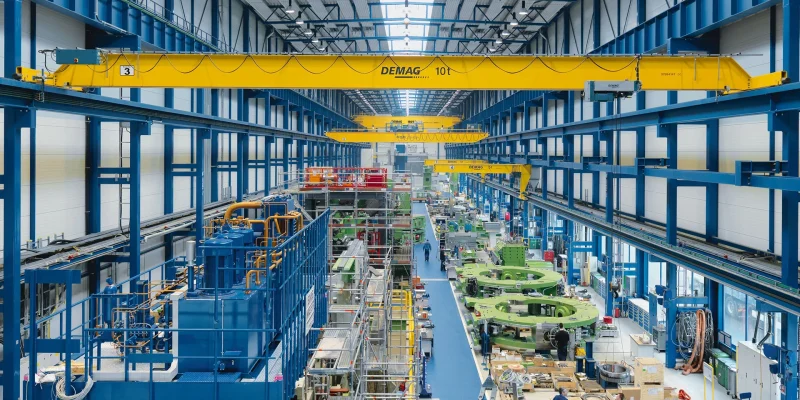
A single girder overhead crane is widely used in factories, warehouses, steel structures, and manufacturing workshops. Proper installation is essential to ensure the crane operates safely, efficiently, and meets operational requirements.
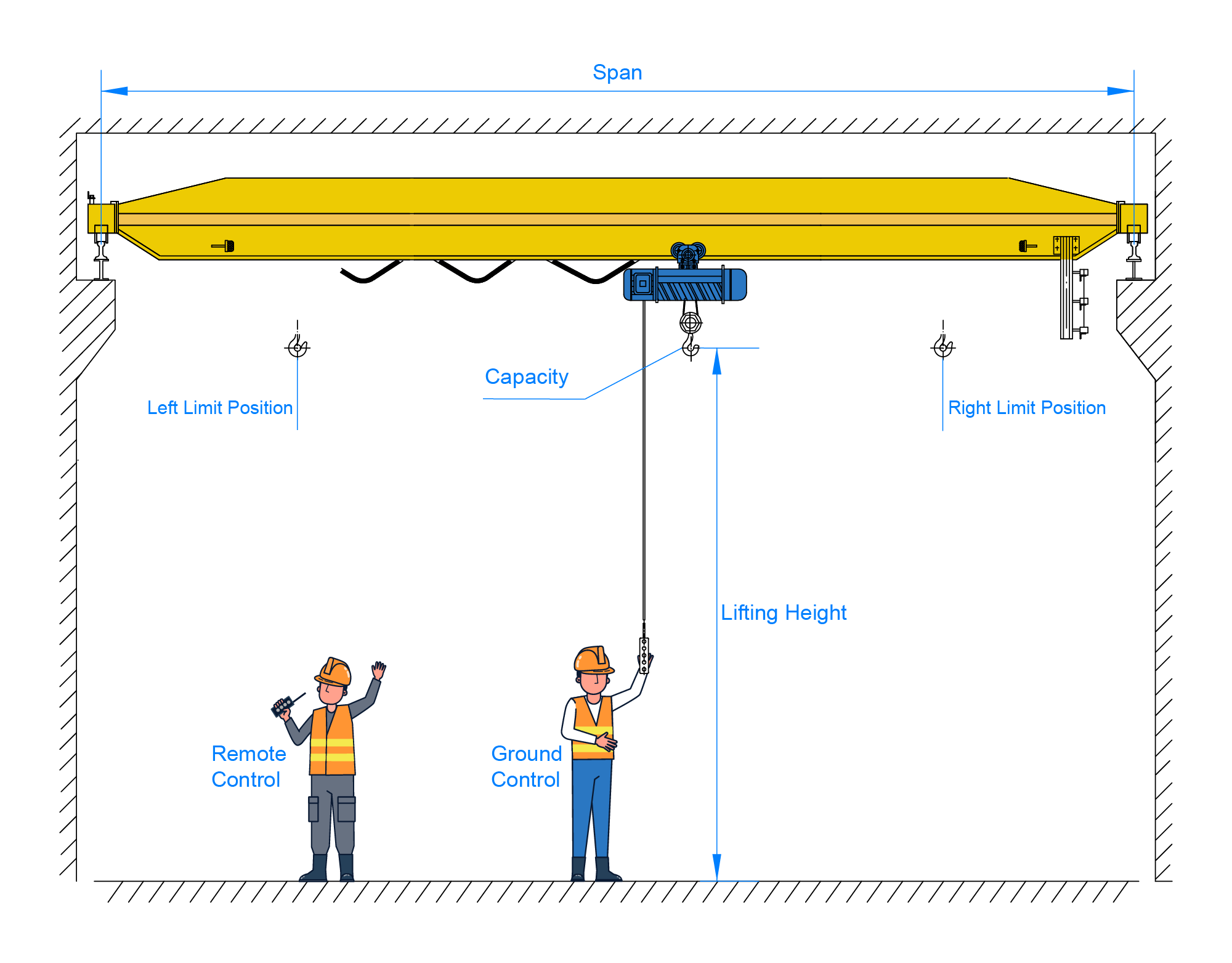
This guide provides a practical step‑by‑step procedure for installing a single girder overhead crane, including runway preparation, mechanical assembly, electrical connection, and commissioning.
Application Scenarios Of Single Girder Bridge Cranes
1. General Manufacturing & Assembly Lines
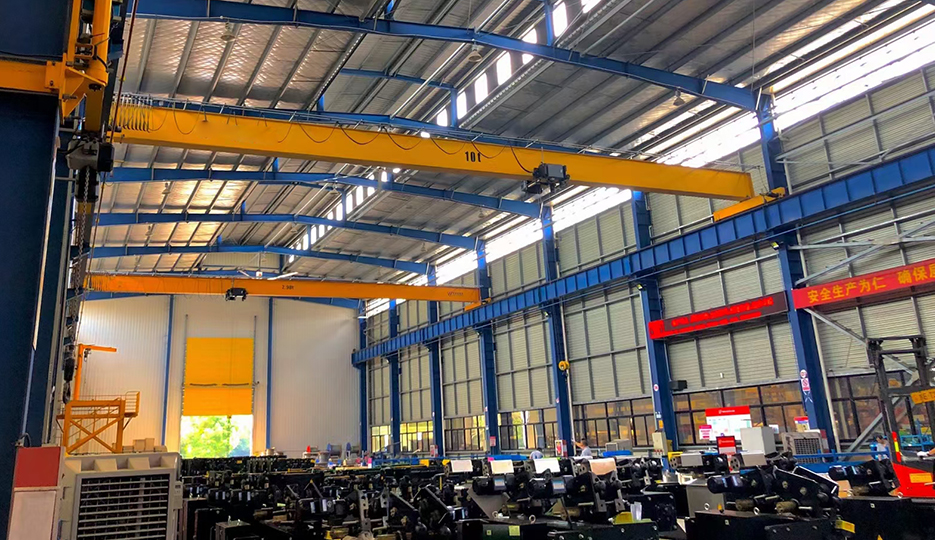
This is the most common application for single girder cranes. They are primarily used for transporting components between workstations, loading/unloading CNC machines, and the final assembly of finished goods.
Common Industries: Automotive parts, hardware mold workshops, pump and valve manufacturing.
Key Features: High operational frequency and smooth travel for precise positioning.
Technical Parameters
|
Item |
Typical Specifications |
|
Lifting Capacity |
1t – 12.5t |
|
Span |
7.5m – 28.5m |
|
Work Duty |
ISO A3 / A4 (FEM 1Am / 2m) |
|
Control Method |
Wireless Remote or Pendant Control |
2. Warehousing & Steel Distribution
In international logistics centers or steel trading warehouses, single girder cranes are used to stack steel pipes, plates, or load/unload delivery trucks.
Common Industries: Steel stockholders, construction material warehouses, precast concrete storage.
Key Features: Often utilizes Low Headroom designs to maximize the vertical lifting space in smaller or lower-roofed warehouses.
Technical Parameters
|
Item |
Typical Specifications |
|
Lifting Capacity |
3t – 16t |
|
Lifting Height |
6m – 18m |
|
Design Style |
European Low Headroom (NLD / QDX Style) |
|
Travel Speed |
VFD Controlled (Step-less speed regulation) |
3. Maintenance & Repair Stations
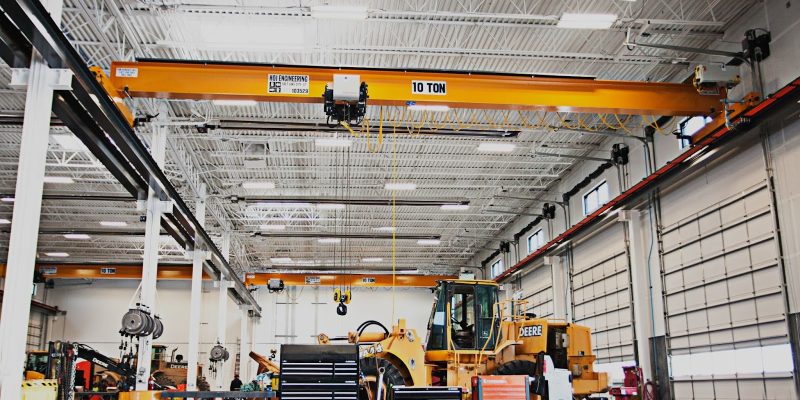
These scenarios require high precision rather than high frequency. The crane is used to lift heavy components (like engines or gearboxes) for delicate maintenance work.
Common Industries: Heavy truck repair shops, wind turbine nacelle maintenance, power plant workshops.
Key Features: Equipped with Inching Control (Micro-speed) to prevent swinging during critical alignments.
Technical Parameters
|
Item |
Typical Specifications |
|
Lifting Capacity |
2t – 10t |
|
Lifting Speed |
Dual-speed or VFD Slow Speed |
|
Installation Type |
Top Running or Underhung (Suspension) |
|
Accuracy |
High-precision alignment capability |
4. Agribusiness & Food Processing
In automated agricultural or food production facilities, cranes are used for loading fertilizers, assembling tractors, or moving large food processing vats.
Common Industries: Tractor assembly plants, grain processing centers, large-scale bottling lines.
Key Features: Focuses on environmental protection, such as dust-proof designs or high-grade anti-corrosion coatings (C3-C5 ratings).
Technical Parameters
|
Item |
Typical Specifications |
|
Lifting Capacity |
1t – 8t |
|
Ambient Temp |
-20°C to +45°C |
|
Surface Treatment |
Epoxy Zinc-rich Painting (Min. 120μm) |
|
Safety Devices |
Overload Limiters & Audible/Visual Alarms |
Pre‑Installation Preparation
Before installation begins, several preparation tasks must be completed:
– Verify crane specifications and drawings
– Check the runway beam alignment and rail installation
– Prepare lifting equipment for installation
– Confirm availability of installation tools and safety equipment
– Ensure installation personnel are trained and qualified
Step 1 – Runway Inspection
The crane runway must be inspected before installing the crane structure.
Inspection items include:
– Rail alignment and levelness
– Rail joint condition
– Rail fastening bolts
– Runway beam structural integrity
Proper runway installation ensures smooth crane travel and reduces wear on wheels and motors.
Step 2 – End Carriage Installation
The end carriages are installed on the runway rails first. These components support the bridge girder and allow the crane to travel along the runway.
Installation process:
– Lift end carriages using suitable lifting equipment
– Position wheels onto crane rails
– Check wheel alignment and rail contact
– Secure temporary positioning
Step 3 – Main Girder Installation
The main bridge girder is lifted and connected to the end carriages.
Installation steps:
– Lift the girder using cranes or lifting equipment
– Align connection plates with end carriage bolts
– Install high‑strength bolts and tighten according to torque specifications
– Verify girder alignment and horizontal level
Step 4 – Hoist and Trolley Installation
The electric hoist and trolley assembly is installed on the bridge girder.
Installation tasks include:
– Position trolley wheels onto the girder track
– Install hoist frame and lifting mechanism
– Connect wire rope and hook block
– Check trolley movement along the girder
Step 5 – Electrical System Installation
The electrical system includes the power supply, control panel, motors, and safety devices.
Electrical installation includes:
– Installing power supply systems such as busbar or festoon cables
– Wiring crane travel and hoist motors
– Installing control pendant or remote control system
– Connecting limit switches and safety devices
Step 6 – Safety Device Installation
The crane must be equipped with proper safety protection systems including:
– Overload limiter
– Hoisting height limiter
– Travel limit switches
– Buffers and rail sweeps
These devices ensure safe crane operation and prevent accidents.
Step 7 – Commissioning and Testing
After installation is completed, the crane must undergo commissioning and operational testing.
Testing procedures include:
– No‑load operation test
– Load test with rated capacity
– Brake performance verification
– Limit switch testing
– Electrical system inspection
Only after successful testing should the crane be put into normal operation.
Common Installation Mistakes to Avoid
– Improper rail alignment
– Incorrect bolt torque
– Poor electrical grounding
– Missing safety device installation
– Incomplete testing before operation
Why Choose SLKJcrane for Your Crane Project
SLKJcrane provides professional crane engineering solutions including crane design, manufacturing, installation guidance, and project support.
Our advantages include:
– Experienced crane engineering team
– Customized crane solutions for different industries
– Complete safety system integration
– International project experience
– Reliable manufacturing quality
Expert in Overhead Crane/Gantry Crane/Jib Crane/Crane Parts Solutions
Eileen
With 20+ years of experience in the Crane Overseas Export Industry, helped 10,000+ customers with their pre-sales questions and concerns, if you have any related needs, please feel free to contact me!
Frequently Asked Questions (FAQ)
Installation time usually ranges from 1–3 days depending on crane size and site conditions.
Mobile cranes, lifting tools, installation platforms, and electrical testing equipment are commonly required.
For safety and compliance reasons, installation should be supervised by qualified crane engineers.
single girder overhead crane installation guide
Single Girder Overhead Crane Installation Guide | Step-by-Step Crane Installation Procedure A single girder overhead crane is widely
How to Select the Right Overhead Crane for Steel Mills
How to Select the Right Overhead Crane for Steel Mills: A Complete Selection Guide In the high-stakes environment
Overhead Crane Safety Devices
Overhead Crane Safety Devices: 7 Essential Protection Systems for Overhead and Gantry Cranes Introduction Overhead cranes and gantry

Cranes as the Backbone of Modern Steel Plants
Cranes as the Backbone of Modern Steel Plants How the Right Steel Plant Crane Solutions Drive Efficiency, Safety,
Contact Us Now
Have questions about our cranes or need help?
Reach out to our friendly team for expert support and guidance.
We are here to help you power your journey towards a greener future !
Address: Crane Industry Park, Xinxiang City Henan Provice
